Tag Archive | politics

Equal Representation is a Basic Social Justice

balance for better

In 2019 of the 37 County Councillors in Donegal only 3 are women, that’s a 8.1% representation, the highest it’s ever been. At the national political level two women since 1918 have ever represented Donegal in Dáil Éireann. We need change.

This year’s International Women’s Day Theme is ‘Balance for Better’, it is a call-to-action for driving gender balance across the world. While also asking people how will you help make a difference?

In honour of this day NCCWN Donegal Women’s Network in association with 50:50 North West invite you to come Celebrate International Women’s Day 2019 with us on Thursday 7th March in Donegal central library, Letterkenny 10am-1pm.

We’ll be discussing equal representation, chatting to female County Councillors and to women who will be running in the upcoming May Local Elections. We’ll also be joined by Historian Dr Angela Byrne who will be talking about the first woman in Donegal to be Elected as a councillor.

This will be an interactive and informative event, refreshments will be provided and all are welcome.

For more information you can contact NCCWN Donegal Women’s Network on donegalwomensnetwork@gmail.com or by phone on 074 9722790

Putting Women’s Equality Centre Stage

WEAR PRESS RELEASE 2017.pngThe NCCWN Donegal Women’s Network warmly invites you to attend their WEAR (Women’s Equality Awareness Raising) seminar, an event which is part of a wider project that the Network has been delivering this year.   This seminar will be held in the Regional Cultural Centre, Letterkenny on 28th September 2017 from 12.30 p.m. to 3.30 p.m. everyone welcome.

In 2017 it remains a reality that globally women and girls can often face gender-based discrimination which increases their risk of experiencing poverty, violence, poor health and a lack of an education. While research also shows us there is a link between development, poverty eradication and women’s equality.

To create awareness to this issue and support women’s equality NCCWN-Donegal Women’s Network, developed The WEAR project, with the funding support of the educational development awareness, EU Ladder Project.

Since April the WEAR project held a 5-week workshop series in Letterkenny, working with women from across Donegal, where participants looked at topics on poverty, health, education, gender based violence and decision-making, through interactive activities and group discussions.

Working with young people is critical if we are to influence change and embed gender equality as a core value within our society.

Through the WEAR project over 80 Transition Year Students from Scoil Mhuire, Buncrana  and Moville Community College participated in a ‘Gender Equality and Development’ awareness workshop.  As both schools have Global Development incorporated into their curriculum the students who participated in WEAR  now have a better understanding of gender equality to inform their reflective learning and development.

Educational Development is about increasing awareness and understanding of the rapidly changing, inter-dependent and unequal world in which we live. The WEAR project has afforded the participants to learn about the structures and systems that impact on their lives and the connections of these to those in developing countries. While providing the opportunity for people to engage in analysis and reflection; recognising local action can assist and sustain global development to help to create a just and more equal world.

The WEAR seminar will share and reflect on the projects learning and look at the ways as a community we can help advance women’s equality locally and globally.

To book a place, please contact: NCCWN Donegal Women’s Network, 6 Tír Chonaill Street, Donegal Town. Tel No: 0749722790 Email: donwomnet@eircom.net

Rock the boat

imageThis blog feature was  first published in the NCCWN-Donegal Women’s Network ‘Women’s Lives’ section in the Donegal Democrat News Paper on 17th December 2015

By Nuala Redmond

For more than a month now, there have been half a dozen foreign super trawlers fishing off the west coast of Ireland. The two biggest trawlers in the world are still here. Nuala Redmond hopes to rock the boat.

When life seems out of control, the big beautiful ocean can bring a unique perspective. For me, all becomes clear – whether I’m getting beaten up by a huge Atlantic swell, or whether the sea is calm and quiet. In Donegal Bay, I’ve seen dolphins, sharks, whales, seals, tuna and over 40 species of fish while working aboard Prospector 1.

My work involves bringing groups out sea-angling. The people who come aboard to fish are very often fishing for their freezer – some are fishing for leisure (these fish go back to the ocean) – but most of the catch is gutted and brought home to feed the families of our customers.

There are many of us who make a living from the sea here around Donegal Bay. And it’s a delicate balance – the sea, like a boat, will not be kind to those that are not kind to her. The sea, like a boat (or a woman), responds well to a little tender loving care.

We all depend on there being a reasonable chance of catching some decent fish, so when we see a posse of super trawlers fishing off our west coast for weeks at a time, we get a little worried. A super-trawler has a factory onboard and can stay fishing in the same place for far longer than any other vessel, enabling it to practically empty the fishing ground.

Our valuable fisheries are in danger of being depleted, affecting coastal communities in far-reaching ways: we have small trawlers fishing locally and supplying locally in areas like Killybegsand Rathmullan (these, by the way, are severely restricted in their quotas and species, and are boarded and inspected regularly). We have charter sea-angling boats filled with tourists expecting to catch fish. We have sight-seeing tour boats expecting to see dolphins, whales and seals – oceanic life is some of the most beautiful on earth. And we have hotels, pubs and restaurants catering for the people who come to do these things.

Super trawlers (pelagic freezer trawlers) have a quota for scad and horse mackerel on our west coast. They are allowed fish off our shorelines up to 12 miles offshore. When the fishing ground yields no more, the ships move on – but all the other fish and mammals (including dolphins, whales, sharks and tuna) that depend on scad and mackerel as a food source will also move on. My fear is then that supporting businesses built around a healthy oceanwill eventually collapse.

The by-catch on these vessels is cruel – seals, dolphins, sharks, turtles, and many fish for which they have no quota ­– die and are damaged in their nets. Recently, an Irish fisherman’s gear has been caught up and destroyed in a super trawler net. EU regulation 812/2004 refers to the need for an onboard observer to be present to monitor the by-catch, but it is unclear, and this week Simon Coveney has agreed to ‘explore’ putting observers on these vessels. The Irish Wildlife Trust is seeking clarity on this matter from the Sea Fisheries Protection Authority. Don’t forget, in 1991 Charlie Haughey declared all Irish waters to be a whale and dolphin sanctuary.

Perhaps it is impossible to get a total ban any time soon, it seems to be out of Irish politician’s hands, or so they say. Simon Coveney has refused to meet us to accept our petition (now almost 35,000 strong). It looks like our fight is to be with the EU. It may be prudent to limit our campaign to a few key points: extend the 12-mile zone to 40 or 50 miles; clarify the position and time-frame of the requirement for onboard observers; lower the quota for foreign boats in our waters; restrict the number of super trawlers to be allowed to fish in the one area at the one time; and open up some (currently banned) fisheries for our own small Irish trawlers.

For me, a fisherwoman in Donegal Bay, I feel privileged to be able to work with the sea and work among sea-creatures. I love my fish, I catch them and I help others to catch them, I kill them and I eat them. I always put the babies back and I never waste a fish. I support sustainable fishing industries that give regional jobs in coastal communities. I support life at sea.

Nuala Redmond works with her partner Peter Power onboard the charter angling boat Prospector 1 operating out of Mullaghmore, Co Sligo, and is part of the campaign ‘Stop Super Trawler on Irish Waters’.

Keeping Women’s Equality on the Agenda

a women's place is in the world-365

By Finola Brennen, NCCWN Donegal Women’s Network Coordinator  

The Irish Government has made many commitments, drawn up many strategies and signed many obligations towards achieving women’s equality. Without a doubt some progress has been made but when you listen to women experiencing disadvantage and who find themselves marginalised, we know why the vital work of The National Collective of Community-based Women’s Network  (NCCWN) is needed.

In 2010 when local Government was been reformed 17 individual women’s networks successfully lobbied Minister Carey for our autonomy and holding our focus on working with and advocating for women experiencing disadvantage and marginalisation.

The NCCWN is managed on a voluntary basis by women who have been empowered within their own communities. Last year they managed a budget of 1.3 million, directly employed a staff of 44 and indirectly employed 156 women.

While each of the 17 networks may work in different ways, what we all have in common is a shared set of values that informs WHAT we do, HOW we do it and WHY we do it. Our vision is for a just and equal society for women and underpinning our work are feminist principles.

My work has been based in Donegal a very beautiful place but alongside that beauty and ruggedness is the reality of isolation and economic deprivation which impacts hugely on the everyday lives of ordinary women.

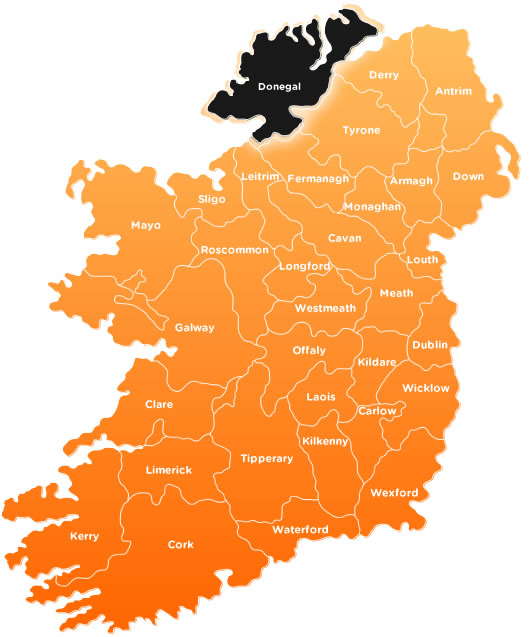
donegal_mapDonegal is

  • Predominately rural
  • The majority of lone-parents, homemakers and carers are women
  • It has the highest level of unemployment of all constituencies
  • Highs level of emigration
  • And has a very high age dependency ratio

Everyone wants to do the best for their children and their loved ones but for women who have a low income, who have a disability, are from the Traveller community, are full-time carers, or who for whatever reason have no economic independence these women know the reality of poverty and the effect this has on their health and the quality of their lives and that of their families.

Employment and Welfare

Once employment gave security and a quality of life but we now have 16% of those working, living in poverty. Women in particular are vulnerable to low wages and precarious employment with 50% of women earning €20,000 or less.

It is a fact that one parent families tend to have the lowest disposable income out of all the households in the state.  In Donegal 93.5% of lone parents are women. So what is their reality?

For women living only on social welfare benefits, the week in week out drudge of living on such a low income greatly adds to their stress levels and ultimately impacts negatively on their physical and mental health.

For some women managing means no heat while the children are at school, buying everything second hand for themselves and their children, including the school uniforms.  I know a number of women who cut their own hair as going to the hair dresser is a luxury they cannot afford and the word holiday is not even in their vocabulary. In rural areas it maybe the monthly trip to do the essential shopping that is their day out.

Incorporate into this picture childhood illnesses, or having a child with a disability and the consequences are unimaginable. The extra costs of attending the GP when a taxi is their only option of transport, or having to attend the hospital which could be over 40 miles away may leave the woman having to get into debt.

Lack of accessible affordable childcare especially in rural area compounds the poverty trap for lone parents with many women unable to access training or to find work.

Some women with no family support, no money for social occasions or interaction develop low self –esteem which compounds their struggle to stay healthy, for their greatest fear is, ‘What happens to my children, if I am sick?’

Domestic violence

For women who find themselves in a domestic abusive relationship, lack of economic independence can often be the main reason why she stays.  When a woman leaves the home and we know that this is the most dangerous time for women, in rural areas where transport is so difficult, it increases their risk of danger.

Ironically, it is the woman experiencing an abusive relationship that becomes homeless and dependent on the support of the frontline services as a safe haven. Legal support and advice is available through legal aid for women who cannot afford independent advice but there is an initial consultation fee of €130.00. Where does a woman with no income find this?

Disability

Cuts to home helps and people with disabilities is having a particular harrowing effect on the most vulnerable in our society.  Many women find themselves alone and afraid in their homes, especially in rural areas where you may not even see the light of your neighbour’s house.

What is now been put in place as care is a time managed operation that takes away that person’s independence because it is easier to do an action than afford the less abled person the dignity and respect of doing it for themselves.  There is little time to give value who they are, to chat about what is important to them. Those who are providing this service do their very best but they themselves are constrained by the system that governs.

Most women with disabilities or older women are reliant are state support and can afford to pay the transport costs for ‘getting out’ the money is kept for the trip to the Doctor or the chiropodist. In the case where wheelchair accessible transport is required this may have to come from an urban area and will be more expensive because of its exclusivity.

Childcare

Lack of accessible affordable childcare is huge barrier for women seeking some economic independence. According to a major economic report commissioned by the Donegal County Childcare Committee in 2013, the annual cost of full-time childcare for a two-child family is €16, 500. Among lower income groups 56% indicated that the cost of childcare prevented them from looking for a job. Within the childcare sector over 25,000 receive less than € 11 an hour women it is just another example of the value given caring roles which predominately are women.

A different future 

blog headerAll the above is unacceptable and needs to be addressed by the implantation of the Irish government’s policy’s, strategies and legal commitments locally, nationally and internationally.

The work and vision of the 5050 Group which seeks to bring a gender balance to politics in Ireland and NCCWN continued work in supporting and empowering women in our community’s is therefore critical in achieving social justice and equality in Ireland.