
In this women’s lives, women’s voices feature, we will delve into the issue of domestic violence and look at the rise of femicide in Ireland, which is not defined in Irish law. Femicide is a growing social issue in our society and we need to create awareness around it and start calling it what it is, the gendered murder of women or girls. Written by WCI-Donegal Development Worker Rhona Hannigan
Domestic violence, sometimes referred to as domestic abuse or intimate partner violence, is a serious and pervasive issue in Ireland, affecting individuals across all ages, genders, and backgrounds. It involves patterns of coercive, controlling, threatening, degrading, or violent behaviour which may include physical, emotional, sexual, and financial abuse, typically by a partner, ex-partner, or family member.
In Ireland, domestic violence has historically been a hidden problem, often shrouded in stigma and silence. However, increased public awareness, changes in legislation, and the work of advocacy organisations have brought the issue into greater focus over recent decades.
Women represent the most recorded victims in Ireland. Almost a third of all women have experienced physical and, or sexual violence by their intimate partner. According to data from Women’s Aid and the Central Statistics Office (CSO), thousands of cases are reported annually, however the majority of incidents remain unreported due to fear, shame, or lack of trust in authorities.
According to Safe Ireland:
“In Ireland, 1 in 3 women have experienced psychological violence from a partner at some point in their lives and 1 in 6 have experienced physical or sexual violence by a partner since the age of 15.
According to the United Nations, in 2023, there were approximately 51,100 women and girls murdered worldwide by their intimate partners or other family members. This means that, on average, 140 women or girls are killed every day by someone close to them. This is the ultimate and extreme culmination of continued acts of violence against victims.
Femicide represents the dramatic end-point on a spectrum of violence against women. Femicide is driven by discrimination against women and girls, unequal power relations, gender stereotypes or harmful social norms. It is the most extreme and brutal manifestation of violence against women and girls which occurs on a continuum of multiple and related forms of violence, at home, in workplaces, schools or public spaces. Which includes intimate partner violence, sexual harassment and other forms of sexual violence, harmful practices and trafficking. As many as 38% of all murders of women are committed by intimate partners, according to the World Health Organisation.
From a statistical perspective, it is difficult to define numbers of femicide in Ireland as there is no working definition. The European Institute for Gender Equality (EIGE) defines femicide as ‘killing of a woman by an intimate partner and the death of a woman as a consequence of a practice that is harmful to women”. It is understood that an intimate partner can be a former or current spouse or partner, whether or not the
perpetrator shares or has shared the same residence with the victim’.
In a joint report by UNODC and UN Women in 2023, more women and girls were killed in 2022 even as overall homicide numbers fall. The research recorded that 89,000 women and girls were intentionally killed globally in 2022, the highest rate in twenty years. The true numbers are likely to be much higher as records only relate to intimate partner killings. Murders of women that occur as a result of rape, sexual violence, honor killings or female genital mutilation are recorded as murders and therefore are not attributed to femicide.
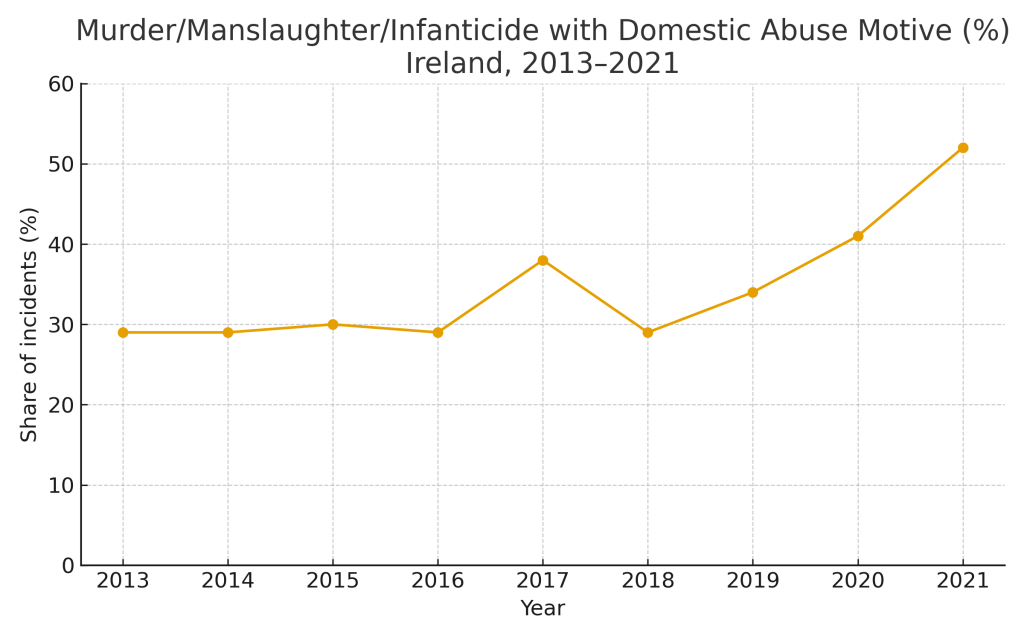
In a Garda report, “Domestic, Sexual and Gender Based Violence”, released in 2022, males and females experience violent crimes differently. In the case of female victims there is a close link with domestic abuse and sexual violence crimes. Between 2019 and 2021 a motive attributed to domestic abuse was recorded for 90% of women who were victims of Murder or manslaughter. Whilst Male victims also experience domestic abuse, they are more likely to be subject to violence by offenders unknown to them or in incidents not relating to domestic abuse.
The graph below by An Garda Síochána shows the annual number of Murder/Manslaughter/ Infanticides incidents between (2013–2021)
Domestic violence remains a critical issue in Irish society, requiring ongoing awareness, prevention, and support efforts. While legal reforms and advocacy have made progress, continued work is needed to ensure that all victims feel safe to come forward, receive protection, and rebuild their lives free from abuse.
Building Community Solidarity
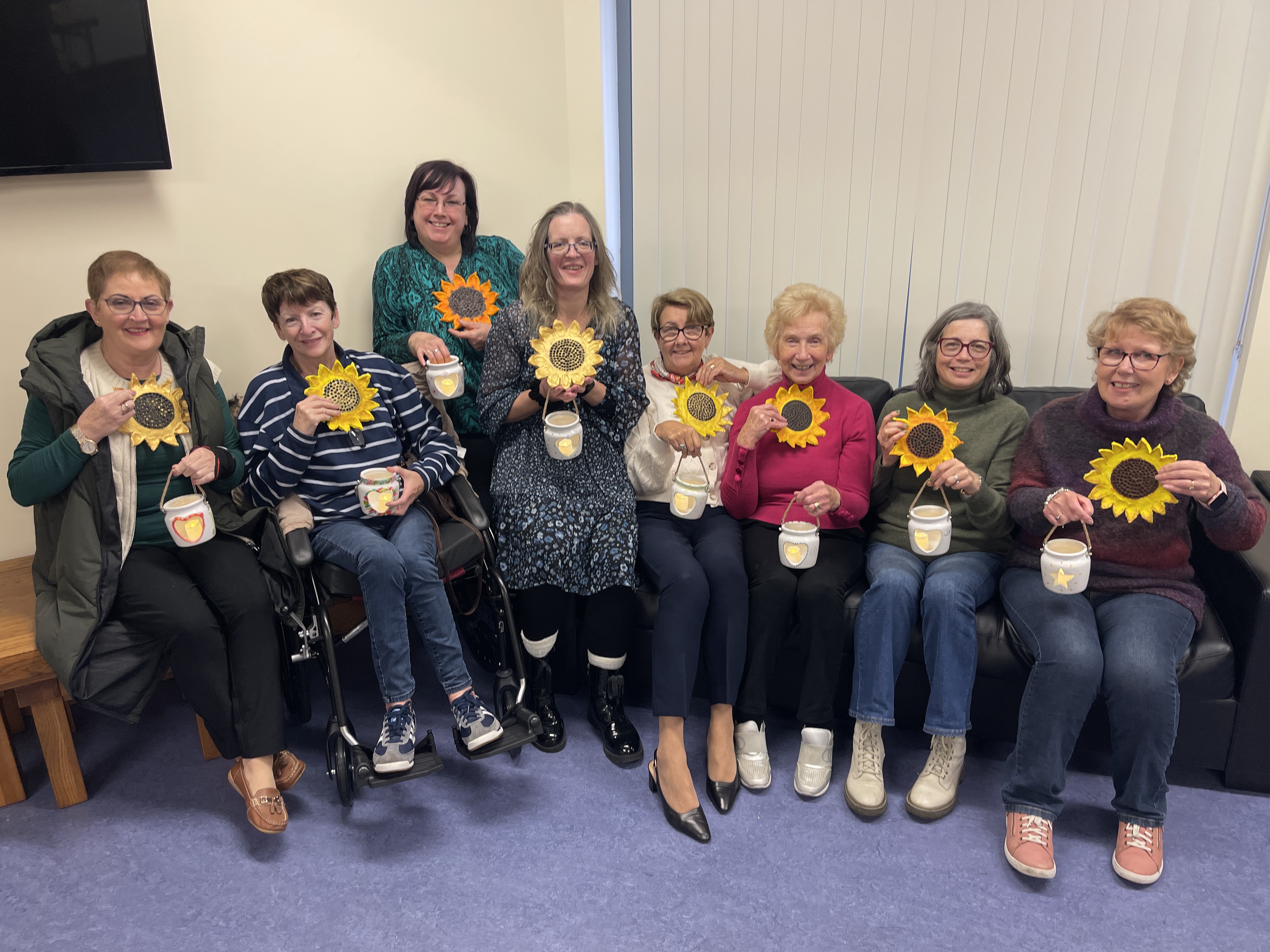
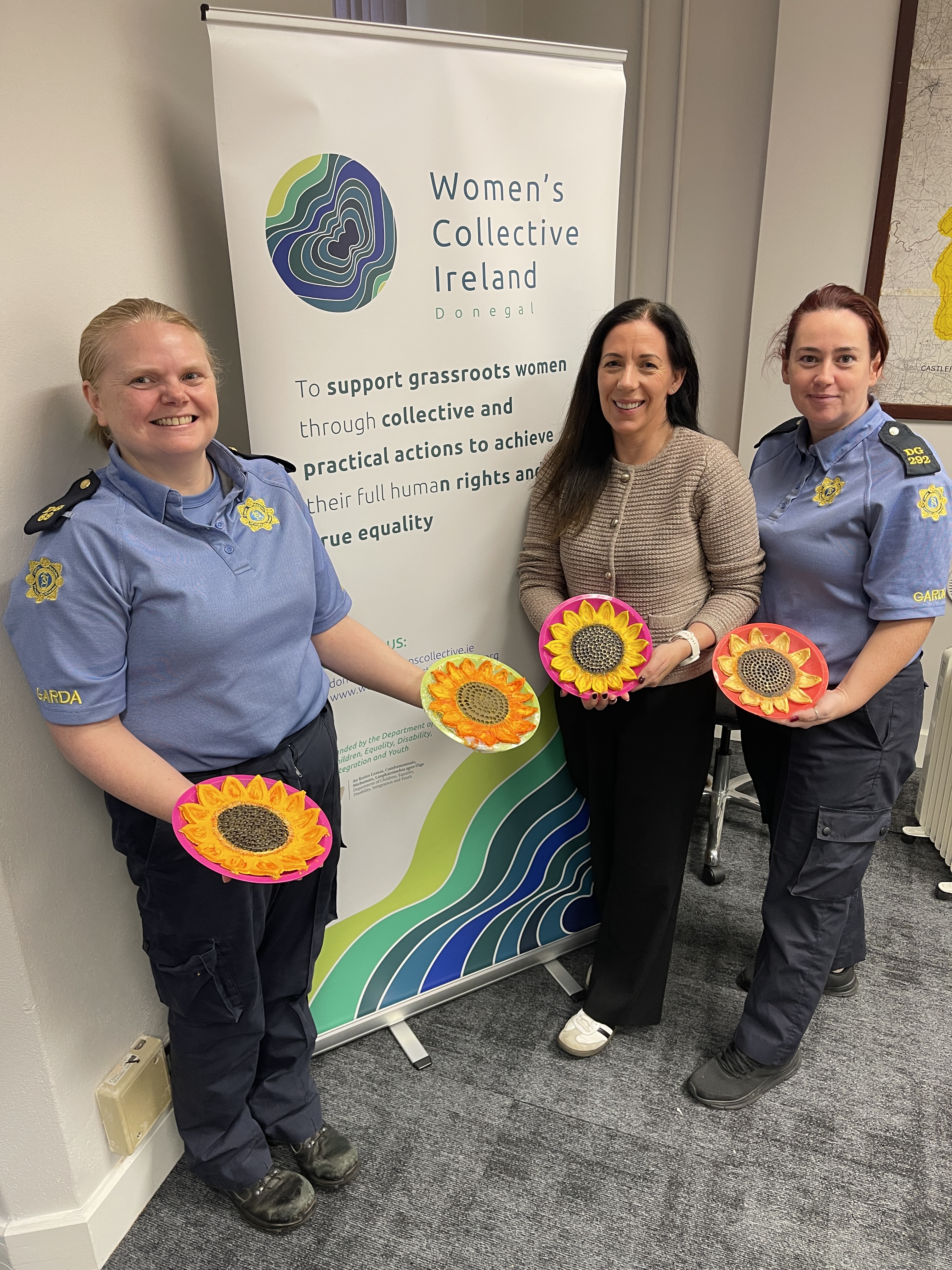
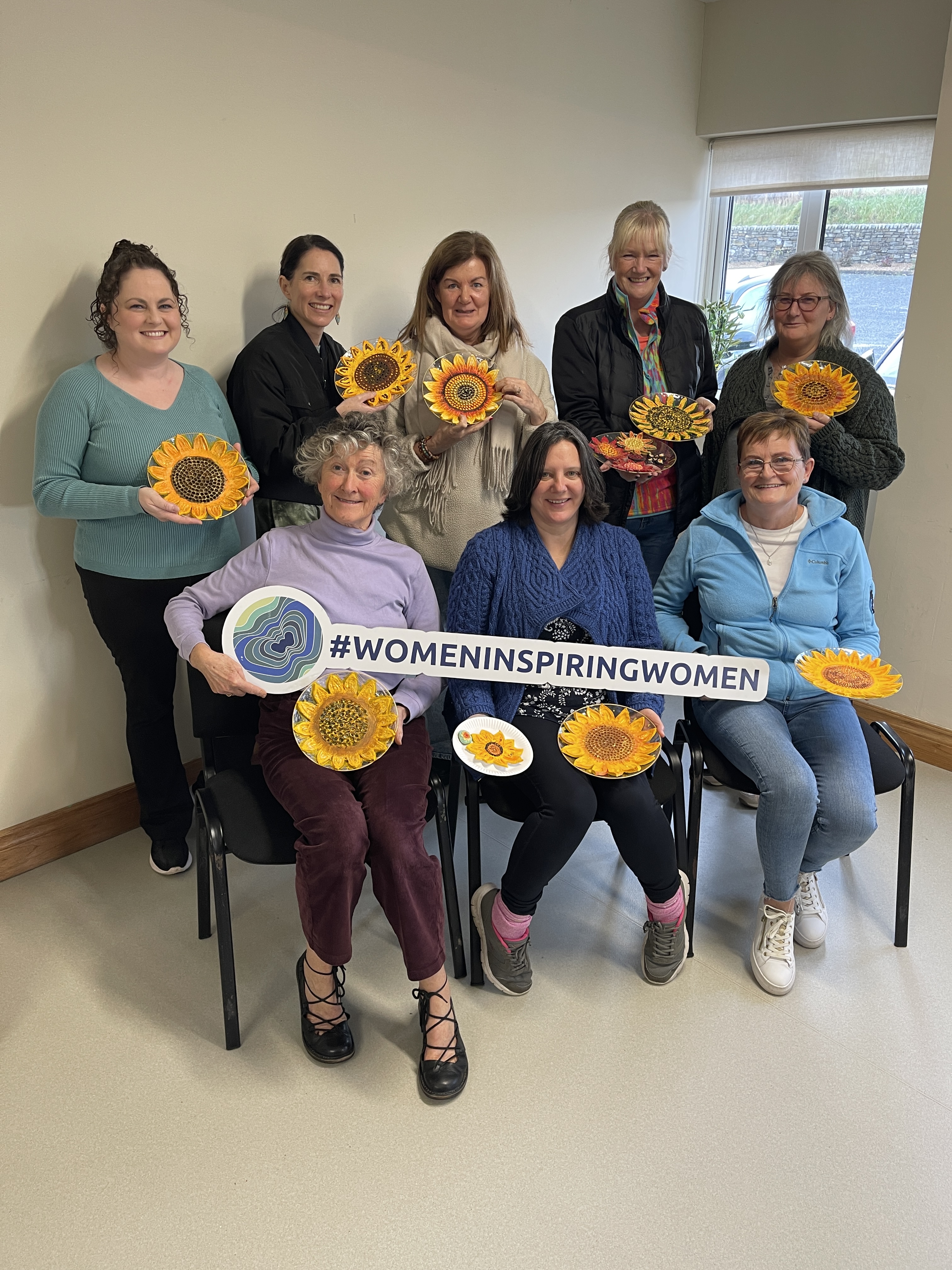
Between October and November 2025, Women’s Collective Ireland–Donegal worked with different groups in Donegal. These included the Early Birds Pettigo Women’s Group, Donegal Town Crafting for Connection Group, Rossnakill Community Hub, AIB staff from Donegal Town, Killybegs, Ballyshannon and Ballybofey, members of An Garda Síochána Donegal, and the ATU Donegal Empower Her Society.
The project highlights the reality that 1 in 3 women experience gender-based violence. It aims to remind women that they are not alone, that support is available, and that communities have a role to play in challenging violence and creating a safer future for women and girls.
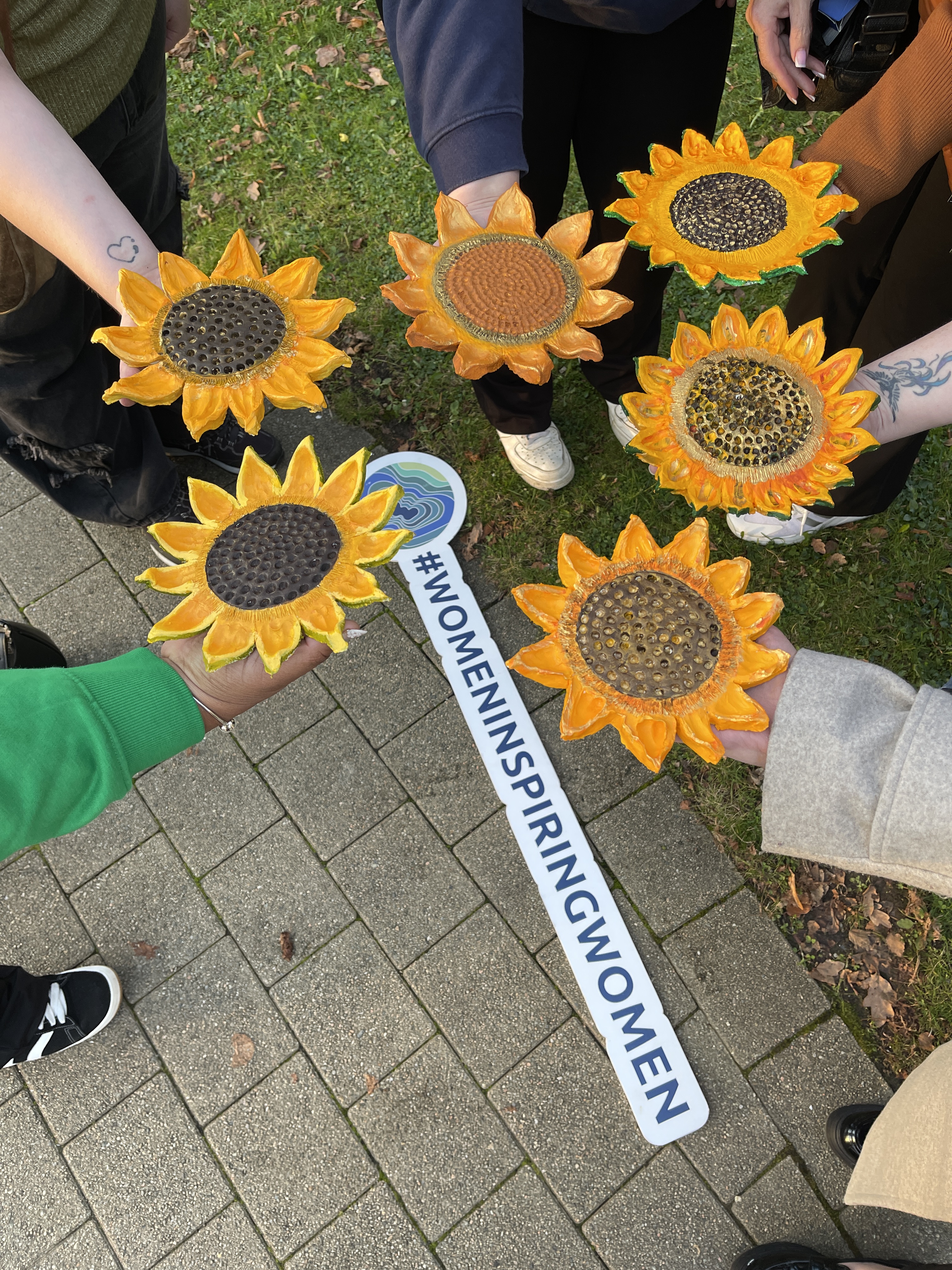
Each group created handcrafted clay sunflowers under the motto:
“Be like a sunflower, so that even on the darkest days you stand tall and find the sunlight.”
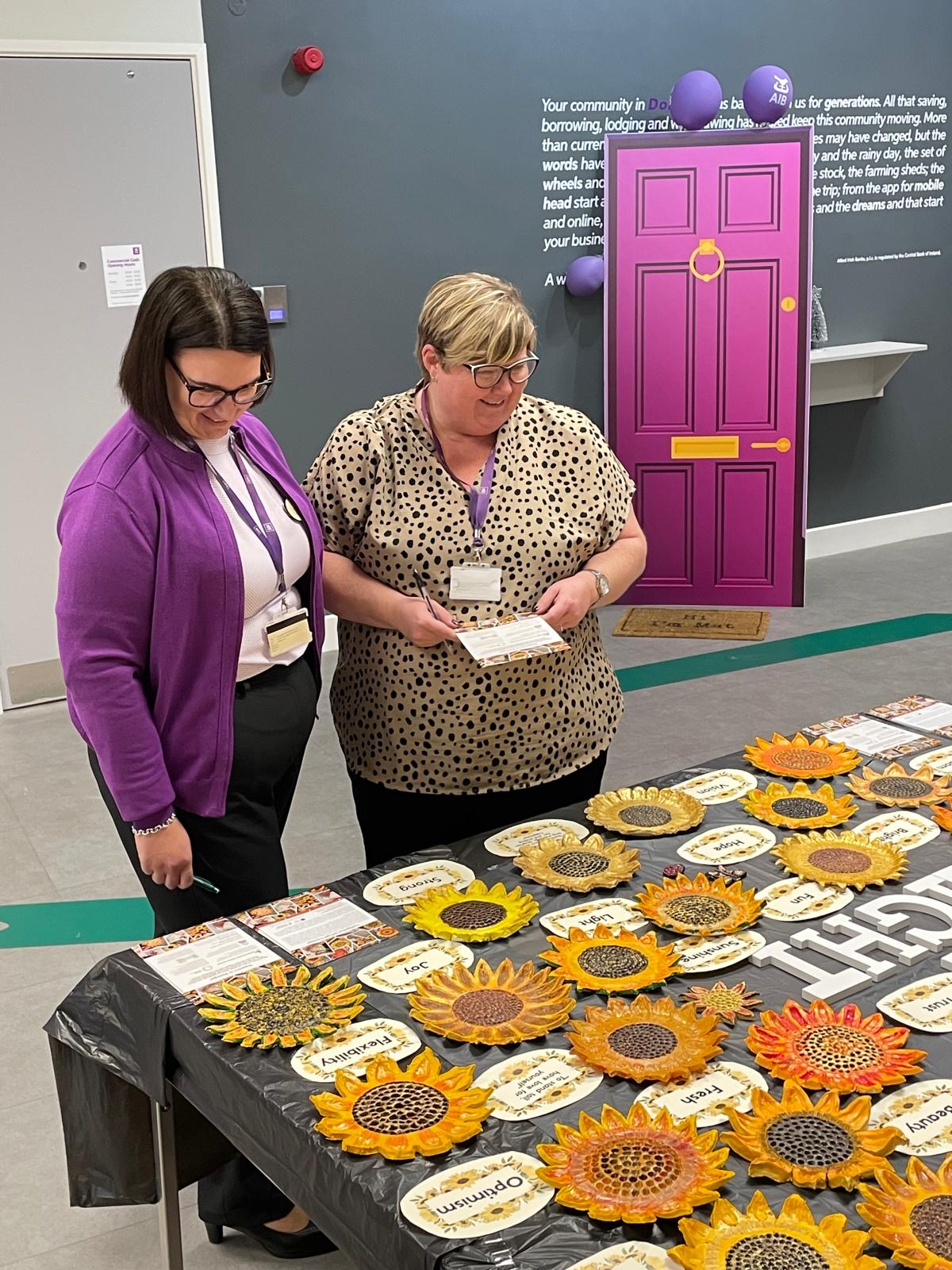
The sunflowers were first displayed at the 2025 Donegal Rape Crisis Centre Art Exhibition in Letterkenny. The exhibition theme was “Hope – Where the Light Enters. Together we rise, together we heal” and took place as part of the 16 Days of Activism, creating a supportive space for survivors and promoting community solidarity.
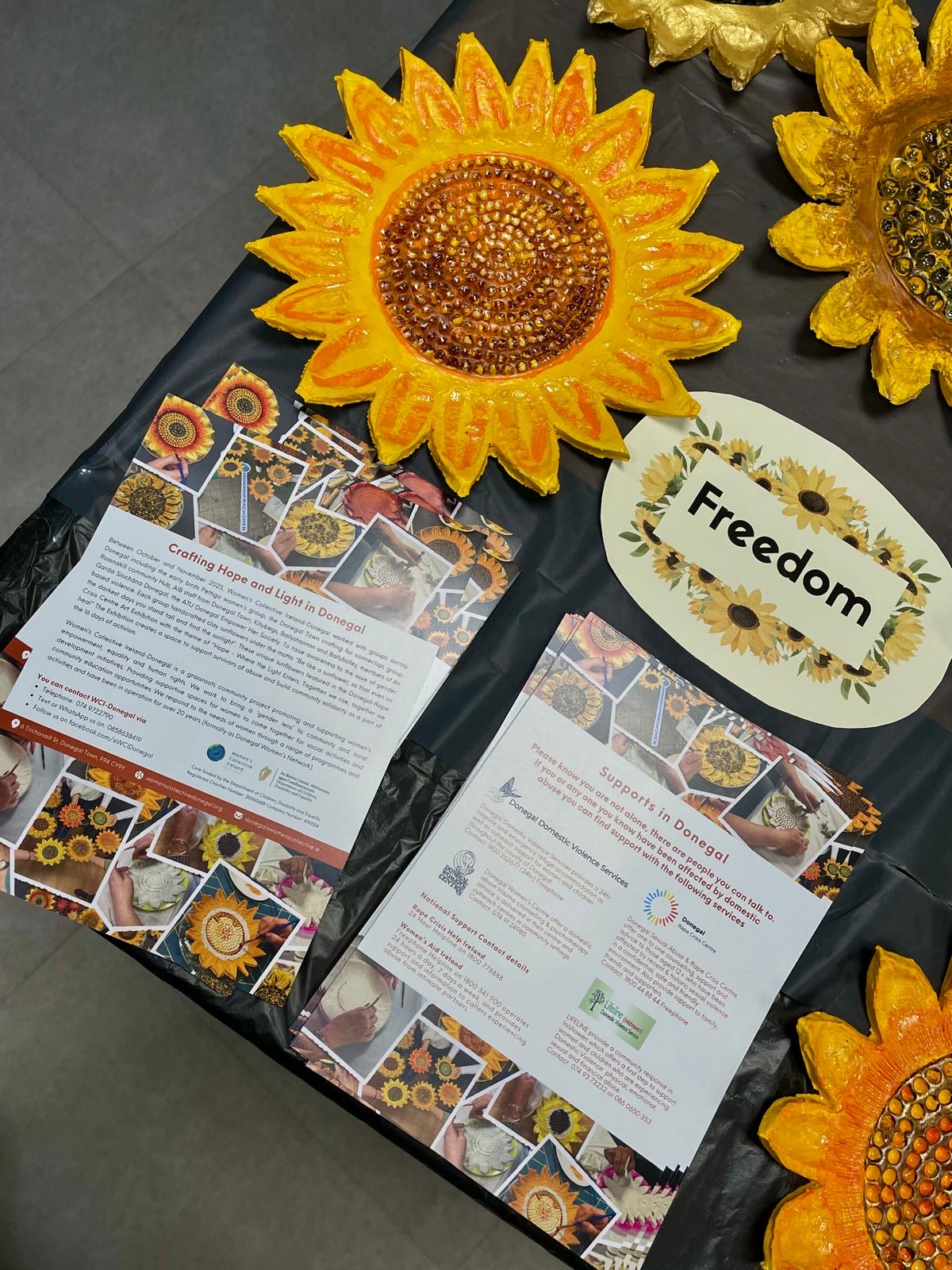
The collection, made up of over 40 unique handmade clay sunflowers, is now on display at the AIB branch in Donegal Town over the Christmas period until the New Year. Each sunflower represents hope, light and solidarity, and carries messages of encouragement for women who have experienced gender-based violence. Members of the public are encouraged to visit the display while in Donegal Town. The AIB branch is open Monday to Friday, 10am to 4pm, and is closed on bank holidays.





Supports in Donegal
Please know you are not alone, there are people you can talk to. If you or any one you know have been affected by domestic abuse you can find support with the following services;
If you or someone you know is a victim of domestic abuse, please contact 999/112 or your local An Garda Síochána Donegal Station.
Donegal Domestic Violence Services – DDVS provides a 24hr helpline and emergency refuge accommodation as well as outreach support for women and children throughout the county of Donegal. Contact: 1800 262677 (24hr) Freephone
Donegal-Rape Crisis Centre offer one to one counselling, support and advice to those aged 12+ who have been affected by recent & historic sexual violence in a confidential, safe and friendly environment. Also provide support to family, friends and supporters. Contact: 1800 44 88 44 Freephone
Donegal Women’s Centre offer a domestic abuse trauma counselling & psychotherapy service is delivered in their centre and outreach centres in community settings. Contact: 074 91 24985
Lifeline Inishowen provides a community response in Inishowen which offers a first step to support women and children who are experiencing Domestic Violence: physical, emotional, sexual and financial abuse. Contact: 074 93 73232 or 086 0650 353
National Support Contact details
Dublin Rape Crisis Centre (Rape Crisis Help Ireland): 24 Hour Helpline on 1800 778888
Women’s Aid Ireland: Freephone Helpline on 1800 341 900 operates 24 hours a day, 7 days a week, and provides support and information to callers experiencing abuse from intimate partners.
References
Five essential facts to know about femicide
 Women's Collective Donegal