Tag Archive | Human Rights

Keeping Women’s Equality on the Agenda

a women's place is in the world-365

By Finola Brennen, NCCWN Donegal Women’s Network Coordinator  

The Irish Government has made many commitments, drawn up many strategies and signed many obligations towards achieving women’s equality. Without a doubt some progress has been made but when you listen to women experiencing disadvantage and who find themselves marginalised, we know why the vital work of The National Collective of Community-based Women’s Network  (NCCWN) is needed.

In 2010 when local Government was been reformed 17 individual women’s networks successfully lobbied Minister Carey for our autonomy and holding our focus on working with and advocating for women experiencing disadvantage and marginalisation.

The NCCWN is managed on a voluntary basis by women who have been empowered within their own communities. Last year they managed a budget of 1.3 million, directly employed a staff of 44 and indirectly employed 156 women.

While each of the 17 networks may work in different ways, what we all have in common is a shared set of values that informs WHAT we do, HOW we do it and WHY we do it. Our vision is for a just and equal society for women and underpinning our work are feminist principles.

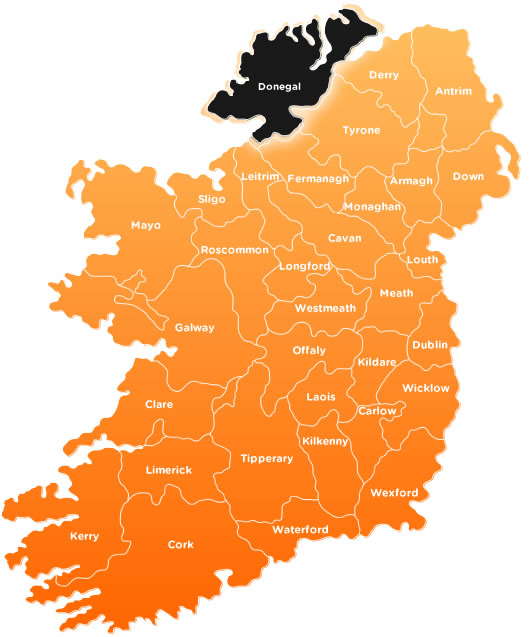
My work has been based in Donegal a very beautiful place but alongside that beauty and ruggedness is the reality of isolation and economic deprivation which impacts hugely on the everyday lives of ordinary women.

donegal_mapDonegal is

  • Predominately rural
  • The majority of lone-parents, homemakers and carers are women
  • It has the highest level of unemployment of all constituencies
  • Highs level of emigration
  • And has a very high age dependency ratio

Everyone wants to do the best for their children and their loved ones but for women who have a low income, who have a disability, are from the Traveller community, are full-time carers, or who for whatever reason have no economic independence these women know the reality of poverty and the effect this has on their health and the quality of their lives and that of their families.

Employment and Welfare

Once employment gave security and a quality of life but we now have 16% of those working, living in poverty. Women in particular are vulnerable to low wages and precarious employment with 50% of women earning €20,000 or less.

It is a fact that one parent families tend to have the lowest disposable income out of all the households in the state.  In Donegal 93.5% of lone parents are women. So what is their reality?

For women living only on social welfare benefits, the week in week out drudge of living on such a low income greatly adds to their stress levels and ultimately impacts negatively on their physical and mental health.

For some women managing means no heat while the children are at school, buying everything second hand for themselves and their children, including the school uniforms.  I know a number of women who cut their own hair as going to the hair dresser is a luxury they cannot afford and the word holiday is not even in their vocabulary. In rural areas it maybe the monthly trip to do the essential shopping that is their day out.

Incorporate into this picture childhood illnesses, or having a child with a disability and the consequences are unimaginable. The extra costs of attending the GP when a taxi is their only option of transport, or having to attend the hospital which could be over 40 miles away may leave the woman having to get into debt.

Lack of accessible affordable childcare especially in rural area compounds the poverty trap for lone parents with many women unable to access training or to find work.

Some women with no family support, no money for social occasions or interaction develop low self –esteem which compounds their struggle to stay healthy, for their greatest fear is, ‘What happens to my children, if I am sick?’

Domestic violence

For women who find themselves in a domestic abusive relationship, lack of economic independence can often be the main reason why she stays.  When a woman leaves the home and we know that this is the most dangerous time for women, in rural areas where transport is so difficult, it increases their risk of danger.

Ironically, it is the woman experiencing an abusive relationship that becomes homeless and dependent on the support of the frontline services as a safe haven. Legal support and advice is available through legal aid for women who cannot afford independent advice but there is an initial consultation fee of €130.00. Where does a woman with no income find this?

Disability

Cuts to home helps and people with disabilities is having a particular harrowing effect on the most vulnerable in our society.  Many women find themselves alone and afraid in their homes, especially in rural areas where you may not even see the light of your neighbour’s house.

What is now been put in place as care is a time managed operation that takes away that person’s independence because it is easier to do an action than afford the less abled person the dignity and respect of doing it for themselves.  There is little time to give value who they are, to chat about what is important to them. Those who are providing this service do their very best but they themselves are constrained by the system that governs.

Most women with disabilities or older women are reliant are state support and can afford to pay the transport costs for ‘getting out’ the money is kept for the trip to the Doctor or the chiropodist. In the case where wheelchair accessible transport is required this may have to come from an urban area and will be more expensive because of its exclusivity.

Childcare

Lack of accessible affordable childcare is huge barrier for women seeking some economic independence. According to a major economic report commissioned by the Donegal County Childcare Committee in 2013, the annual cost of full-time childcare for a two-child family is €16, 500. Among lower income groups 56% indicated that the cost of childcare prevented them from looking for a job. Within the childcare sector over 25,000 receive less than € 11 an hour women it is just another example of the value given caring roles which predominately are women.

A different future 

blog headerAll the above is unacceptable and needs to be addressed by the implantation of the Irish government’s policy’s, strategies and legal commitments locally, nationally and internationally.

The work and vision of the 5050 Group which seeks to bring a gender balance to politics in Ireland and NCCWN continued work in supporting and empowering women in our community’s is therefore critical in achieving social justice and equality in Ireland.

Breaking the Silence

SA Cover (2)

There are various forms of violence committed against women and one of the most prevalent is sexual violence.

By definition sexual violence means any non-consented act or activity imposed upon a person. The violence itself can take various forms “including but not restricted to: rape, sexual assault, child sexual abuse, sexual harassment, rape within marriage/relationships, forced marriage, so-called honour-based violence, female genital mutilation, trafficking, sexual exploitation, and ritual abuse.” (Rape Crisis Organisation)

Sexual violence never seems to be an easy topic to openly discuss due in part to its sensitive nature, a situation which seems to only feed the crime’s prevalence.

Research in Ireland (SAVI) showed that 42% of women and 28% of men as having experienced some form of sexual abuse or assault in their lifetime (McGee et al, 2002). Further research shows that only around 33% of incidents are reported in Ireland to the police or another formal authority. (Donegal Rape Crisis Centre, 2012) While 90% of sexual violence perpetrators are known to their victim. Such statistics highlight the victim’s insecurity over coming forward and the fact that perpetrators are commonly known to them.

By engaging in an open conversation however we can help break down the negative attitudes and barriers which allow sexual violence to continue and instead start to ensure its prevention.

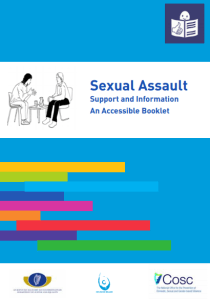
To help bring awareness to the crime of sexual violence, Inclusion Ireland has produced an information booklet, which holds answers to some of the questions people may be afraid to ask.  While it also provides information of the support available to victims and the actions we can take to report a crime of sexual violence.

SA Cover

Click here  to view and download the information and support booklet

     Remember you are not alone, there are people you can talk to     If you or any one you know have been effected by sexual violence you can find support with Donegal Sexual Abuse & Rape Crisis Centre, call them for free on 1800 44 88 44.

Don’t Silence Women’s Voices

Support the 17 NCCWN Networks

NCCWN-Donegal Women’s Network and the other 16 NCCWN are under threat of closure. We truly need the support of the community to prevent this closure and we are therefore asking people to join us in lobbying the government to secure future funding for our valuable work in the community.

We have put together this online petition and asking people across Ireland to please sign it. The petition will be presented to Alan Kelly TD, Irish Minister for the Environment, Community and Local Government, who is overseeing the changes which affect our funding.

Why you should support NCCWN  

The “National Collective of Community-based Women’s Network’s” (NCCWN) is an organisation made up of 17 women’s networks, its work includes the advocacy of equality and human rights for all women in Ireland. With a working mission to “empower and support community-based women who experience disadvantage and marginalisation as a result of barriers to participation and lack of opportunities”.

Working within a limited budget in 2013 the NCCWN Projects engaged with 36,589 women from communities who do not engage with state agencies. NCCWN have demonstrated that this represents excellent value for money.  Funding enables the NCCWN across its 17 projects to not only employ core staff but to also lever in additional funding to coordinate and run development programmes including equality, health & wellbeing, active citizenship, community education, domestic abuse support, employment pathways.  Services provided include childcare centres, drop-in/information centres and counselling.  In the 17 Projects, this has resulted in the additional employment of approximately 200 people, managed and coordinated by NCCWN staff.

One of the main reasons it is possible to deliver this level of work within a limited budget is that the work is and always has been volunteer managed and led. Work with women from the most disadvantaged communities in the country is happening only because it is underpinned by thousands of volunteer hours and decades of commitment and voluntary effort. NCCWN development programmes encompass equality, education, health, employment paths and supports including childcare provision.

However funding to this project is to end December 2014. NCCWN is extremely concerned that its work in removing barriers to disadvantaged women’s full and equal participation in society and in local and national decision-making and policy arenas will be lost.  NCCWN now finds itself lobbying the government to safeguard the funding of the organisations work which is why we are asking for your support today to help secure the future of NCCWN and its local Women’s Projects beyond 2014.

Will you sign the NCCWN on-line petition? Your support is just a click away!


People in both Donegal and round the country are petitioning the government to ensure the future work of NCCWN and the 17 networks

Niamh Kennedy Letter of support

Michael Daly

HSE support letter Donegal Women’s network

Minister for the Environment Letter of Support NCCWN (3)

5050 letter of support Min Hogan letter re W Networks 10 7 14

Donegal Change Makers letter to Phil Hogan re DWN

DWDVS letter to minister Kelly 2014

DWN Leter of Support Lifford Clonleigh

Are you a Feminist? You Might be one If….

are you a fem

President of Ireland, Michael D. Higgins is not behind the door when he states that he is a feminist. Neither was his two predecessors President, Mary McAleese and President, Mary Robinson.

The San Diego State University chapter of the National Organization for Women (NOW),  has a flier entitled – “You Might Be A Feminist If…” , that includes the following attributes that allow men and women to see what it means, essentially, to be a feminist:

  • you are a woman or man that believes in ending sexism.
  • you believe in equal pay for equal work.
  • you support choice and reproductive freedom.
  • you believe that women should not fear for their safety at night.
  • you believe that rape victims should be treated with respect, not suspicion.
  • you believe that women should not be defined by their bodies.
  • you want to see more female representation in elected office.
  • you know that equal rights are not “special rights”.
  • you believe that no opportunity should be closed to a woman because of her gender, race, class, or sexuality.
  • you believe that religion is not an excuse for sexism.
  • you want your daughter, mother, friend, sister, girlfriend, or wife to be safe from violence.
  • you believe in speaking up and taking action to end sexism.
  • you believe that women, women’s work, and women’s opinions matter.

Feminism means all of these things. If you agree with all or many of these statements, you might just be a feminist! Many people who read this list, and previously had not considered themselves to be feminists, reconsider their position.

Finola Brennan, Co-ordinator  NCCWN – DWN shares her thoughts on feminism –

“Feminism means very many different things to very many different people. 

For me, feminism is the belief that all people should be treated equally in legal, economic, social and political arenas – regardless of gender, religion, sexual orientation, ethnicity, and other similar predominant identifying traits. 

Feminism includes the idea that a person’s gender does not define who they are or what they are worth and that being a woman [or indeed, a man] should not put a person at an overall, and especially -institutionalized disadvantage. 

Sometimes calling oneself a feminist comes with a plethora of stigmas including that one is a bra burning,  man-hating  militant, and of course – a lesbian! 

Nearly all who would consider themselves under the feminist umbrella would agree that the core of feminism revolves around a fundamental belief in equality.”

The editorial group of the National Collective of Community-based Women’s Networks – Donegal Women’s Network (NCCWN- DWN) would be interested in hearing your point of view.