Tag Archive | Health

Donegal Women want to be active and connected to their community

In this women’s lives, women’s voices feature, the Women’s Collective Ireland- Donegal team share with you our recent research findings on the community needs of women in the Donegal. WCI-Donegal Team; Rhona Hannigan Development Worker, Sinead Doherty Project Worker and Danielle Bonner Project Coordinator. Photos by Tori Tinney

It’s been a busy year for the Women’s Collective Ireland- Donegal team, in between our planning and the delivery of a range of courses, workshops and events, this year we have also been researching the community needs of women in Donegal. This research began in December 2024, when we launched a women’s needs assessment survey which provided an opportunity for women living in Donegal to express their community needs and share life experiences. 

572 women aged 18 and above took part in the assessment which was carried out through an online survey. The findings from this survey now provides us with important insight into the lives of women living in Donegal and highlights the diverse needs of women in rural Ireland. 

Women living across the county took the time to share with WCI-Donegal their experiences with mental health, access to local support services, their views on what’s missing for women in the county and their experiences of gender inequality. They spoke openly about mental health, pressure at home and work, lack of affordable childcare, and gaps in community opportunities for women in the county. More than half (52%) said they experience anxiety. Many also reported loneliness, low mood and feeling overwhelmed, especially those in their 30s and 40s, many of whom are juggling work and caring responsibilities. 

A common theme among the respondents was the need for a welcoming, women-only space in their community where they could drop in for a chat, a class or a cuppa, somewhere safe, informal and friendly to connect, learn or simply take a break. Others expressed a need for better access to local workshops, creative programmes, and everyday practical support. 

While most respondents didn’t know of a Women’s Group in their area, nearly three-quarters said they’d like to join one. Many women also said that gender inequality continues to impact their lives, from taking on more caring responsibilities at home while also working, to facing discrimination at work and feeling unsafe in public spaces.


Women’s Collective Donegal project coordinator Danielle Bonner spoke with Ocean FM about the importance of creating spaces for women, the work WCI-Donegal is planning in response to needs assessment findings and the importance of programme funding to support the community needs of women in Donegal.


Women’s responses also suggest that there are gaps in current community engagement and highlight there is a need to utilise and better connect women to the opportunities that already exist in the community. 


Women’s Collective Donegal project coordinator Danielle Bonner highlights what we can do to address these challenges with Highland Radio


Speaking with Greg Hughes on the Nine til Noon Show on Highland Radio about the survey findings

The survey findings will help shape WCI-Donegal’s work, ensuring that our work is grounded in the lived realities of women in Donegal. While the experiences and information shared by women in the survey provides local community organisations and decision-making bodies valuable insight and data to help inform their work allowing us all to better support women to engage and participate in the community, support their wellbeing and empowerment. 

Women’s Collective Ireland-Donegal would like to thank and acknowledge all the women who took the time to complete our women’s needs assessment. Their time and insightful input are very much appreciated. 


You can read a full copy of the needs assessment report by downloading it here.


WCI-Donegal are always looking for women to share their stories and looking for women to write features on topics of their choice which we will profile as part of our Women’s Lives, Women’s Voices’ series.

Supporting Women 40+ Through Change, One Honest Talk at a Time

Jacqueline Toner yoga

When I first began teaching yoga, I knew I wanted to help people feel better in their bodies, but over the years, that calling has grown into something far deeper. As a woman in midlife myself, I’ve seen how this stage of life can feel like a storm and a sunrise all at once.

So many of the women I work with—whether in yoga classes, workshops, or private sessions—are quietly navigating a thousand tiny shifts: sleep disruption, changing hormones, body aches, weight gain, brain fog, burnout, anxiety, mood swings, ageing parents, empty nests, and career transitions. It’s no wonder we’re tired.

That’s why I decided to create a new space for conversation, community, and compassionate education—and so my Mindful Natters podcast was born, with the first series, Sweet Dreams, Strong Women. These talks aren’t polished, perfect, or preachy. They’re real, heartfelt chats with wise people who have something valuable to share. Each one is designed to empower, inform, and gently remind you that you’re not alone, and you don’t have to do it all on your own.

🌿The Power of Honest Conversation

The idea for this series came from the mat—from hearing time and time again that “I didn’t sleep well again last night,” or “I can’t shift this tiredness,” or “I don’t feel like myself anymore.”

Yoga offers so much, but I know we also need support off the mat—in our kitchens, bedrooms, workplaces, and hearts. We need trustworthy, down-to-earth advice from people who understand midlife not just academically, but personally. So, I reached out to some incredible health professionals in my wider circle, and together we began weaving the threads of a supportive tapestry—one conversation at a time.

🎧 In Case You Missed Them: Sweet Dreams, Strong Women: The First 4 Conversations

Here are a few highlights from the series so far—each one focused on a key area that many of us struggle with in midlife.

💬 #1 Sleep Struggles & Solutions: with Reflexologist Joanne Gillen
Joanne and I talked about why sleep becomes so tricky after 40, and how reflexology can help reset the nervous system. She also shared practical tips for creating a wind-down ritual, plus self-massage points you can try at home.
👉 Listen to the talk with Joanne

🥗 #2 Nourishing Food for Fatigue with Laura Fergus, Inner Harmony Health
Laura and I explored the link between nutrition and hormones, why protein and magnesium are key in midlife, and how to eat for energy, not exhaustion. Her advice is sensible, kind, and doable.
👉 Listen to the talk with Laura

💪 #3 Strength Training for Midlife Women with Emmet and Maria Rushe from Rushe Fitness
We discuss why lifting weights is vital after 40, especially for maintaining bone health, regulating metabolism, and improving mood, and how to get started safely and confidently.
👉 Listen to the talk with Rushe Fitness

🧘‍♀️# 4 Mindfulness for Sleep with Mary Kara, from Angels Cove and Donegal Mindfulness
Mary talks about how mindfulness calms the busy mind at bedtime, lowers stress, and helps you feel more present in your day-to-day life.
👉 Listen to the talk with Mary

There’s something powerful about hearing another woman say, “Me too.” These episodes are short, insightful, and full of grace, just like the women (and man) who joined me.

✨Why This Series Matters

I believe we all need permission to pause. To rest. To be soft and strong. These conversations are an invitation to come home to yourself, to honour your body as it changes, and to lean into support when you need it.

They’re also part of a bigger picture—one where we create spaces for midlife women to gather, grow, grieve and glow. Whether that’s in a yoga class, an online circle, a podcast chat, or something even more special…

🌸 Join Me in Person: Journey to the Heart Retreat in September at Lough Mardal Lodge, Co. Donegal
If you’ve felt the call to step away, to unplug and reconnect with yourself more deeply, I’d love to invite you to my upcoming Journey to the Heart retreat this September.

Set in the wild, soulful landscape of Lough Mardal Lodge, this weekend is your chance to slow down, listen inward, and reconnect with what truly matters. This retreat is especially for women over 40 who are craving rest, reflection, and reconnection. Over three nourishing days, we’ll explore gentle yoga, guided meditations, restful rituals, and honest conversations—just like the ones in the podcast, but held in person and presence.

📅12–14 September 2025
📅 📍
Location: Lough Mardal Lodge, Co. Donegal

🌿For more information:
🔗 BOOK YOUR SPOT HERE: subscribepage.io/SMoexo
Spots are limited and do tend to fill quickly. If your heart is whispering yes, I’d be honoured to hold space for you.
You’ll leave feeling grounded, energised, and deeply supported.

💖 A Final Word

This season of life is not a problem to be fixed—it’s a transition to be honoured. My hope is that these podcast conversations and the work I continue to share offer you companionship on the path. Whether you’re sleeping poorly, feeling unsteady, trying to build strength, or just trying to remember who you are, please know this: you’re not broken. You’re becoming.

I’d love for you to listen in, share with a friend, or reach out if a topic resonates. And if you’re feeling the nudge to dive deeper, join me this September in Donegal. We’ll move, breathe, and root into our radiance together.

With warmth, gratitude, and strength,
Jacqueline

www.healingflowyoga.ie | Healing Flow Yoga Instagram & Facebook
Email: jacqueline@healingflowyoga.ie

About Jacqueline
CEO, Healing Flow Yoga / Yoga Teacher & Yoga Therapist | Calm Cultivator | Midlife Mentor
Jacqueline Toner is an experienced yoga therapist and mental health facilitator based in Donegal, Ireland. She teaches weekly yoga and wellbeing classes both in person and online, specialising in supporting women over 40 through life’s transitions—helping them find calm amidst the chaos, build strength gently, and reclaim their energy. Her classes combine mindful movement, breathwork, restorative yoga, and deep relaxation, all designed to leave you feeling grounded, nourished, and empowered. She’s the creator of the Sweet Dreams, Strong Women talk series and will host her upcoming retreat, Journey to the Heart, at Lough Mardal Lodge in September 2025.
When she’s not teaching, you’ll find her singing with her ukulele orchestra, playing guitar, or walking barefoot in nature.

Donegal Women Embrace the Power of Creativity

“Creativity is a superpower”

This women’s lives, women’s voices feature delve’s into the power of getting creative, looking at the many ways this is achieved and the benefits associated. Written by Rhona Hannigan Development Worker for the Women’s Collective Ireland- Donegal


“Creativity is Intelligence Having Fun” Albert Einstein.

Einstein believes that we were all born with intelligence, with this intelligence we should have fun and be creative with it! Creativity engages the mind. It helps a person to absorb knowledge more easily making learning more efficient and enables alternative ways of thinking. Most importantly though it connects us to ourselves. In a fast paced world it is increasingly vital that we spend time recharging the batteries and dare I say having some “Me Time”


Crafting is for everyone, regardless of age or gender. Research shows that any crafting activity can prove therapeutic. It improves mood and reduces stress levels, while also improving self-confidence. Studies have shown that crafting reduces many health disorders from chronic pain to PTSD, depression, insomnia and anxiety. It is beneficial for older people in improving motor skills and helps prevent cognitive decline, but importantly, crafting is fun and sociable. Social connectedness is a key component of good mental wellness.


Crafting is an excellent way to relax and unwind. The repetitive motions of activities like knitting, painting, or woodworking can have a meditative effect, reducing stress and promoting a sense of calm. This “flow state” can help distract from daily worries, offering a break from the fast-paced world and allowing your mind to focus on something creative.


Engaging in crafting encourages creative expression. Whether you’re painting a picture, sewing a piece of clothing, or building something with your hands, crafting stimulates your imagination. It allows you to experiment with colors, materials, and design, which can also improve problem-solving skills and foster innovation.


Creating something with your hands provides a deep sense of accomplishment. Whether it’s finishing a quilt, a model, or a piece of pottery, seeing your project come to life gives you a tangible sense of achievement. This can boost self-esteem and provide motivation to take on new challenges.


Crafting often requires concentration and attention to detail. Whether you’re following a pattern or figuring out how to complete a project, crafting improves your ability to focus and be patient. These skills can carry over into other areas of life, helping you stay engaged in tasks and challenges.


 Arts and crafts are a way of expressing emotions in a creative way, when immersed in an activity nothing else seems to matter. Your worries are suspended, time is a concept, you forget yourself. The act of crafting encourages mindfulness—a focused, present mindset. As you work with your hands, you become more attuned to the moment, which can help improve overall well-being. It’s an opportunity to take a break from digital screens and engage in an activity that fosters a deep connection to the process.


Crafting can stimulate brain function, particularly in areas like problem-solving and spatial awareness. Projects that require designing, measuring, and visualizing end results engage the brain in ways that help maintain cognitive flexibility and memory


According to therapist Victoria Schindler, creative benefits are similar to those of meditation, which have proven to reduce stress and fight inflammation. Our bodies are in a constant state of stress, causing the “fight or flight” response which causes the many symptoms of stress. Stress is often flippantly dismissed or expected in a busy life but if not addressed it can lead to feeling overwhelmed, being irritable and lacking concentration. It can cause anxiety or wanting to avoid people or places. Many peoples experience an increase or decrease in appetite, sleep disruption or fatigue. Sometimes we use drugs, food, alcohol or smoking as a way of coping. Constant stress can weaken our immune system slowing the body’s ability to heal, making us more susceptible to illnesses and infections. Long term stress often results in aches and pain, headaches or debilitating migraines.


Our lives become a vicious circle, no motivation to exercise, socialise or embrace life, and this can lead to social isolation and loneliness. Imagine if there was a simple, fun even engaging way of breaking the cycle. Creative responses activate the parasympathetic nervous system, this brings the “fight or flight” response right down, instilling a sense of calm within.


Crafting can also be a social activity. Whether you’re attending a craft class, joining a local crafting group, or sharing your work online, crafting provides opportunities for connection. Sharing your creations and learning new techniques can foster a sense of community and belonging.


However, many feels that they are not creative and lack the confidence to try a new craft or even something that they may have enjoyed before. And often participants will say “I’m not crafty or I don’t think I can do that”. As a creative facilitator the most important part of a workshop is helping participants with the confidence to succeed and feel less anxious or isolated.


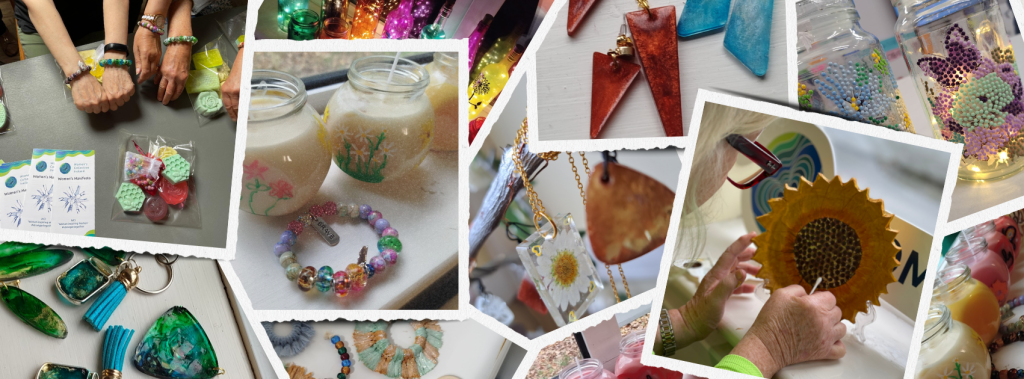
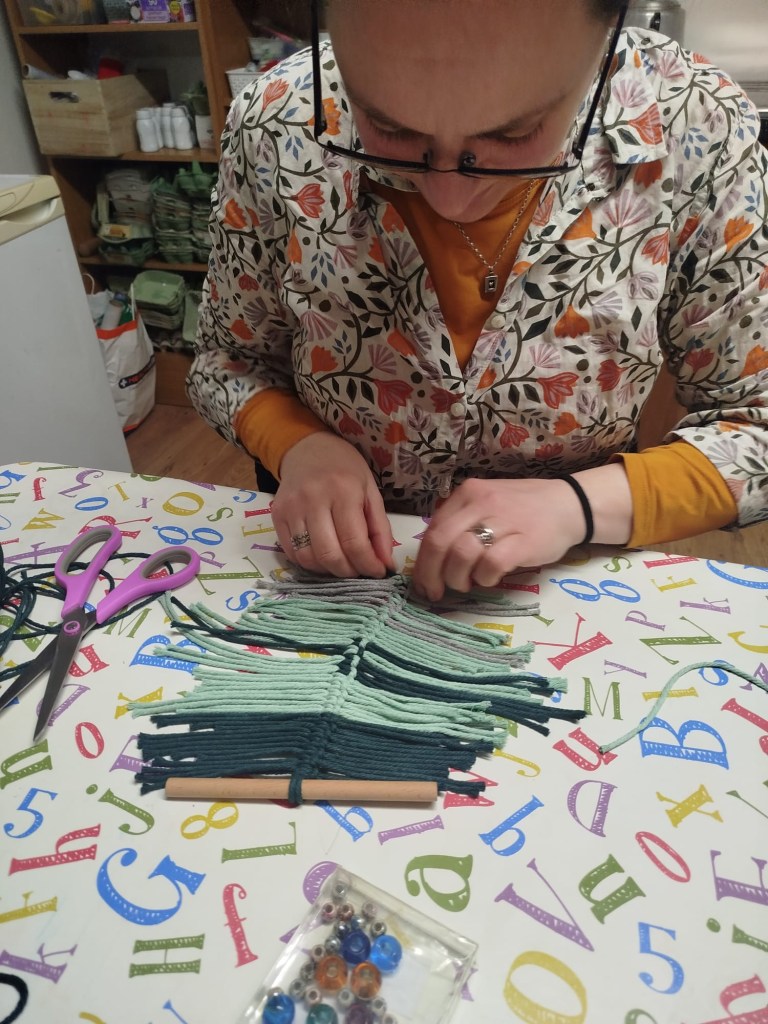
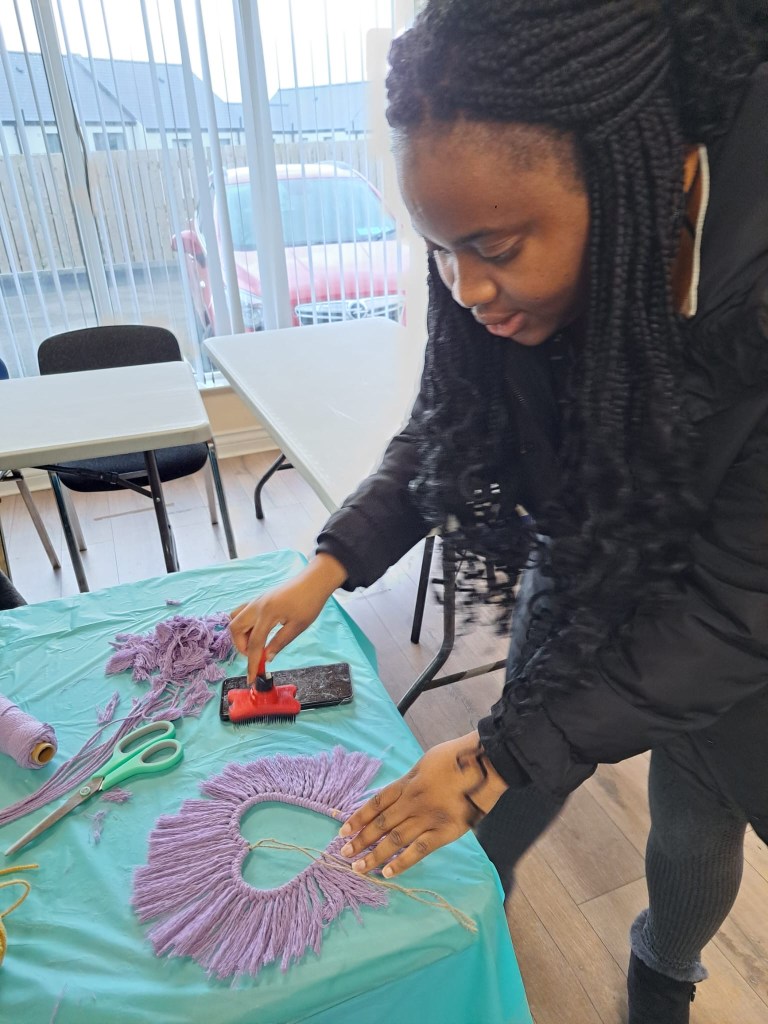
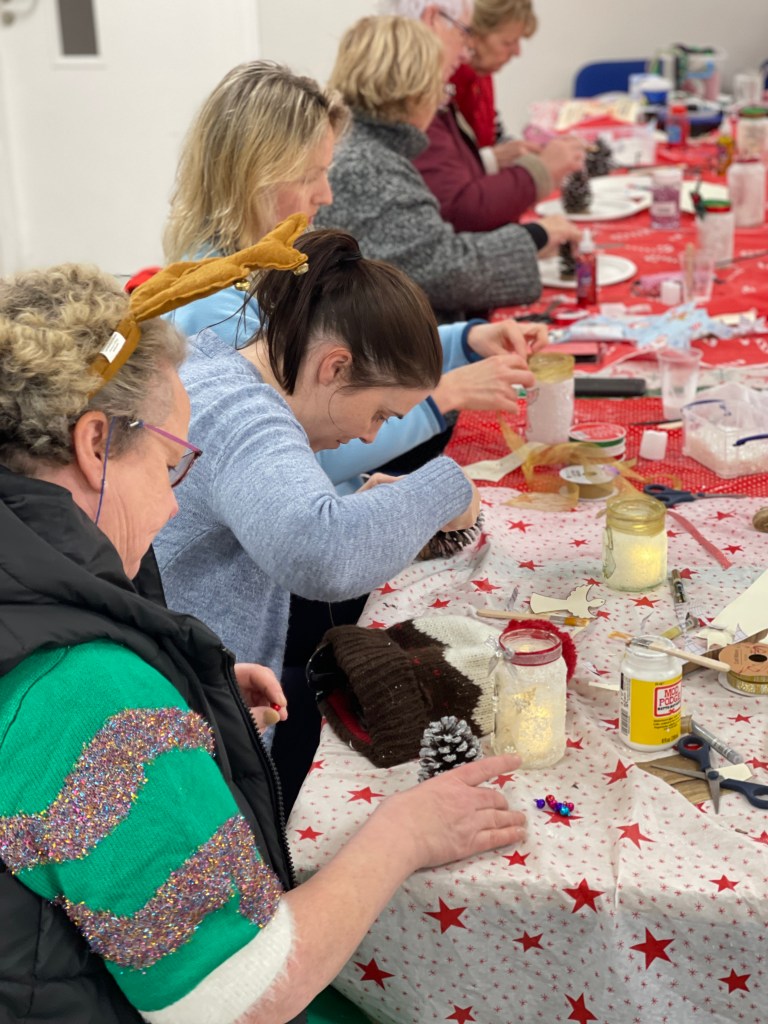
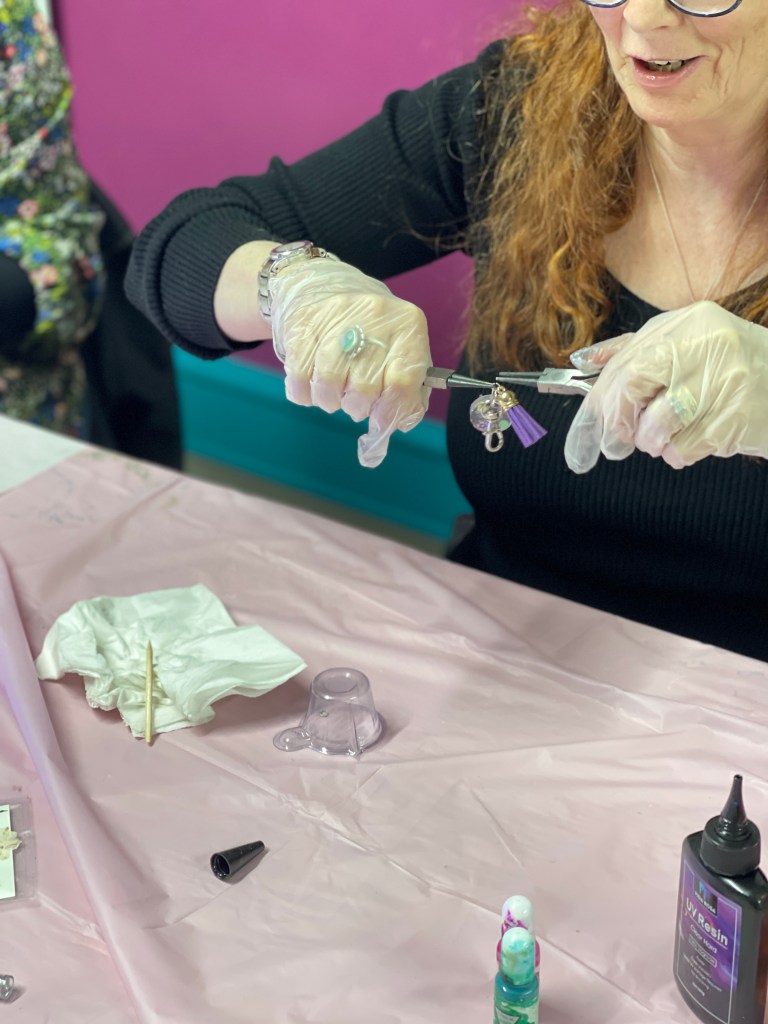
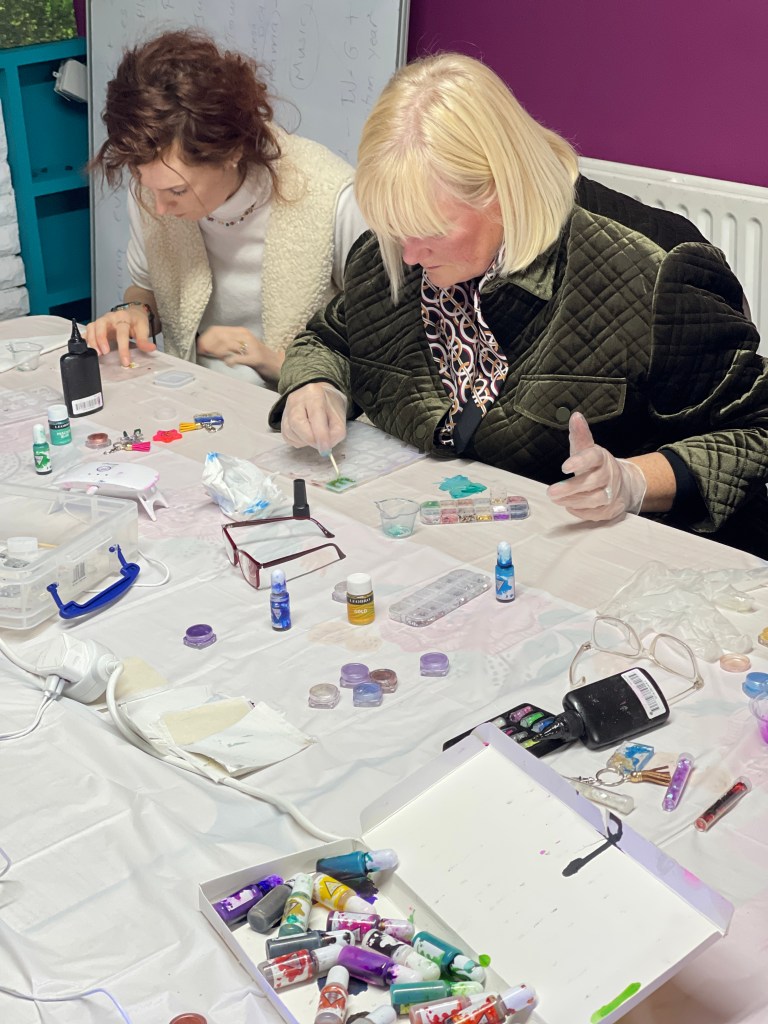
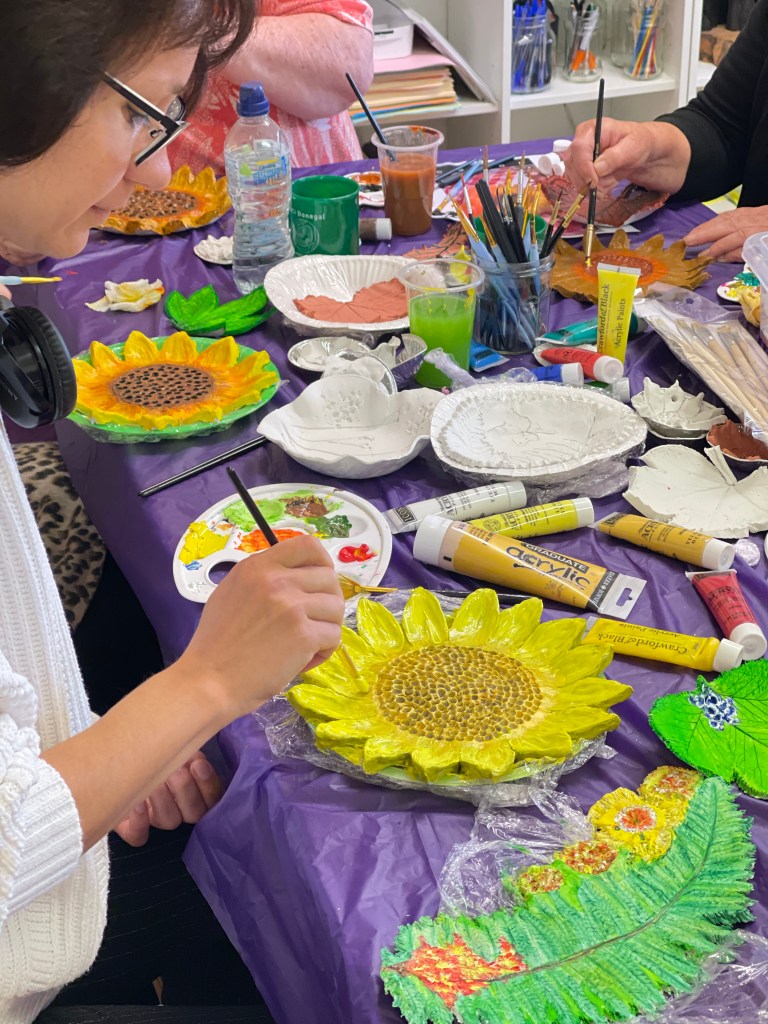
Here at the Women’s Collective Ireland-Donegal we run a variety of crafting programmes from one off classes like jewellery making or soap making to a series of workshops incorporating a variety of crafts. We work throughout Donegal and collaborate with other organisations. One of which is the HSE and their “Connecting for Life” programme, a National strategy to create awareness around suicide by helping to improve mental health and wellbeing in the community.


Through this funding we have been able to offer four creative wellness programmes, in different areas of the county addressing issues around peri-menopause and menopause. Women in this category are at an increased risk of suicidal behaviours especially in areas of social deprivation. The programmes we have run already have been very beneficial to participants, along with a weekly workshop we provided online webinars with a menopause coach who provided expert advice on many aspects associated with peri-menopause/menopause.


Below are some of the feedback from participants who benefited from the programme.

“We are on our lass class and oh my God it has been a beautiful course, talking while crafting was amazing and the bonus, we took home something that we handmade, we were actually like kids coming out of playschool so proud of our crafts.”

“If I had known that the course was crafting, I would not have joined, as I would have felt that I couldn’t do it, but anyone can do crafting and I did find the course very relaxing”

“I have thoroughly enjoyed the past 8-week course. The crafting provided a lovey distraction when talking about the menopause.”

Tap into your crafty side with Women’s Collective Ireland-Donegal

Crafting is not only fun and rewarding, but it also offers a wide array of benefits for your mental, emotional, and physical health. Whether you’re picking up a new hobby or returning to an old one, crafting provides a fulfilling, therapeutic outlet for creativity, mindfulness, and self-expression. We know we have done our job if at the end of each workshop women leave with a sense of pride at the amazing things that they created and with the added confidence to try different skills.


WCI-Donegal are always looking for women to share their stories and looking for women to write features on topics of their choice which we will profile as part of our Women’s Lives, Women’s Voices’ series.

Writing for Wellbeing


This Women’s Collective Ireland-Donegal, ‘Women’s Lives, Women’s Voices’ feature is written by Siobhán Mc Laughlin. Siobhán is a poet and writer from Donegal, she has a MA in creative writing and is a creative writing facilitator who has been facilitating writing for wellbeing courses with women for WCI-Donegal this year. In this feature she reflects on the benefits of writing for wellbeing, talking about her own experience of writing and what she has discovered along the way


Writing for Wellbeing is a relatively new practice in the wellness field, but as anyone who writes knows, writing has always had therapeutic benefits. It’s just now they are being recognised.

If you’ve kept a diary at any stage in your life, you will be very familiar with this. A diary during those teenage angst years was a great way to vent all your turbulent feelings, from daily dramas to heartbreak crushes. Those pages of gushing would provide comfort and consolation, a listening ear, a way of uncorking all those bottled-up emotions. (And there was a reason why they used to come with a lock and key!)

Writing is a way to clarify thoughts, to unravel the jumble of them into clear concise visible ideas. Do you keep a to-do list? The power of such a simple thing to keep your head clear of worrying about things is very evident. When it’s written down, it’s out of your head and onto the paper. Like a magic spell, the words hold it there; it is no longer your mind’s job to do so. It can let go and relax.


To write something – to put your thoughts into words and onto paper – provides you with the space to listen to your own voice. Your real voice. Your inner voice. The one that is so often quieted, by other louder insistent voices in your life. To put pen to paper is to silence those other voices and like turning a radio dial, to tune into yourself again. Journalling is keeping a record of the story of your life, as told by you. And stories help make sense of things.

I’ve been writing since I was a child. Diary writing, story writing, letter writing, poems, blogs.  I loved the escapism of creative writing and later, the hyper-realism: how you can lose yourself in writing and simultaneously, find yourself there. Writing helps me work things out. It dissects emotions and feelings under the light of attention. It helps me unravel knots of thoughts and find out what I really am thinking/feeling. I would be lost without it.


I kept a diary/journal into my twenties and into it poured all my worries and wonderings, rantings and musings.  It was a catalogue of growing up, a space for reflection, and with reflection comes self-knowledge. It was where I examined with each word and sentence what exactly was going on in my life and what my responses to it were. It was a way to commune with my true self. When writing about things, I felt like I was making them ‘right.’ Telling myself the story of my life was a way to appreciate it as such and to look at it from a more knowledgeable perspective. Looking back on that time I can really say it was an invaluable practice.

Writing is a great way to express feelings. To get them ‘off your chest’ and out onto the page. There’s a great word for this from Greek called ‘catharsis’ – the act of releasing pent-up or repressed emotions. When you write about these feelings, they leave you. They are expressed. This is essential to our wellbeing. Therapists recommend it all the time. To write about how you are feeling acknowledges the feeling and puts you at a distance from it. In writing about it, you can translate and transform it, until you gain a sense of peace and move on from it.


Poetry is an excellent way of doing this.  Poetry allows us to decode emotions, explaining them to ourselves through its tools of symbolism, metaphor, imagery.  If I can contain an emotion within a poem, then it is stored somewhere else other than my psyche. The power of poetry to translate emotions is incomparable, I think. It is: ‘when an emotion has found its thought, and the thought has found words’ (to quote Robert Frost). I always think of emotions as these vaporous, glowing entities, hard to grasp as they slip and shimmy about us. But poetry helps solidify them, catch them with a net and shine a light on them. What is this thing and how am I experiencing it and what does it have to teach me? Writing a poem is a journey and always at the end of it, there is understanding to be found, which offers the greatest sense of wellbeing. It’s my go-to method of dealing with strong emotions.

Did you know that writing about positive experiences for as little as 15 minutes three times a week can significantly boost feelings of wellbeing and reduce stress and anxiety? You can write a daily diary entry, or a journal topic or perhaps some little scribbled notes of a poem or an idea for a story. Or gratitude journalling – just jotting down three things you are grateful for at the end of every day. Within a year you will have hundreds of little footnotes of joy. Things we may forget completely if they are not immortalised in words. Writing gives power to things. You are creating a world for yourself with words. A better world that will improve your mindset.


Writing is also an exercise in mindfulness. As I type this article I am lulled by the rhythmic tapping of keys and the timbre of thoughts. It is the same when you handwrite something, the pen carries you along in the moment. The blank page quietens the mind. It focuses you on the moment, on each word as it comes. Writing attunes us to the present moment and keeps our minds from wandering.

I really began to think about the wellbeing aspects of writing during Covid. During the lockdown I set up a Facebook group for friends and writers I knew to come together where we could share daily writing as a way of easing the stress of the time. Something quick and easy, like haiku. A haiku is a short three-line nature-based poem, rooted in paying attention to the present moment. From all over the world, members would post in their daily offerings of haiku, usually more than one in the day. We were suddenly, collectively, paying attention to moments of peace and beauty in our lives, despite the strange, unsettling time we were living in, and these little moments became so important to us. They were a comfort, a calm, a nucleus of loveliness. Three little lines of uplifting observation. The group is still going today. We haven’t been able to give it up! Just spending a few minutes in the day to scribble a couple of lines lifts the spirits so much and shifts mood. This is the power of writing.


In 2022-2023 I facilitated a weekly series of Writing for Wellbeing workshops at Foyle New Horizons: Action Mental Health in Derry. I got to meet so many wonderful people there who were so open to the benefits of writing in their wellness journey. I facilitate a lot of writing classes and workshops, but I find Writing for Wellbeing ones really inspiring. I welcome every chance to facilitate them and share the benefits of writing with people and have been lucky to do so in the past few years with groups like Insight Inishowen to promote positive mental health. People tend to open up and share their innermost thoughts and feelings with each other in these workshops which is truly inspiring. All of the creative arts are so beneficial for wellbeing, but writing in particular is quite a powerful one in bringing us face to face with a better understanding of ourselves and of the human condition.

It makes me sad to think that some people may have a resistance to writing because of things like grammar and a feeling that they would not be able for it. There is no right and wrong when it comes to writing. It is not a test. You write what you want to write. What calls your heart. In whatever form it may be. Don’t be put off by things like grammar and rules. Break the rules! Poetry doesn’t have to rhyme! Journal entries don’t have to be pages long! Don’t tell yourself you have nothing to write about. We all have our own stories. Don’t silence them. Writing, unlike some of the other creative arts, costs nothing in terms of material needs. All you need is a pen and paper. You do not need an easel to begin or a set of fancy pens or a predisposed talent. Just begin with scribbles. See where they take you.


Writing will surprise you. That is a guarantee. Every time you put pen to paper, you are led on a journey. You will discover reservoirs of insight and wisdom you didn’t know you had; a lot of writing feels like you are taking ‘dictation’ – listening to some other source, and not writing it yourself. Any writer will tell you this is the best part of writing. Like free-falling. The part when we transcend our blocks and critical hang-ups and tune in to our authentic, wise, and inner selves. And it just flows.  

Julia Cameron, author of The Artist’s Way said that ‘writing is medicine.’ It makes us better. It cures us of our ailments. It is a companion to life’s changes. It is certainly all that. And a welcome addition to the world of wellbeing.


Siobhán’s poems have been published in numerous publications including The Honest Ulsterman, The Ekphrastic Review, Drawn to the Light Press, The Poetry Village and more. She featured on Donegal Daily’s We are the Poets Series 2020 and Eat the Storms, TER and Absolute Writers Podcasts. She volunteers with mental health charity Insight Inishowen.

She blogs at www.a-blog-of-ones-own.blogspot.com and www.a-poem-a-day-project.blogspot.com


WCI-Donegal are always looking for women to share their stories and looking for women to write features on topics of their choice which we will profile as part of our Women’s Lives, Women’s Voices’ series.