Tag Archive | DOMESTIC ABUSE

Hope Beyond Violence-Creating Safer Communities for Women

In this women’s lives, women’s voices feature, we will delve into the issue of domestic violence and look at the rise of femicide in Ireland, which is not defined in Irish law. Femicide is a growing social issue in our society and we need to create awareness around it and start calling it what it is, the gendered murder of women or girls.  Written by WCI-Donegal Development Worker Rhona Hannigan


Domestic violence, sometimes referred to as domestic abuse or intimate partner violence, is a serious and pervasive issue in Ireland, affecting individuals across all ages, genders, and backgrounds. It involves patterns of coercive, controlling, threatening, degrading, or violent behaviour which may include physical, emotional, sexual, and financial abuse, typically by a partner, ex-partner, or family member.

In Ireland, domestic violence has historically been a hidden problem, often shrouded in stigma and silence. However, increased public awareness, changes in legislation, and the work of advocacy organisations have brought the issue into greater focus over recent decades.


Women represent the most recorded victims in Ireland. Almost a third of all women have experienced physical and, or sexual violence by their intimate partner. According to data from Women’s Aid and the Central Statistics Office (CSO), thousands of cases are reported annually, however the majority of incidents remain unreported due to fear, shame, or lack of trust in authorities.

According to Safe Ireland:

“In Ireland, 1 in 3 women have experienced psychological violence from a partner at some point in their lives and 1 in 6 have experienced physical or sexual violence by a partner since the age of 15.


According to the United Nations, in 2023, there were approximately 51,100 women and girls murdered worldwide by their intimate partners or other family members. This means that, on average, 140 women or girls are killed every day by someone close to them. This is the ultimate and extreme culmination of continued acts of violence against victims.

Femicide represents the dramatic end-point on a spectrum of violence against women. Femicide is driven by discrimination against women and girls, unequal power relations, gender stereotypes or harmful social norms. It is the most extreme and brutal manifestation of violence against women and girls which occurs on a continuum of multiple and related forms of violence, at home, in workplaces, schools or public spaces. Which includes intimate partner violence, sexual harassment and other forms of sexual violence, harmful practices and trafficking. As many as 38% of all murders of women are committed by intimate partners, according to the World Health Organisation.


From a statistical perspective, it is difficult to define numbers of femicide in Ireland as there is no working definition. The European Institute for Gender Equality (EIGE) defines femicide as ‘killing of a woman by an intimate partner and the death of a woman as a consequence of a practice that is harmful to women”. It is understood that an intimate partner can be a former or current spouse or partner, whether or not the
perpetrator shares or has shared the same residence with the victim’.

In a joint report by UNODC and UN Women in 2023, more women and girls were killed in 2022 even as overall homicide numbers fall. The research recorded that 89,000 women and girls were intentionally killed globally in 2022, the highest rate in twenty years. The true numbers are likely to be much higher as records only relate to intimate partner killings. Murders of women that occur as a result of rape, sexual violence, honor killings or female genital mutilation are recorded as murders and therefore are not attributed to femicide.


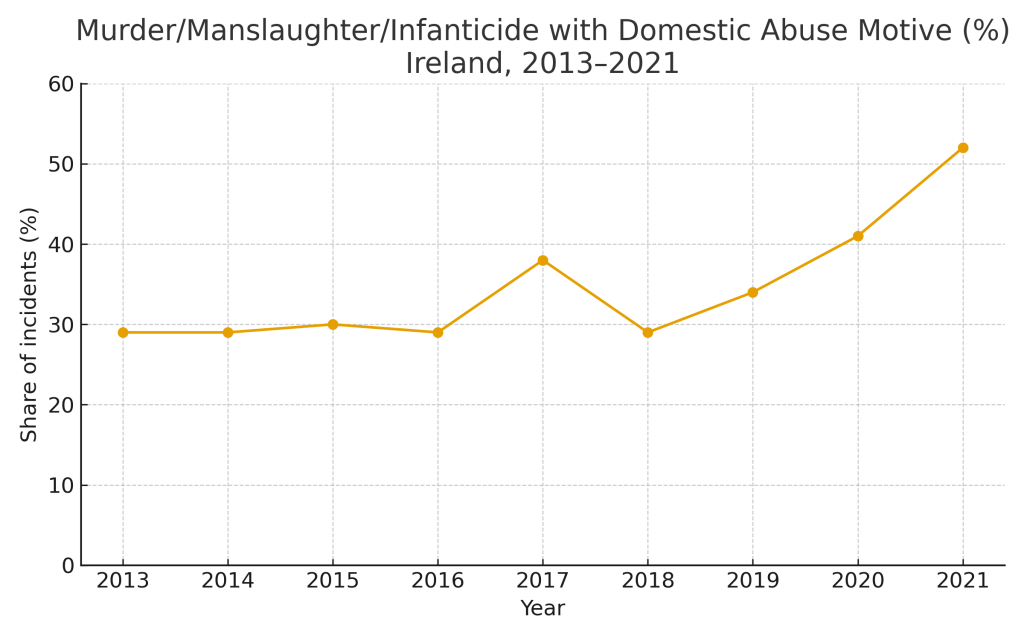
In a Garda report, “Domestic, Sexual and Gender Based Violence”, released in 2022, males and females experience violent crimes differently. In the case of female victims there is a close link with domestic abuse and sexual violence crimes. Between 2019 and 2021 a motive attributed to domestic abuse was recorded for 90% of women who were victims of Murder or manslaughter. Whilst Male victims also experience domestic abuse, they are more likely to be subject to violence by offenders unknown to them or in incidents not relating to domestic abuse.


The graph below by An Garda Síochána shows the annual number of Murder/Manslaughter/ Infanticides incidents between (2013–2021)

Domestic violence remains a critical issue in Irish society, requiring ongoing awareness, prevention, and support efforts. While legal reforms and advocacy have made progress, continued work is needed to ensure that all victims feel safe to come forward, receive protection, and rebuild their lives free from abuse.

Building Community Solidarity

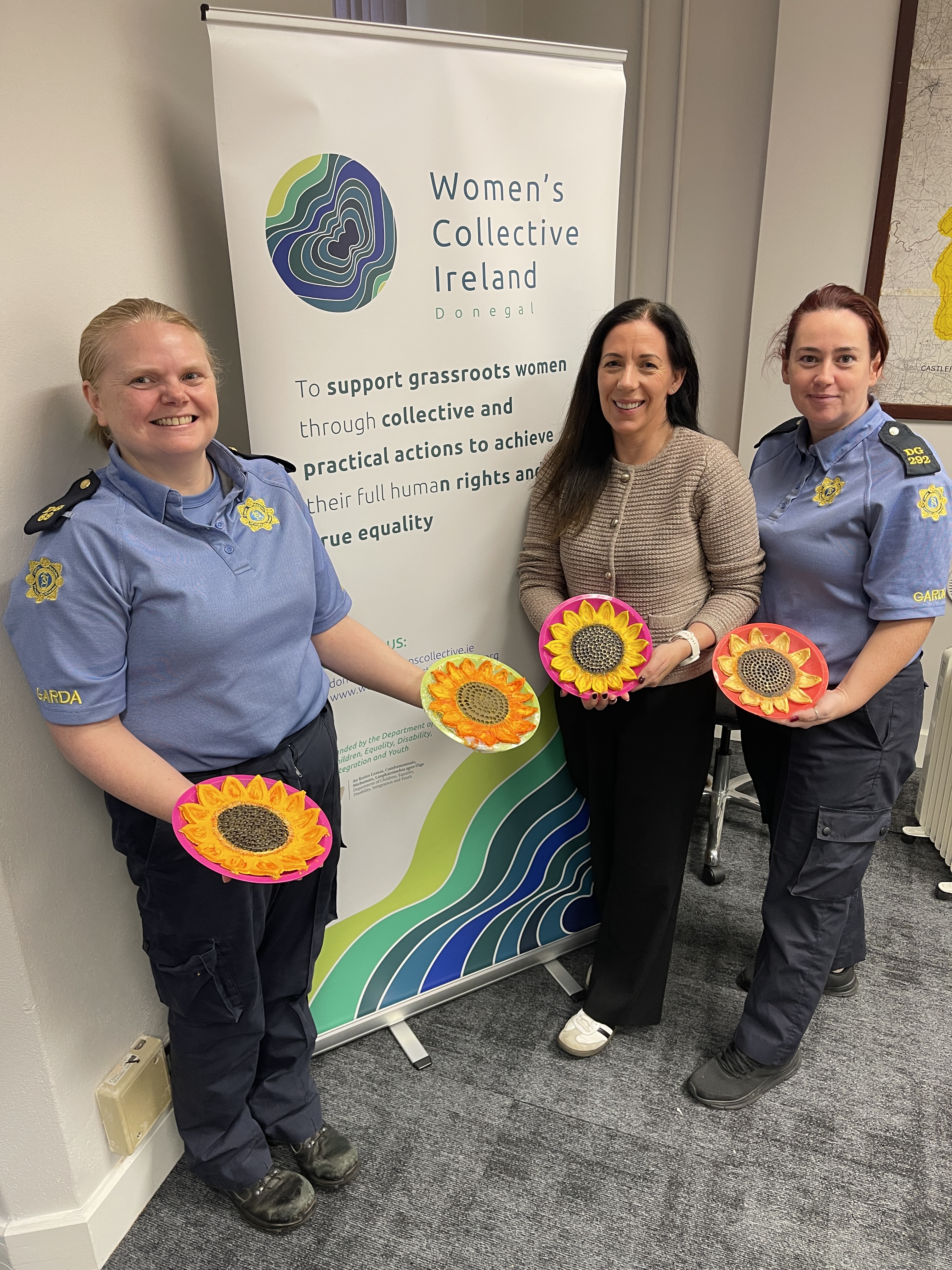
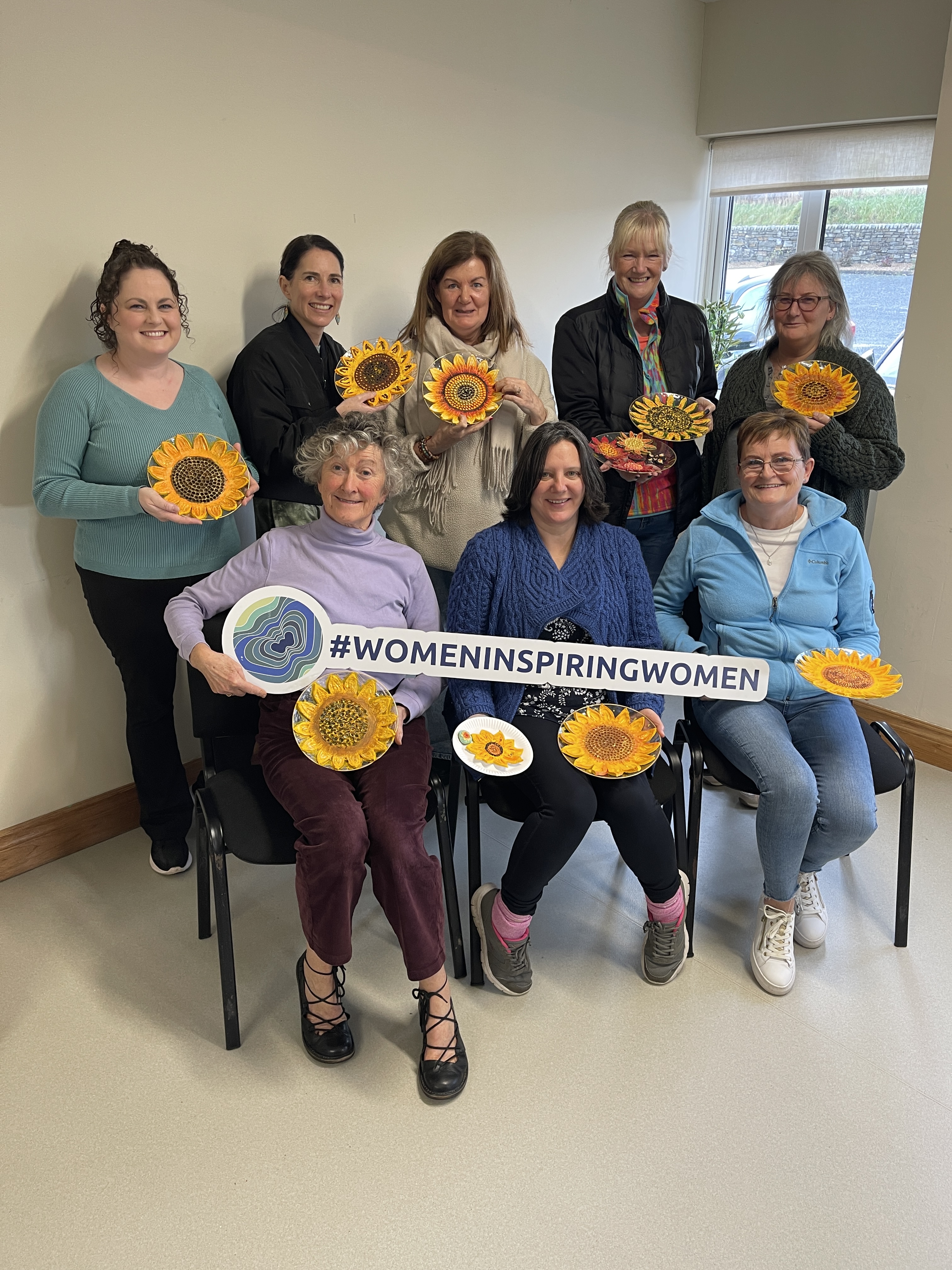
Between October and November 2025, Women’s Collective Ireland–Donegal worked with different groups in Donegal. These included the Early Birds Pettigo Women’s Group, Donegal Town Crafting for Connection Group, Rossnakill Community Hub, AIB staff from Donegal Town, Killybegs, Ballyshannon and Ballybofey, members of An Garda Síochána Donegal, and the ATU Donegal Empower Her Society.

The project highlights the reality that 1 in 3 women experience gender-based violence. It aims to remind women that they are not alone, that support is available, and that communities have a role to play in challenging violence and creating a safer future for women and girls.

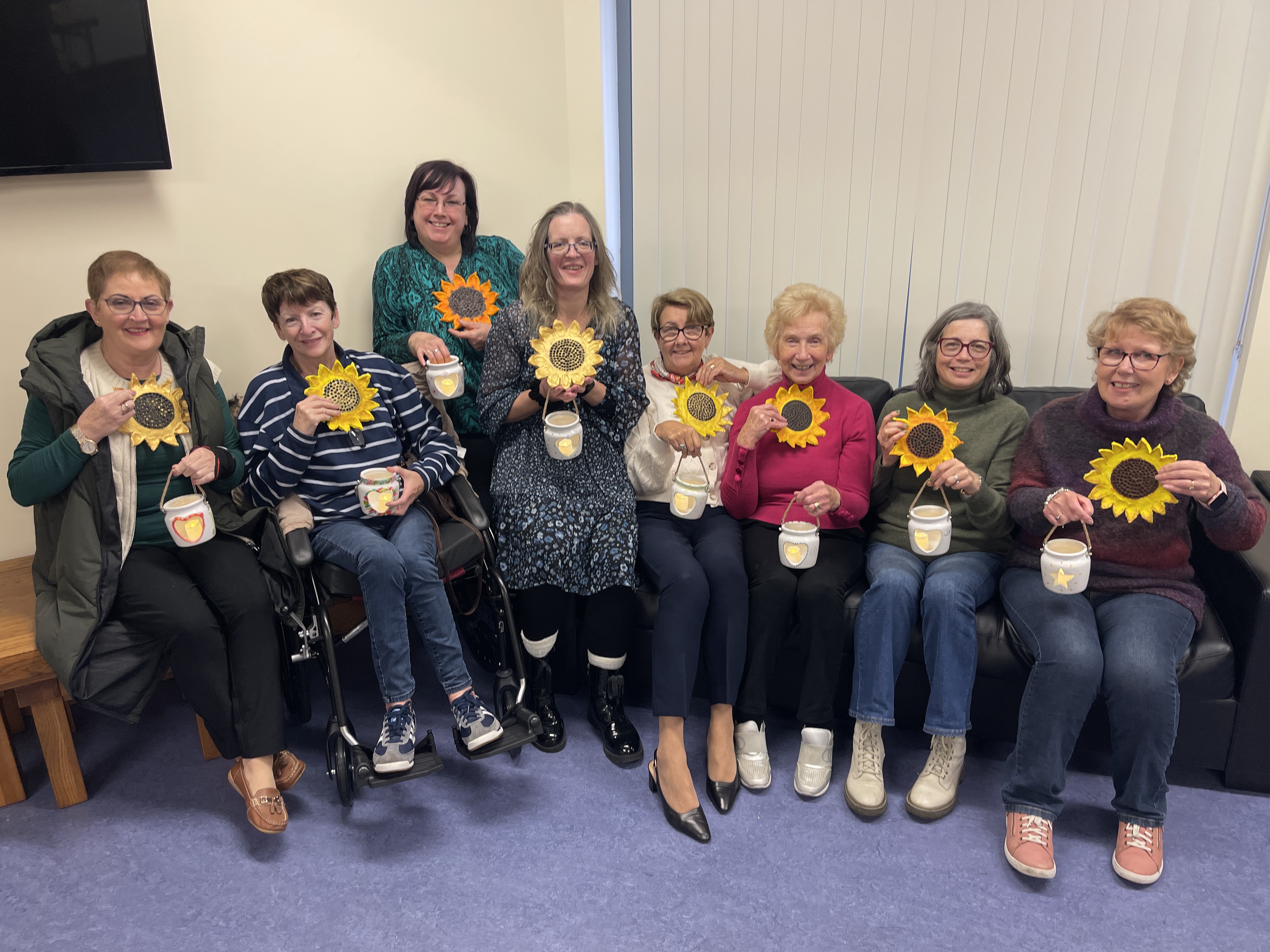
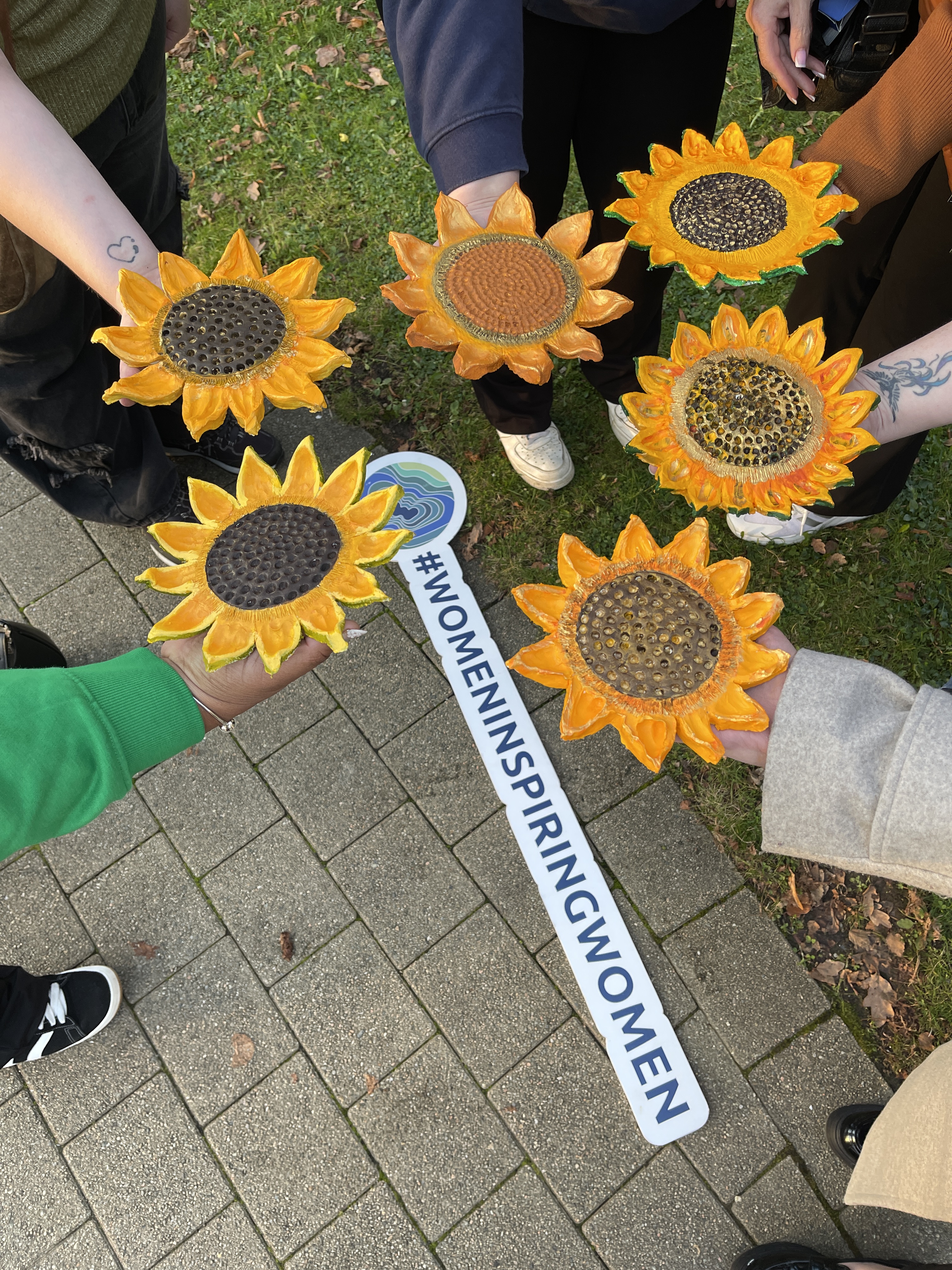
Each group created handcrafted clay sunflowers under the motto:

“Be like a sunflower, so that even on the darkest days you stand tall and find the sunlight.”

The sunflowers were first displayed at the 2025 Donegal Rape Crisis Centre Art Exhibition in Letterkenny. The exhibition theme was “Hope – Where the Light Enters. Together we rise, together we heal” and took place as part of the 16 Days of Activism, creating a supportive space for survivors and promoting community solidarity.

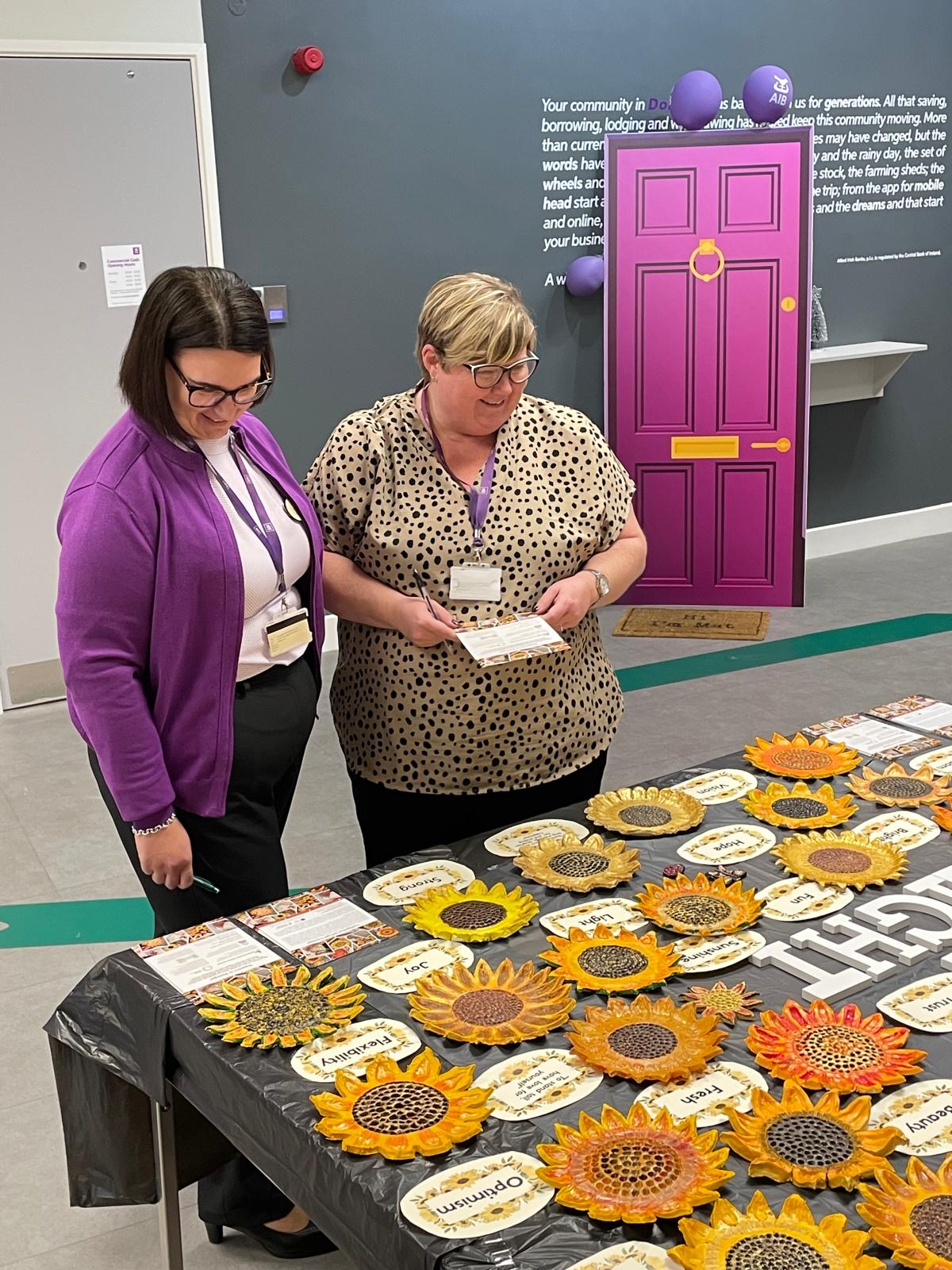
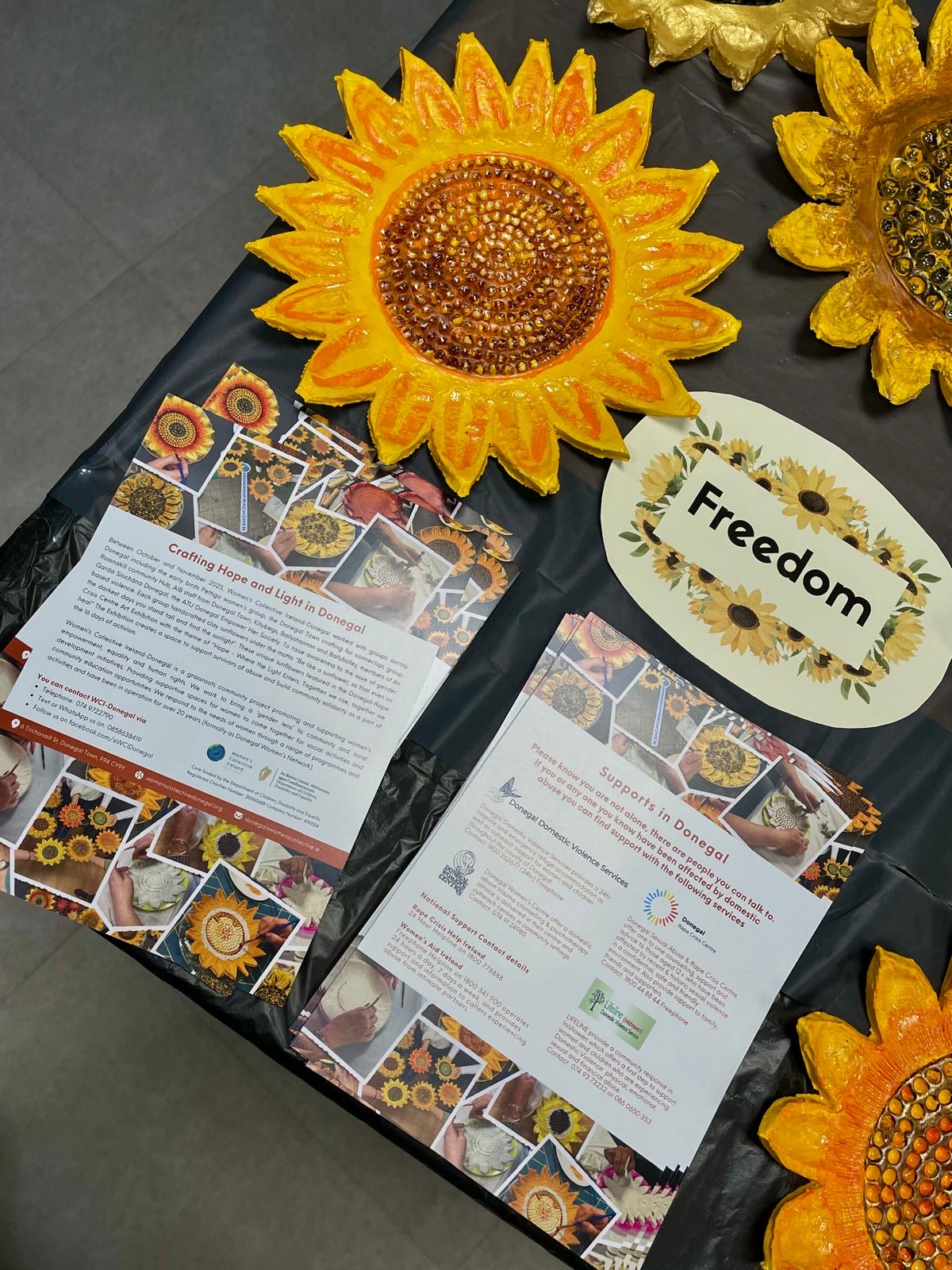
The collection, made up of over 40 unique handmade clay sunflowers, is now on display at the AIB branch in Donegal Town over the Christmas period until the New Year. Each sunflower represents hope, light and solidarity, and carries messages of encouragement for women who have experienced gender-based violence. Members of the public are encouraged to visit the display while in Donegal Town. The AIB branch is open Monday to Friday, 10am to 4pm, and is closed on bank holidays.
Supports in Donegal

Please know you are not alone, there are people you can talk to. If you or any one you know have been affected by domestic abuse you can find support with the following services;

If you or someone you know is a victim of domestic abuse, please contact 999/112 or your local An Garda Síochána Donegal Station.

Donegal Domestic Violence Services – DDVS provides a 24hr helpline and emergency refuge accommodation as well as outreach support for women and children throughout the county of Donegal. Contact: 1800 262677 (24hr) Freephone

Donegal-Rape Crisis Centre offer one to one counselling, support and advice to those aged 12+ who have been affected by recent & historic sexual violence in a confidential, safe and friendly environment. Also provide support to family, friends and supporters. Contact: 1800 44 88 44 Freephone

Donegal Women’s Centre offer a domestic abuse trauma counselling & psychotherapy service is delivered in their centre and outreach centres in community settings. Contact: 074 91 24985

Lifeline Inishowen provides a community response in Inishowen which offers a first step to support women and children who are experiencing Domestic Violence: physical, emotional, sexual and financial abuse. Contact: 074 93 73232 or 086 0650 353

National Support Contact details

Dublin Rape Crisis Centre (Rape Crisis Help Ireland): 24 Hour Helpline on 1800 778888

Women’s Aid Ireland: Freephone Helpline on 1800 341 900 operates 24 hours a day, 7 days a week, and provides support and information to callers experiencing abuse from intimate partners.

References

Measuring femicide in Ireland

Five essential facts to know about femicide

Research from UNODC and UN Women

Femicide in Ireland 2012-2023

FUNDAMENTAL RIGHTS REPORT –2025

Why doesn’t she just leave him?

In this Women’s Live’s, Women’s Voice’ feature in support of the 16 days of action campaign  Donegal local Jenna talks about the issue of domestic abuse, highlighting why it’s so important to understand the realities of victims and survivors.


Did you know Ireland is currently taking part in the annual International campaign known as the 16 Days of Action? This internationally recognised campaign runs from 25th November (UN Day For the Elimination of Violence against Women) to 10th December 2020 (International Human Rights Day). It is a campaign used to highlight the issue of gender based violence and an organising strategy by individuals and organisations around the world to call for the prevention and elimination of violence against women and girls. (UN Women)

Gender-Based Violence refers to “violence that is directed against a person on the basis of gender or sex and includes acts that inflict physical, mental or sexual harm or suffering, threats of such acts, coercion and other denials of freedom” (cosc.ie)

And while both men and women can experience gender based violence the reality however remains that in 2020 it is women and girls who are disproportionately affected by this violence. With 1 in 4 women in Ireland having experienced domestic abuse by a current or former partner. (Women’s Aid)


Why doesn’t she just leave him?

By nature people are quick to form judgments. Have you ever sat just drinking a coffee and watching strangers pass by as you contemplate what kind of people they may be? I think it’s normal for us to create stories in our minds now and again about the lives of others and the characteristics they may possess.

Or maybe you can think of a time when you have read or watched a news story on television and had speculated about those involved and how they might have found themselves in a certain situation.

We take in what we can see in front of us and somehow our brains begin to connect the dots and form opinions about people. Maybe in some cases we judge correctly but in others we are just guessing without any real depth of knowledge.

Perhaps it is something we can teach ourselves to refrain from doing. Maybe sometimes we need to take a step back and really truly think about the person we are making the assumptions about.

“Before you judge my life, my past or my character, walk in my shoes, walk the path I have travelled, live my sorrow, my doubts, my fear, my pain and my laughter” – Unknown

After my sister’s death last year I learned a lot of life lessons that I’d never imagined I would have to. I had to face things that I would never have dreamed could have happened to our family. I definitely learned that we don’t know what is going on in other people’s lives and the difficulties they face.

Since Jasmine died I think that people feel as though they can talk to me about their own problems more so than a person who hasn’t experienced this tragedy. Through this difficult journey I have had several women talk to me about their past experiences with domestic violence or the current situation that they are in.

I truly don’t think that enough people are aware of the extent of people who are having to deal with gender based violence in their lives. So many of the victims who I have spoken to are probably the women who society would ‘never expect’ would find themselves in a situation like that. But unfortunately this type of violence is happening more than we think.

Why doesn’t she just leave him? A question that has probably been asked a million times. Maybe to some people this is a logical question. Just walk away. Simple? Every million times this question is asked there are another million responses as to why this question isn’t in fact helpful or logical.

When I was asked to take part in 16 Days of Activism against Gender Based Violence I knew that I had to take this opportunity to share some of the reasons that the women I have spoken to share with me.

One of the reasons that came up over and over again was because of the children.

“A mother will do almost anything to protect her child and I stayed because I didn’t know what could happen if I tried to leave.” – Lady 1

“I felt as though I was trapped and if I moved then my children would be in danger” – Lady 2

Another reason that we discussed was the guilt that the victim is made to feel.

“I stayed with him because he said he was going to kill himself and it would be all my fault ” – Lady 3

This type of threat was also used against a victim but while adding the extra danger by involving the child. “I stayed with him because he threatened to kill himself or run away with our daughter if I left” – Lady 4

Other reasons why these women stayed included an immense sense of fear. A feeling of shame about the situation they are in and also financial constraints. If they left, where would they go, how could they leave without the money to escape.

But all of the victims I spoke to did express something that it is so important, that gender based violence becomes something that people are more aware of. That questions and judgmental statements aren’t helpful in preventing it from happening. Awareness is key and in order to help these people we must understand that everything isn’t always black and white and there are so many factors involved in these extremely dangerous circumstances.

So why doesn’t she just leave him? It’s most definitely not that simple.


Please know you are not alone, there are people you can talk to. If you or any one you know have been effected by domestic abuse you can find support with the following services;

Local county wide support in Donegal 

Donegal Women’s Domestic Violence Service is a frontline service providing crisis accommodation, 24 hr helpline, support (1800262677) and information and outreach service throughout the County to women and their children who are victims of domestic violence.

Donegal Women’s Centre operate a domestic violence counselling service delivered in the Donegal Women’s Centre with outreach centres in, Killybegs, Ballyshannon, Falcarragh, Dungloe and Carndonagh. Call 074 91 24985 for appointment or more information


National support in Ireland

Women’s Aid Ireland Freephone Helpline (1800 341 900) operates 24 hours a day, 7 days a week, and provides support and information to callers experiencing abuse from intimate partners.

Safe Ireland You can find a list of County services across Ireland here.

Men’s Aid Ireland is a service for men who are experiencing domestic violence. You can call them on 01 554 3811or email hello@mensaid.ie.
Their helpline is open Monday to Friday, from 9am to 5pm.

The National Office for Victims of Abuse provides assistance, support and advice for people in abusive relationships. Freephone 1800 252 524.

Anyone who may wish to report or discuss an incident of Domestic or Sexual Violence can contact 112/999 or their local Garda Station.


NCCWN Donegal are always looking for women to share their stories and looking for women to write features on topics of their choice which we will profile as part of our Women’s Lives, Women’s Voices’ series.

Breaking the Silence

SA Cover (2)

There are various forms of violence committed against women and one of the most prevalent is sexual violence.

By definition sexual violence means any non-consented act or activity imposed upon a person. The violence itself can take various forms “including but not restricted to: rape, sexual assault, child sexual abuse, sexual harassment, rape within marriage/relationships, forced marriage, so-called honour-based violence, female genital mutilation, trafficking, sexual exploitation, and ritual abuse.” (Rape Crisis Organisation)

Sexual violence never seems to be an easy topic to openly discuss due in part to its sensitive nature, a situation which seems to only feed the crime’s prevalence.

Research in Ireland (SAVI) showed that 42% of women and 28% of men as having experienced some form of sexual abuse or assault in their lifetime (McGee et al, 2002). Further research shows that only around 33% of incidents are reported in Ireland to the police or another formal authority. (Donegal Rape Crisis Centre, 2012) While 90% of sexual violence perpetrators are known to their victim. Such statistics highlight the victim’s insecurity over coming forward and the fact that perpetrators are commonly known to them.

By engaging in an open conversation however we can help break down the negative attitudes and barriers which allow sexual violence to continue and instead start to ensure its prevention.

To help bring awareness to the crime of sexual violence, Inclusion Ireland has produced an information booklet, which holds answers to some of the questions people may be afraid to ask.  While it also provides information of the support available to victims and the actions we can take to report a crime of sexual violence.

SA Cover

Click here  to view and download the information and support booklet

     Remember you are not alone, there are people you can talk to     If you or any one you know have been effected by sexual violence you can find support with Donegal Sexual Abuse & Rape Crisis Centre, call them for free on 1800 44 88 44.

BE INFORMED…About your 2014 Local Election Candidates

b4

Where does your Donegal Local Election Candidate stand on issues relating to Childcare, Cuts to Carers, Domestic Abuse + Violence Against Women, Lesbian, Gay, Bisexual and Transgender (LGBT), Travellers, Women’s Political Representation and Equality within our society?

Early 2014, The National Women’s Collective- Donegal Women’s Network held a number of meetings to hear and collect what are the main issues locally and nationally for women in Donegal. Some of the issues discussed and debated were the lack of women’s representation, lack of local training and employment issues, cuts to home helps and services for the older person and people with disabilities, domestic abuse, lack of transport and accessible affordable community child-care. These meetings were supported by Longford Women’s Manifesto Project.

Following on from these meetings a questionnaire was designed  by The National Women’s Collective- Donegal Women’s Network  and an “Open Invitation” was sent out to the 83 candidates running in the local elections to respond to questions identified  as areas of concern by voters in Donegal.

To-date the responses we have received have been insightful and we are delighted that all of the candidates who responded stated that they would work towards upholding and promoting the ethos of social inclusion, equality and human rights. All agreed that gender equality is a fundamental principle underpinning the concept of social justice, and human and civil rights in Ireland.  All  candidates pledged to sign up to the MAN UP campaign and to undertake a half day workshop on domestic violence in 2014 that would be delivered by Donegal Women’s Domestic Violence Service.

To read your 2014 Local Election Candidates full responses to our questions please click on the candidates picture and you will be taken to their individual response. This we believe will give the electorate an insight into each candidate as well as giving the candidates an open forum which could be helpful in securing votes.


Donegal Electoral Area

   Joseph McN Bernie Mulhern


Glenties Electoral Area

joe mc carron Marie Therese Gallagher


Inishowen Electoral Area

eilis haden Mary McCauley Albert Doherty CiaranMcLaughlin 


Letterkenny Electoral Area 

 sio John Watson gb Jimmy Kavanagh gerry mcm Mick Quinn


Stranorlar Electoral Area

charile Gary Doherty Alan McMenamin  Claudia Kennedy


Still waiting to hear from (as of 15/5/14)

DONEGAL ELECTORAL AREA GLENTIES ELECTORAL AREA INISHOWEN ELECTORAL AREA LETTERKENNY ELECTORAL AREA STRANORLAR ELECTORAL AREA
John Boyle Padraig Doherty Paul Canning Liam Blaney Gerry Crawford
Brendan Byrne Seamus O Domhnaill Rena Donaghey Ciaran Brogan Patrick McGowan
Sean Mc Eniff Hughie McBride Martin McDermott Michael Mc Bride Martin Harley
Michael Naughton Ian Molloy Mickey Doherty Noel Mc Bride Bert Galbraith
Barry O’Neill Enda Bonner John Ryan Ian Mc Garvey Seamus Kee
John Mc Nulty Terence Slowey Bernard McGuinness James Pat Mc Daid Brian McCrea
Patricia McCafferty John Curran Peter McLaughlin John O Donnell Liam Doherty
Laurence McManus Micheal Cholm Mac GiollaEasbuig Martin Farren Tom Crossan Tim Meehan
Jonathan Kennedy Michael Mc Clafferty Joe Murphy Peter Cutliffe
Michael McMahon Brendan Carr Nicholas Crossan Donal Cullen
Noel Jordan Seamus Rodgers Patrick McCarroll David Fisher
John Sheamáis O Fearraigh Ryan Stewart  Charlie McLafferty
Paul Ferguson Paschal Blake
Billy Banda
Dessie Shiels

The BE INFORMED…About your 2014 Local Election Candidates Initiative has been brought to you by the Donegal team at The National Women’s Collective Donegal Women’s Network.

offical logo to use