This ‘Women’s Lives, Women’s Voices’ feature is written by Nasya Mc Jyn. Nasya is a poet and the upcoming new Welfare and Equality Officer at ATU Donegal. Women’s Collective Donegal first met Nasya last year at the Women of the World Seminar in Letterkenny, where she spoke of her experience of being born in Ireland with Nigerian heritage, her love for Donegal after moving to Letterkenny to study law and her passion for poetry.
Hello reader,
My name is Nasya Mc Jyn, and I am an Irish-Nigerian writer from County Louth but based in Donegal. A little bit about myself: I have a law degree and will be the Welfare and Equality Officer at ATU Donegal from the years 2025-2026. I have an obsession with vintage paintings, reading, and I got into writing at the age of 16, and have only really come out with my work in 2024. Which was both scary and exciting for me as a young person.
What got me into the world of literature would have probably been my father if I am being completely honest. He played a HUGE role in why I like reading and writing. When I was younger, I was quite literally forced to tag along and go to the library with my father and my sister; that was our weekly thing, which to me at the time was weekly torture, but alas, it slowly started to grow on me. We would have to choose a book and then we were given a week to read it and every now and then he would ask us what we were reading, what it was about, and what we had learned from it. At the time, it might have been annoying for me, but it has been a habit that I never really grew out of.
I continued reading by myself as I got older, entered every spelling bee as a child, read every required reading in class, and much more. My love for writing started to grow in secondary school when we were put into a position where we had to read something, but it did not just stop there; we had to analyse it, critique it, and think for ourselves. And that was when writing became a possibility for me. Inspired by the likes of Kate Mosse, Maya Angelou, Shakespeare, and Taylor Jenkins Reid, I decided to get on my school laptop and start writing.
The first draft I ever wrote was for my English teacher, and she gave me corrections that to this day I never let go of. I am currently writing a poetry book as well as my first novel, which sounds like mission impossible, but I am getting through it and learning so much as I go. Here I share with you two poems I have written.
The Tree
When I look out my window, I see a tree.
This tree is not a tree that commands attention,
She does not bear any fruit or flowers, but she is many shades of green.
She is tall in height, and her branches expand to a wide length.
And yet she is still a tree I walk past every day, a tree that I don’t notice,
A tree that I don’t bat an eye at,
Then one day, she managed to lure my eyes.
Colours of olive, sage, and forest green adorned the leaves that were attached to the branches that adorned her like clothing would a woman’s body.
The leaves her clothes,
The branches her bones,
The trunk her waist,
The roots, her legs.
At first glance, she blended in with her green counterparts,
Showing no signs of individuality until I fixed my gaze upon her,
And started to notice the radiant beauty of this tree.
Her beauty may be hidden and unnoticeable upon first glance, but upon further looking, she possesses a certain charm.
Vines climb up her body,
Crooked, parallel-shaped lines design her trunk, and leaves of all colours coat her branches like wings.
She stands in the way of the fields behind her,
Taking up as much space as she can so that when you look out the window,
Hers is the first face you see.
She is not a tree that commands attention but rather pleads for it.
When I look out my window, I see a tree, and when she looks through the window, she sees me.
Similar in spirit and yet physically different
When we look out the window, whether it be outside or in,
We see each other.
The Tree: Read by Nasya Mc Jyn at the 2024 Women of the World Seminar in Letterkenny
I Am Changing The Things I Cannot Accept
I’ve been told to accept the things I cannot change,
And have the courage to change things that I can,
But I choose to change the things I cannot accept.
Footprints of all those who chose to change what they could not accept
They are etched onto the ground, lying before me, grueling in nature and yet revolutionary.
The footprints of women who raised their arms to hold posters in protest
Beckoning to the ears of those who had chosen ignorance over equality.
Under the heel of the oppressor is a woman,
Defying the very heel intended to hold her down, and rising with double the strength.
Making her own mark and treads, shaping her own destiny, pushing her own rights
And owning her inheritance.
If not a heel, then a muzzle, used to silence her voice,
Intended to keep her quiet and still her dreams, wants, and desires,
Bring her most brightest of ideas to a halt.
Draining her of her light, bottling it, and shining it onto the opposite counterpart,
Her light, her glory, her right robbed.
But her hope is like a bird with feathers,
Ready to soar at any moment, if given a chance.
Her hope is not reliant on man,
It’s born from the twinkling look in her little one’s eye,
And her response is simply wanting more for her.
It’s born from the need to have her voice be heard regardless of whether she dwells in a world that doesn’t want to hear it.
It’s born from a yearning heart, for a foreign start.
A start which could bring prosperity, love, and joy.
It’s born from the longing to be seen and acknowledged
Considered an equal, considered a counterpart, and considered a worthy rival.
I choose to change the things I cannot accept,
I choose to tear the muzzle from my lips if it means the ends of the earth will hear me,
I choose to shine my light on others, not allowing anyone to steal it from me,
I choose to own the rights which are mine to begin with, and not allow the world to tell me otherwise,
I choose to make my own marks and treads in history, so that those in the future can follow.
Those who choose to change what they deem unacceptable know that their hearts are perfectly aligned.
With women from the past.
I Am Changing The Things I Cannot Accept: Read by Nasya Mc Jyn at the 2024 Women of the World Seminar in Letterkenny
WCI-Donegal are always looking for women to share their stories and looking for women to write features on topics of their choice which we will profile as part of our Women’s Lives, Women’s Voices’ series.
Catherine Culbert HCPC Registered Dietitian, Personal Trainer and Yoga Teacher specialising in sports nutrition and women’s health.
This Women’s Collective Ireland- Donegal, ‘Women’s Lives, Women’s Voices’ feature is written by Rhona Hannigan, Development Worker with the Women’s Collective in Donegal Town and Catherine Culbert HCPC Registered Dietitian who specialises in sports nutrition and women’s health. Highlighting the importance of education on the impact of the menstrual cycle and women in sport.
As many people know I love football and in particular women’s football. Women’s football has come on leaps and bounds but a huge disparity still remains between the men’s and women’s game especially in terms of wages, attendance at matches and funding available to improve structures within women’s football. We often hear the old argument that ” men’s games generate more revenue” and that is partly why men are paid more. However, if the same amount of time and effort had gone into women’s football in the past who knows where we would be today.
Girl’s football is the fastest-growing sport in the country. There are chances for girls to play that have never been available before. It’s only 15 years ago that Stephanie Roche was playing with her local boy’s team because there wasn’t any options for her. Now, there are options at every level from community to elite. The success of the Irish women’s football team in recent years has had a profound effect on the Irish public and especially on many young girls who want to emulate players like Katie McCabe and Denise O’Sullivan. Attendance at women’s football matches is breaking records. Women’s football in Ireland is on a journey with many positive steps implemented already. We have prominent companies like Sky who sponsor the women’s national team, who’s advertising can be seen nationwide, and Cadbury Ireland who have given tremendous support to the growth of women’s grassroots football and have recently launched their ‘The Game is On’ campaign that aims to drive more interest in local clubs, game attendance, volunteering and supporting the game in general.
Despite the fact that many girls and women love football, it’s still a sport that’s overwhelmingly dominated by men. Even with the increased popularity, women face barriers that prevent them from participating. Such barriers may include feeling self-conscious about body image, social stereotyping and harassment or doubts around skill level or perceived lack of skills “because you are a girl”. Football has a male-dominated sports culture and more often than not your role model will be a male footballer, for me there is only one Roy Keane, the only one person iv ever hero worshipped.
All levels of football coaching is male dominated and more female coaches is preferable to bridge the gap. However, thankfully, despite what sex the coaches are they devote crazy hours of their free time coaching so that we have girls football. That said, coaching girls is very different to boys. I’m involved with Derry City FC Women’s Academy, I’m the Child Welfare Officer and also on the coaching staff of the U17’s and U19’s. Derry has an amazing ethos of education off the pitch as well as on the pitch. Head of the academy, Jarleth Canning, thought it prudent that the teams should have a female on the coaching staff as all our coaches are males. As the Welfare Officer one of the areas I thought important to highlight was how women are affected by their mensural cycle when participating in sport. It was shocking speaking to some of the coaching staff, who had never considered the affect periods had on girls and their performance, so after research and recommendations I asked Catherine Culbert to present to the coaches and players on this topic; here is her story.
Some of the “Derry Girls” at the educational talk about menstruation and women in sport.The presentation was organised by Derry City FC Women’s Academy
The importance of education around the menstrual cycle and women in sport
“Menstrual cycles are a completely natural process for most girls and women, yet they are often the elephant in the room for female athletes. Menstrual cycles can be a huge barrier for girls and women continuing to play sport throughout their lifecycle or reaching their full potential in sport. In a recent survey by Youth Trust Sport periods and low confidence were the most common reasons girls gave for not wanting to take part in PE¹. Its important that girls and women feel supported to continue to play sport for as long as possible and to do this, we need to raise awareness and educate athletes, coaches and parents on menstrual cycles for women in sport.
As a female athlete myself, I started my period when I was 12. At that time, I swam competitively for a local swimming club and often felt embarrassed and worried each time I got my period and had to juggle swimming training and competitions. At that time, most of my coaches growing up were men and so I never dreamt of mentioning it to them. Looking back, I wish I felt more supported that having a menstrual cycle was completely normal and perhaps as a young girl given education on how to manage menstrual health around sport and training. Even the provision of period products in the swimming changing rooms would have been an absolute game-changer to help normalise it and for emergencies.
When it comes to menstrual cycles, there is no ‘normal’, as every woman and girls’ body is different. Not all athletes have a regular cycle, due to hormonal imbalances, contraceptives, pregnancy, or menopause, so there is no ‘one size fits all’ advice.
However, most women and girls at some stages are likely to suffer from menstrual cycle symptoms which can impact on their physical performance in sport. Examples include bloating, digestive issues, mood swings, increased hunger, cravings, acne, low confidence, reduced energy, endurance, and strength. Another thing to consider is that bloating, and water retention can significantly impact on body image, especially for young girls which might affect their confidence in sport around this time.
Raising awareness and speaking about menstrual cycles for girls and women in sport can support the management of symptoms as well as encouraging female athletes to seek help if menstrual cycles are a barrier to them playing sport.
The effect of menstrual cycle on sports performance is now being increasingly recognised. Studies show 50-86% of women reported sport-related menstrual problems or that menstruation has affected their participation in training and competition.
The benefits of increasing awareness and education around menstrual cycle and sport includes:
Girls and women supported to continue to play sport for longer
Female athletes supported to reach their full potential
Reduced risk of injury due to better understanding and management of symptoms
More women and girls participating in sport
More positive attitudes towards sport and exercise from girls and women
Less shame and embarrassment
What can clubs and sports teams do to support girls and women with their menstrual cycle
The first place to start is getting buy-in and commitment from coaches to raise awareness of how menstrual cycles can affect female athletes. This can be done by organising a session where all coaches and athletes attend. Nutrition plays a key role in supporting with symptom management around menstrual cycles so a nutrition session that focuses on food and nutrients to support symptoms can be helpful starting point for coaches and athletes.
Coaches also need to normalise menstrual cycles and periods by speaking about them regularly, encouraging athletes to track and understand how their cycle affects them personally. Teams and clubs can also provide period products in changing rooms and provide emergency products in a kit bag for matches/ competitions away to support athletes.
Providing a safe space for female athletes to speak to coaches about barriers such as periods can really support athletes in staying consistent with training ad matches. Not all athletes will want to discuss their period with coaches, especially younger girls but it’s still important to raise awareness and provide education on this area for all.”
WCI-Donegal are always looking for women to share their stories and looking for women to write features on topics of their choice which we will profile as part of our Women’s Lives, Women’s Voices’ series.
This feature is a Women’s Collective Ireland- Donegal, ‘Women’s Lives, Women’s Voices’ feature. Written in celebration of Rural Women’s Day to raise awareness to the role Donegal Women play in agriculture and rural development.With an inspiring afternoon at The Milk Bar with its founder Shannon Porter
Did you know Sunday 15th October 2023 marks International Day of Rural Women? The day was first observed in 2008 to recognises the role of rural women, including indigenous women, in enhancing agricultural and rural development, improving food security and eradicating rural poverty.
It was suggested that October 15 be celebrated as “World Rural Women’s Day,” which is the eve of World Food Day, to highlight rural women’s role in food production and food security. “World Rural Women’s Day” was previously celebrated across the world for more than a decade before it was officially a UN observance. The theme for this day is “Rural Women Cultivating Good Food for All”, which highlights the essential role rural women play in the food system.
At Women’s Collective Ireland-Donegal we felt it was important that we take the opportunity to celebrate the contribution and successes of the women working in agriculture and rural development locally here in Donegal. During the summer WCI-Donegal development worker Rhona Hannigan took a trip to the Milk Bar to interview Donegal local farmer and the Milk Bar founder Shannon Porter to see the great work she is doing in Dairy farming and the business she has created.
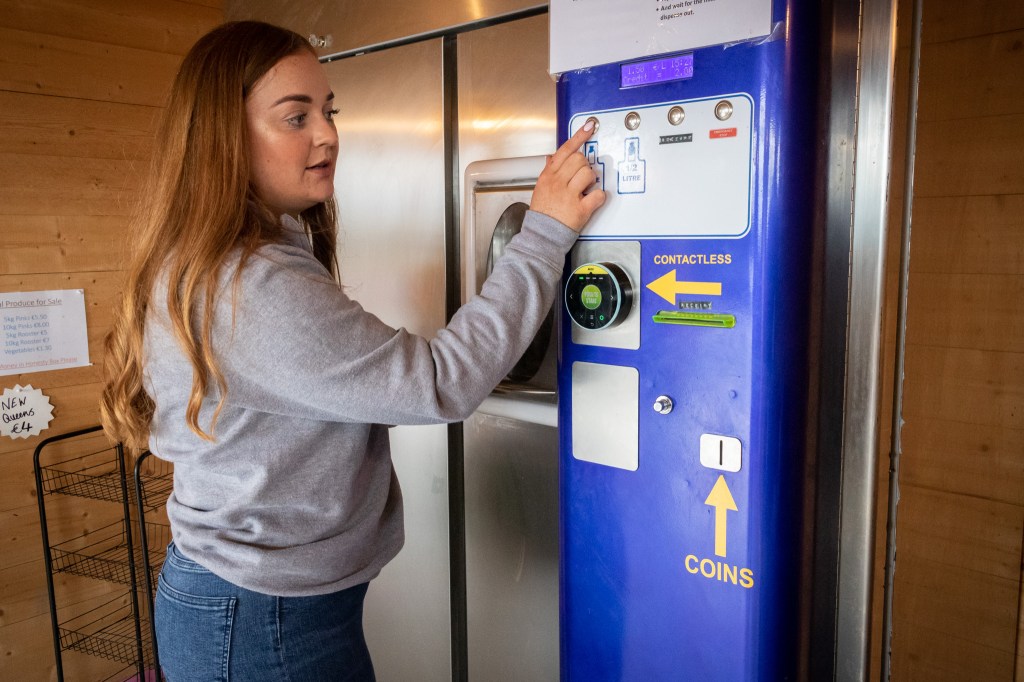
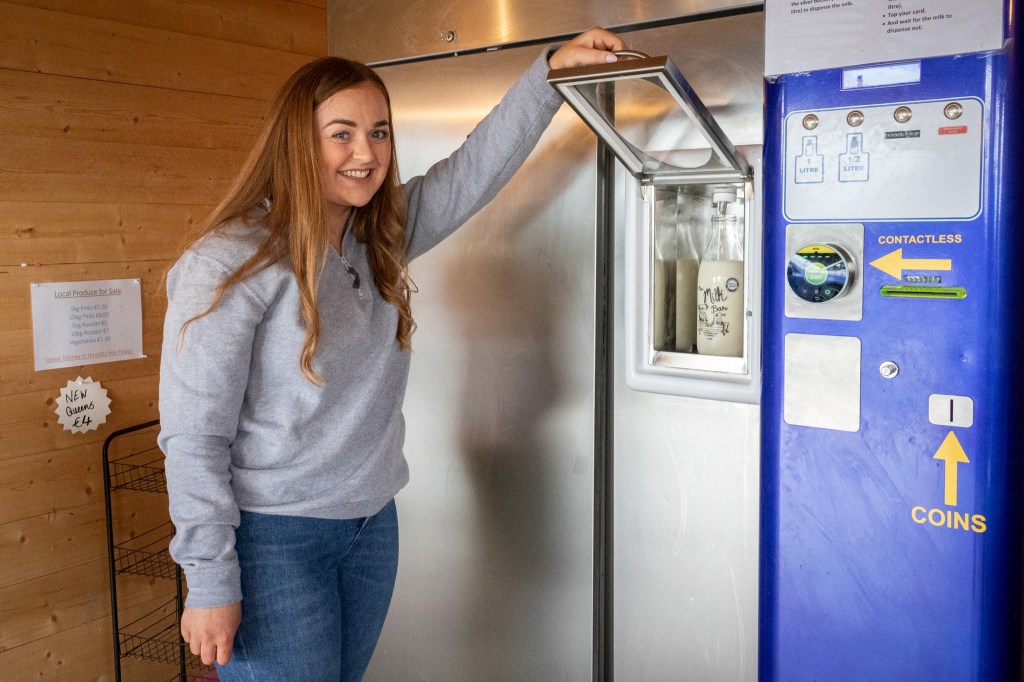
The Milk Bar opened its doors on the 24th of September 2021, an innovative concept of local girl Shannon Porter. Shannon grew up on the family dairy farm in Lusticle, Carrigans in the North West of Donegal. Chatting with Shannon it is evident that she is passionate about dairy farming, she has managed to turn her passion into a thriving business that is going from strength to strength. The Milk Bar is situated on the family farm and uses the freshest milk that is pasteurised on site, but it is not homogenised, leaving the creamy layer on top.
Shannon’s passion for the agriculture sector developed from growing up on a large farm, both her parents come from a farming background and passed on their skills for sustainable farming with an innovative approach. The family business dates back to the 50’s and 60’s when Shannon’s great grandfather Jack and great grandmother Henrietta Porter started to provide milk to the village, known as Millburn Dairies. In those days you collected the milk at the dwelling house in a tin can. Later the milk was delivered in glass bottles to your doorstep. Over time the glass bottles were replaced by milk cartoons and plastic containers. ‘The Milk Bar’ has reverted back to glass bottles with sustainability at the forefront, reducing the use of plastic. Shannon got the idea when she studied Agricultural Science at university, graduating with a BSc Honors Degree in Agriculture from Harper Adams University. She set up the business during covid which was risky, but it proved successful because of the self service vending machines. The milk itself is beautiful, fresh and a novel idea that promotes local produce.
Shannon choose a general agriculture course that covered all areas of agriculture from livestock, crops, business, environment and sustainable farming. While studying Shannon worked on dairy farms of varying sizes to support her studies and to expand her knowledge of the sector. Getting experience from the farm at home, to working in the UK and New Zealand, developing practical farming skills in all areas of agriculture. Shannon’s talents were recognised at University when she was a finalist for the Royal Association of British Dairy Farmers Dairy Student Award 2021. She was runner up in 2022 in the Food Coast Donegal Awards and a finalist in Blas na hEireann Irish Food Awards in 2023 for her milk and ice-cream. A growing number of local businesses are selling and using the milk now. Its freshness and creaminess makes a hugh difference when making frothy coffees Shannon mentioned.
The farm produces around 6ooo litres per year, most of which is sold to creameries, the milk is collected every two days, processed and then sold to consumers. It is worth noting that the milk in the Milk Bar is straight from the farm, pasteurised on the farm, as fresh as you can get. As a businesswomen profit is important but animal welfare also features highly. With Shannon at the helm I have no doubt the business will continue to thrive and diversify.
Farming is not a traditional route for women, increasingly gender balance is being achieved in most sectors, however, in Ireland only 13% of farms are owned by women. A situation contributed to the fact that men in Ireland significantly outnumbered women as the holders of family farms. In 2016, male ownership stood at 88.3% compared with 11.7% female ownership. This can be attributed to a myriad of social, cultural, legal and financial reasons for the low rate of female farm ownership.
But change is happening and the innovation and vision of young women like Shannon, provides an example to other women who may want to create a future in farming. Women in farming has been an area we have highlighted before, in 2021 as part of our Donegal femLENS exhibition, we feature two thought provoking documentary photography projects which focused on women in farming, you can view these projects here “Focus on Female Farmers” and “The Farm Hers”.
Women’s collective Ireland-Donegal would like to thank Shannon for inviting Women’s Collective Donegal up to the farm and taking the time to show Rhona around and take part in the women’s lives, women’s voices series. Shannon is a role model for young women in Donegal and beyond. We would also like to thank femLENS participant Maud McClean, who volunteered her time and budding photography skills to take pictures for this rural women’s day feature.
We are always looking for women to share their stories and looking for women to write features on topics of their choice which we will profile as part of our Women’s Lives, Women’s Voices’ series. If you would like to get involved please drop us an email at donegal@womenscollective.ie
This feature is part of the NCCWN Donegal Women’s Network, ‘Women’s Lives, Women’s Voices’ series. Written by Anne McLaughlin, who reflects on some of the pressures young women in Donegal face today.
Most of you reading this will be wondering why I chose this title. I chose this title for one simple reason and that is to portray women’s future prospects within Irish society. Although it is a very gender biased society we live in, women are coming into equal power to men very slowly. We are progressing as the years go on and well if you think about it, it took one woman to make a change for many women, which was a major breakthrough in the more traditional society we still live in today. For example the beloved Susan B.Anthony was the first woman to revolutionise the Irish Constitution for women’s rights to vote. This created an extraordinary chain of inspiration within the Irish community.
Within the modern world we encounter more social related issues rather than demographic for the modern day women. As a young woman it is extremely difficult to become independent as we are frowned upon for being “alone”. Even to be seen alone would be considered a problem. On a more controversial note, I grew up with with siblings nearly twice my age, they taught me mannerisms that most people my age and below lack in this modern society. From a very young age I was taught respect and appreciation and I am glad to say I have carried that through and will continue to do so.
The biggest problem facing a young woman today is the influence of social media and its impact on our self-esteem, confidence and competing against one another. Social media has brought on unachievable high standards and expectations in terms of career prospects and quality of life. Social media teaches young girls that provocation is a trend and should be taken part in rather than a bad trait. If you take Instagram for example, 90% of their influencers are encouraging plastic surgery, mountains of makeup, unrealistic body transformations and the most self indulgent topic of the lot, materialism.
The saddest thing about this is most young girls don’t realise the internal damage they are doing to their young lives before it’s even begun because it’s the only way of living they have ever known. From my observations of working with young girls in a youth club, they seem to have grown up much too quickly. They are spoilt with choice and opportunity without realising how lucky they are to have some of the things they possess. Children as young as 11 are being introduced to the world of social media through Iphones or any other brand of smartphone you can think of. This brings on more issues than resolutions, as they hold the key to a world of revolutionising information but yet they also hold the key to ruin their lives over the silliest of things like “looking good”. The unfortunate reality is that this can drive a young girl to have suicidal thoughts for those irrelevant reasons.
As a young woman living in a rural Ireland, social pressure has a massive influence on the mental wellbeing of our young people in this country. Young people are taught to follow rather than lead. This creates a trend, a trend only lasts for a short space of time and something not worth noting within society and Irish culture. It must be said that the novelty of the online world is slowly declining. This will bring on new developments within education and the way people communicate. This will also introduce a higher level of social awareness. On a more positive note, the opportunities are limitless and most of the future jobs aren’t even created yet for our young people. “Your big opportunity might be where you are right now”, Napoleon Hill.
By Anne McLaughlin.
NCCWN Donegal are always looking for women to share their stories and looking for women to write features on topics of their choice which we will profile as part of our Women’s Lives, Women’s Voices’ series.




 Women's Collective Donegal