Archives

Sweet Treats for all this Easter?

easteregg_2868022bMost of us look forward to chocolate at this time of year, however, before we all get cracking on Easter celebrations, let’s consider the global supply chain – from  cocoa farming to the Easter eggs we buy for our loved ones, and choose to enjoy chocolate which is produced fairly without exploitation of others.

Chocolate and Human trafficking

Most of the chocolate we buy is produced from cocoa grown in West Africa where farmers can earn less than $2 a day. This in turn can result in farmers resorting to child labour and slavery to keep their prices competitive in the global market. This drive to keep cocoa prices low is fuelled by multinational companies and consumer’s desire and expectation of low cost chocolate. In the West, chocolate has become a low cost everyday item, often produced at the expense of other humans.

Human Trafficking is a form of modern day slavery. It is a crime which violates human rights. Thousands of children are trafficked to harvest cocoa beans. Children as young as 5 are forced to work long hours, in dangerous conditions with no pay and no access to education. Impoverished families in Ivory Coast, West Africa can be duped by traffickers into believing their children will earn money and receive education if they work on cocoa farms, some children are abducted from neighbouring countries such as Burkina Faso and Mali- two of the poorest countries in the world. Some children will never see their families again.

What is being done to combat child labour and human trafficking in chocolate production?

The International Labour Organisation (ILO) works in partnerships with multinational companies aiming to combat the worst forms of child labour. Whilst many of the major chocolate manufactures are working towards combating trafficking and child labour in the supply chain, only a small percentage of products have a guarantee that the chocolate is fairly produced without human trafficking and child labour.

What we can do here in Donegal ?

Join the campaign to put pressure on chocolate manufacturers to guarantee all chocolate is fairly produced, and find out where in Donegal you can buy chocolate such as “Fair trade”- visit WWW.stopthetraffik.org

Human Trafficking is a crime which can take place anywhere, including areas such as Donegal, where recent arrests were made following reports of human trafficking and labour exploitation here Letterkenny.

We all have a role to play in being alert to the possibility of trafficking crimes and to report any concerns to Crimestoppers:  Tel: 1800 25 00 25, E-mail: Blueblindfold@garda.ie, www.blueblindfold.gov.ie.

The most common forms of trafficking are for: sexual exploitation and  forced labour.

Some of the barriers to potential victims of trafficking escaping :

  • Not knowing how to access help
  • Fear of retaliation by the traffickers to the victim or their family back in their home country.
  • Fear of deportation due to undocumented migrant status or passports/documents being withheld from the victims by traffickers or others.
  • No English- victims may have little or no knowledge of the local language.

Some of the signs of human trafficking- (for further info. see www.blueblindfold.gov.ie):

  • Women or men living in groups in poor conditions and working very long hours.
  • Women or men dependent on their employer for all their basic needs such as food, accommodation and transport.
  • Women or men living in the same place as they are working.

In The Long Run :- Ending human trafficking ‘one step at a time’

“In the Long run” is a Belgian based Oasis project, where a  team of runners, who have travelled over 1,000km along a major international human trafficking route, aim to  raise awareness about the issue of human trafficking, and provide information to communities about the issue of human trafficking.

The Donegal Anti Human Trafficking Group is welcoming the “In the Long Run” team to Letterkenny on 30th March 2016. Donegal YouthCouncil will be hosting an event and have invited the “In the Long Run” team to highlight the human trafficking issue.

 For more information see: ‘Donegal Anti-Human Trafficking Group’ on Facebook and ‘In The Long Run‘.

This feature was written by Catherine Brown as part of our Women’s Lives series to raise awareness to the local and global crime that is human trafficking. 

Remembering the Women of 1916


1916 LK event black


Please join NCCWN-Donegal Women’s Network, on Wednesday 25th Nov from 7-9pm in the Regional Cultural Centre, Letterkenny, for a free talking history event highlighting the often forgotten role that women played in the 1916 Rising and the struggle for women’s equality.

With Guest Speakers: Dr. Mary Mc Auliffe, Women’s Studies Department UCD & Local Historian Helen Meehan

This event is free and open to everyone so please come along and join us

For any enquires  please contact the Donegal Women’s Network on

074 972 2790 or Donwomnet@eircom.net

Find us on http://www.facebook.com/NCCWN.DWN

Keeping Women’s Equality on the Agenda

a women's place is in the world-365

By Finola Brennen, NCCWN Donegal Women’s Network Coordinator  

The Irish Government has made many commitments, drawn up many strategies and signed many obligations towards achieving women’s equality. Without a doubt some progress has been made but when you listen to women experiencing disadvantage and who find themselves marginalised, we know why the vital work of The National Collective of Community-based Women’s Network  (NCCWN) is needed.

In 2010 when local Government was been reformed 17 individual women’s networks successfully lobbied Minister Carey for our autonomy and holding our focus on working with and advocating for women experiencing disadvantage and marginalisation.

The NCCWN is managed on a voluntary basis by women who have been empowered within their own communities. Last year they managed a budget of 1.3 million, directly employed a staff of 44 and indirectly employed 156 women.

While each of the 17 networks may work in different ways, what we all have in common is a shared set of values that informs WHAT we do, HOW we do it and WHY we do it. Our vision is for a just and equal society for women and underpinning our work are feminist principles.

My work has been based in Donegal a very beautiful place but alongside that beauty and ruggedness is the reality of isolation and economic deprivation which impacts hugely on the everyday lives of ordinary women.

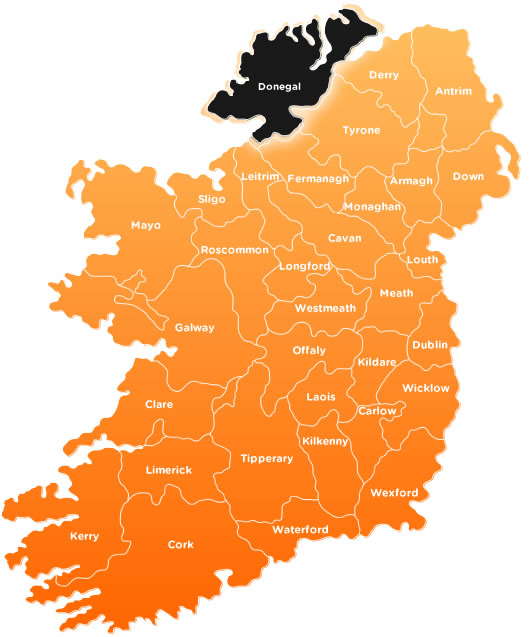
donegal_mapDonegal is

  • Predominately rural
  • The majority of lone-parents, homemakers and carers are women
  • It has the highest level of unemployment of all constituencies
  • Highs level of emigration
  • And has a very high age dependency ratio

Everyone wants to do the best for their children and their loved ones but for women who have a low income, who have a disability, are from the Traveller community, are full-time carers, or who for whatever reason have no economic independence these women know the reality of poverty and the effect this has on their health and the quality of their lives and that of their families.

Employment and Welfare

Once employment gave security and a quality of life but we now have 16% of those working, living in poverty. Women in particular are vulnerable to low wages and precarious employment with 50% of women earning €20,000 or less.

It is a fact that one parent families tend to have the lowest disposable income out of all the households in the state.  In Donegal 93.5% of lone parents are women. So what is their reality?

For women living only on social welfare benefits, the week in week out drudge of living on such a low income greatly adds to their stress levels and ultimately impacts negatively on their physical and mental health.

For some women managing means no heat while the children are at school, buying everything second hand for themselves and their children, including the school uniforms.  I know a number of women who cut their own hair as going to the hair dresser is a luxury they cannot afford and the word holiday is not even in their vocabulary. In rural areas it maybe the monthly trip to do the essential shopping that is their day out.

Incorporate into this picture childhood illnesses, or having a child with a disability and the consequences are unimaginable. The extra costs of attending the GP when a taxi is their only option of transport, or having to attend the hospital which could be over 40 miles away may leave the woman having to get into debt.

Lack of accessible affordable childcare especially in rural area compounds the poverty trap for lone parents with many women unable to access training or to find work.

Some women with no family support, no money for social occasions or interaction develop low self –esteem which compounds their struggle to stay healthy, for their greatest fear is, ‘What happens to my children, if I am sick?’

Domestic violence

For women who find themselves in a domestic abusive relationship, lack of economic independence can often be the main reason why she stays.  When a woman leaves the home and we know that this is the most dangerous time for women, in rural areas where transport is so difficult, it increases their risk of danger.

Ironically, it is the woman experiencing an abusive relationship that becomes homeless and dependent on the support of the frontline services as a safe haven. Legal support and advice is available through legal aid for women who cannot afford independent advice but there is an initial consultation fee of €130.00. Where does a woman with no income find this?

Disability

Cuts to home helps and people with disabilities is having a particular harrowing effect on the most vulnerable in our society.  Many women find themselves alone and afraid in their homes, especially in rural areas where you may not even see the light of your neighbour’s house.

What is now been put in place as care is a time managed operation that takes away that person’s independence because it is easier to do an action than afford the less abled person the dignity and respect of doing it for themselves.  There is little time to give value who they are, to chat about what is important to them. Those who are providing this service do their very best but they themselves are constrained by the system that governs.

Most women with disabilities or older women are reliant are state support and can afford to pay the transport costs for ‘getting out’ the money is kept for the trip to the Doctor or the chiropodist. In the case where wheelchair accessible transport is required this may have to come from an urban area and will be more expensive because of its exclusivity.

Childcare

Lack of accessible affordable childcare is huge barrier for women seeking some economic independence. According to a major economic report commissioned by the Donegal County Childcare Committee in 2013, the annual cost of full-time childcare for a two-child family is €16, 500. Among lower income groups 56% indicated that the cost of childcare prevented them from looking for a job. Within the childcare sector over 25,000 receive less than € 11 an hour women it is just another example of the value given caring roles which predominately are women.

A different future 

blog headerAll the above is unacceptable and needs to be addressed by the implantation of the Irish government’s policy’s, strategies and legal commitments locally, nationally and internationally.

The work and vision of the 5050 Group which seeks to bring a gender balance to politics in Ireland and NCCWN continued work in supporting and empowering women in our community’s is therefore critical in achieving social justice and equality in Ireland.

Where do Donegal Councillors Stand on issues of Equality and Social Inclusion?

dcc equaility answers

Where do the 37 Donegal County Councillors stand on issues relating to Childcare, Cuts to Carers, Domestic Abuse + Violence Against Women, Lesbian, Gay, Bisexual and Transgender (LGBT), Travellers, Women’s Political Representation and Equality within our society?

In early 2014, The National Women’s Collective- Donegal Women’s Network held a number of meetings to hear and collect what are the main issues locally and nationally for women in Donegal. Some of the issues discussed and debated were the lack of women’s representation, lack of local training and employment issues, cuts to home helps and services for the older person and people with disabilities, domestic abuse, lack of transport and accessible affordable community child-care. These meetings were supported by Longford Women’s Manifesto Project.

Following on from these meetings a questionnaire was designed by Network and an “Open Invitation” was sent out to the Donegal Councillors.

To-date the responses we have received have been insightful and we are delighted that all of the councillors who responded stated that they would work towards upholding and promoting the ethos of social inclusion, equality and human rights. Those who responded all agreed that gender equality is a fundamental principle underpinning the concept of social justice, and human and civil rights in Ireland.  And they further All pledged to sign up to the MAN UP campaign and to undertake a half day workshop on domestic violence in 2014 that would be delivered by Donegal Women’s Domestic Violence Service.

To read your local councillors full responses to our questions please click on their picture and you will be taken to their individual response. 


Donegal Electoral Area

Respondents 


As of 03/09/14 STILL WAITING to hear from these Councillors 

Barry O'Neill  Photo Clive  Wasson Noel Jordan Sean McEniff


Glenties Electoral Area

Respondents 

Marie Therese Gallagher  John Sheamais OFearraigh

As of 03/09/14 STILL WAITING to hear from these Councillors 

Michael Cholm MacGiolla Easpaig Terence slowey, sloweyt@eircom.net  Photo Clive Wasson Enda Bonner Seamus O Domhnaill


Inishowen Electoral Area

Respondents

Albert Doherty CiaranMcLaughlin 


As of 03/09/14 STILL WAITING to hear from these Councillors 

B McGuinness, mcguinnessbernard@gmail.com.  Photo Clive Wasson John Ryan Martin Farren Martin McDermott Nicholas Crossan Paul Canning Rena Donaghey


Letterkenny Electoral Area 

Respondents 

Jimmy Kavanagh gerry mcm Mick Quinn

As of 03/09/14 STILL WAITING to hear from these Councillors 

Ciaran Brogan - ciaran.brogan@donegalcoco.ie,   Photo Clive Wasson Cllr Ian Mc Garvey Dessie Shiels jamespatmcdaid@gmail.com, Photo Clive Wasson John O' Donnell Liam Blaney Michael McBride


Stranorlar Electoral Area

Respondents

Gary Doherty  

As of 03/09/14 STILL WAITING to hear from these Councillors 

Gerry Crawford Liam Doherty FG Martin Harley. marty.harley@hotmail.com  Photo Clive Wasson Patrick McGowan


Brought to you by the Donegal team at The National Women’s Collective Donegal Women’s Network.

offical logo to use