Archives

Hope Beyond Violence-Creating Safer Communities for Women

In this women’s lives, women’s voices feature, we will delve into the issue of domestic violence and look at the rise of femicide in Ireland, which is not defined in Irish law. Femicide is a growing social issue in our society and we need to create awareness around it and start calling it what it is, the gendered murder of women or girls.  Written by WCI-Donegal Development Worker Rhona Hannigan


Domestic violence, sometimes referred to as domestic abuse or intimate partner violence, is a serious and pervasive issue in Ireland, affecting individuals across all ages, genders, and backgrounds. It involves patterns of coercive, controlling, threatening, degrading, or violent behaviour which may include physical, emotional, sexual, and financial abuse, typically by a partner, ex-partner, or family member.

In Ireland, domestic violence has historically been a hidden problem, often shrouded in stigma and silence. However, increased public awareness, changes in legislation, and the work of advocacy organisations have brought the issue into greater focus over recent decades.


Women represent the most recorded victims in Ireland. Almost a third of all women have experienced physical and, or sexual violence by their intimate partner. According to data from Women’s Aid and the Central Statistics Office (CSO), thousands of cases are reported annually, however the majority of incidents remain unreported due to fear, shame, or lack of trust in authorities.

According to Safe Ireland:

“In Ireland, 1 in 3 women have experienced psychological violence from a partner at some point in their lives and 1 in 6 have experienced physical or sexual violence by a partner since the age of 15.


According to the United Nations, in 2023, there were approximately 51,100 women and girls murdered worldwide by their intimate partners or other family members. This means that, on average, 140 women or girls are killed every day by someone close to them. This is the ultimate and extreme culmination of continued acts of violence against victims.

Femicide represents the dramatic end-point on a spectrum of violence against women. Femicide is driven by discrimination against women and girls, unequal power relations, gender stereotypes or harmful social norms. It is the most extreme and brutal manifestation of violence against women and girls which occurs on a continuum of multiple and related forms of violence, at home, in workplaces, schools or public spaces. Which includes intimate partner violence, sexual harassment and other forms of sexual violence, harmful practices and trafficking. As many as 38% of all murders of women are committed by intimate partners, according to the World Health Organisation.


From a statistical perspective, it is difficult to define numbers of femicide in Ireland as there is no working definition. The European Institute for Gender Equality (EIGE) defines femicide as ‘killing of a woman by an intimate partner and the death of a woman as a consequence of a practice that is harmful to women”. It is understood that an intimate partner can be a former or current spouse or partner, whether or not the
perpetrator shares or has shared the same residence with the victim’.

In a joint report by UNODC and UN Women in 2023, more women and girls were killed in 2022 even as overall homicide numbers fall. The research recorded that 89,000 women and girls were intentionally killed globally in 2022, the highest rate in twenty years. The true numbers are likely to be much higher as records only relate to intimate partner killings. Murders of women that occur as a result of rape, sexual violence, honor killings or female genital mutilation are recorded as murders and therefore are not attributed to femicide.


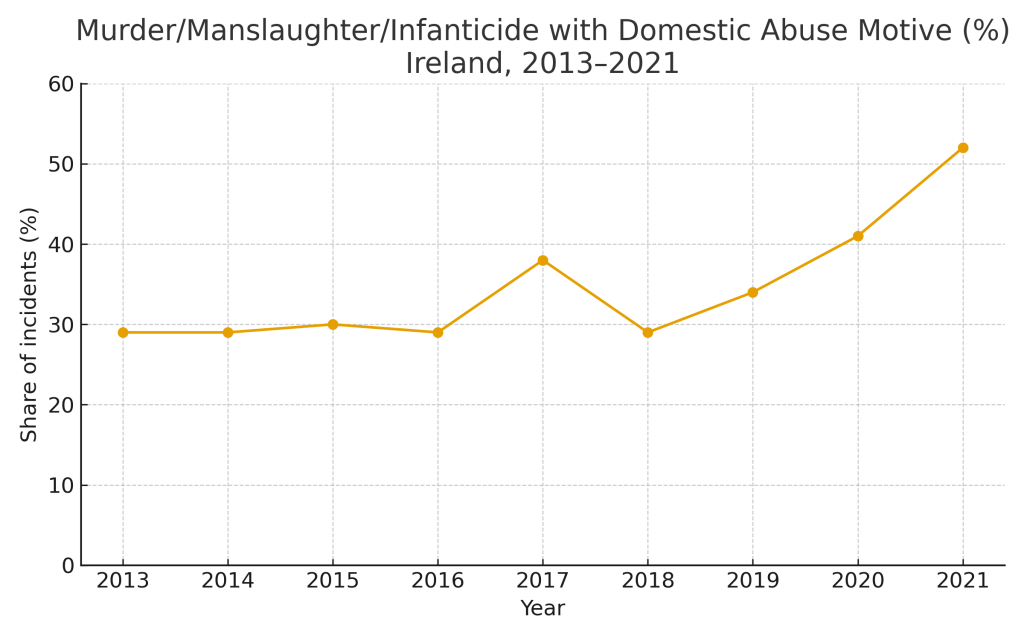
In a Garda report, “Domestic, Sexual and Gender Based Violence”, released in 2022, males and females experience violent crimes differently. In the case of female victims there is a close link with domestic abuse and sexual violence crimes. Between 2019 and 2021 a motive attributed to domestic abuse was recorded for 90% of women who were victims of Murder or manslaughter. Whilst Male victims also experience domestic abuse, they are more likely to be subject to violence by offenders unknown to them or in incidents not relating to domestic abuse.


The graph below by An Garda Síochána shows the annual number of Murder/Manslaughter/ Infanticides incidents between (2013–2021)

Domestic violence remains a critical issue in Irish society, requiring ongoing awareness, prevention, and support efforts. While legal reforms and advocacy have made progress, continued work is needed to ensure that all victims feel safe to come forward, receive protection, and rebuild their lives free from abuse.

Building Community Solidarity

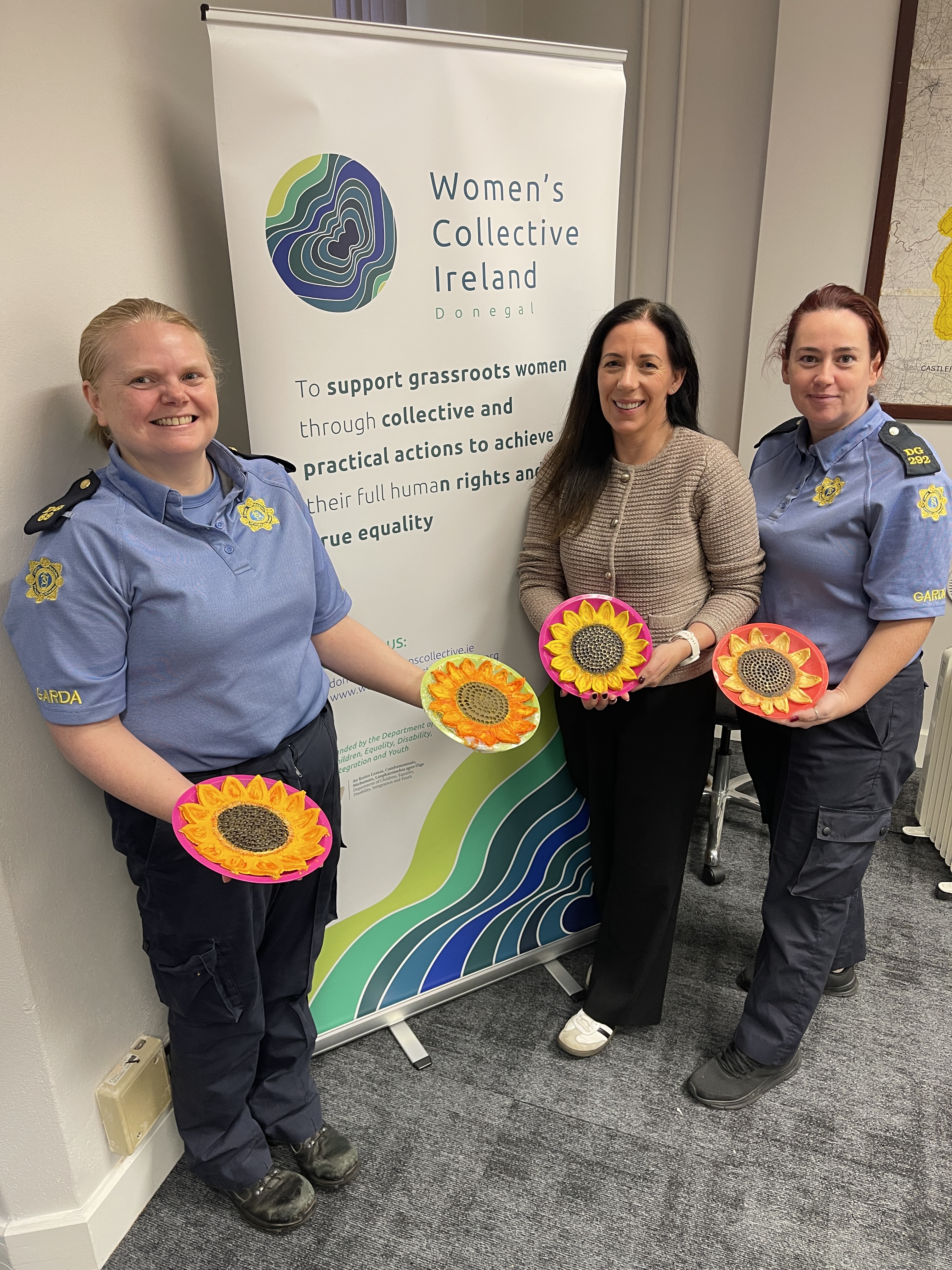
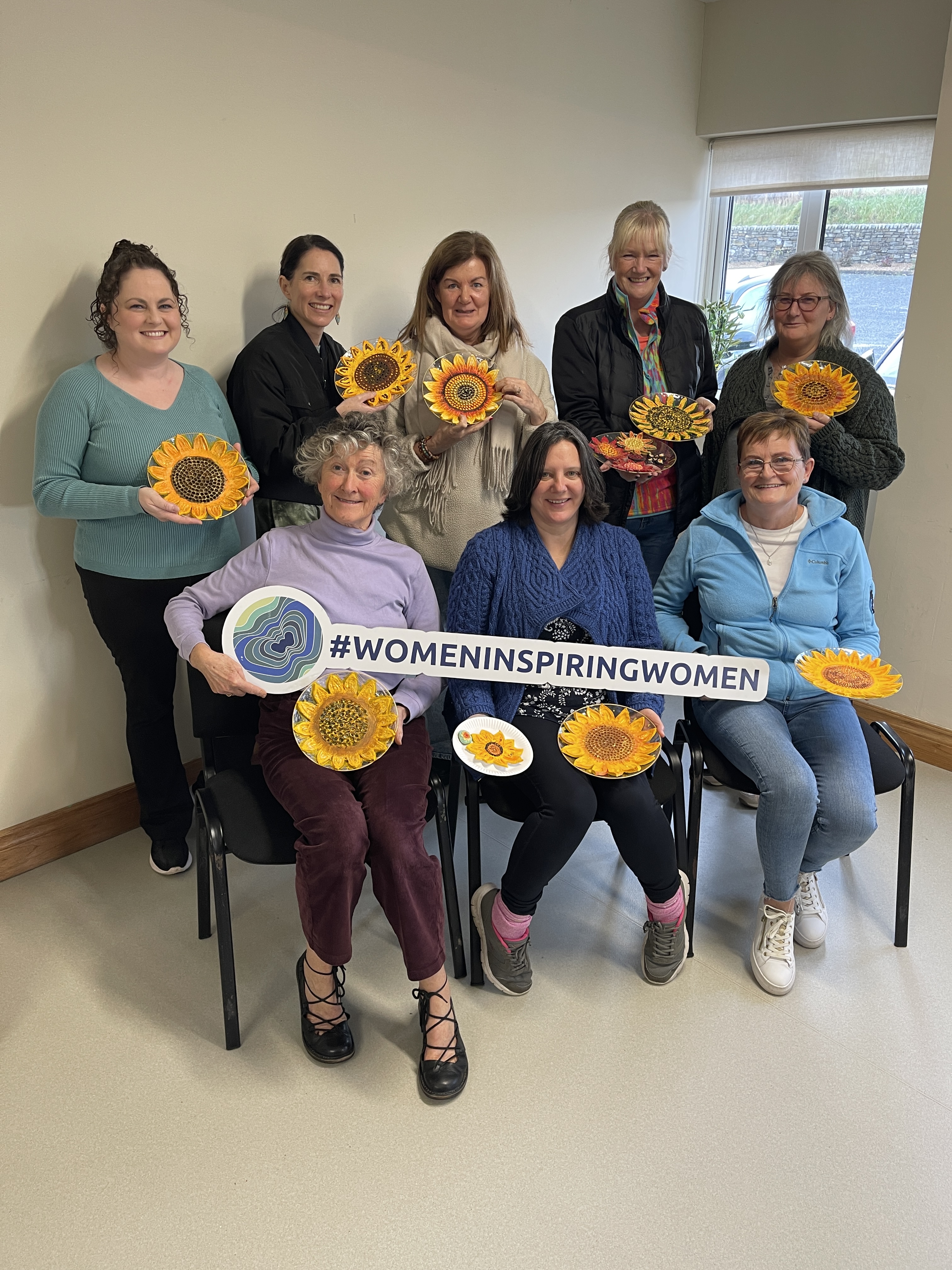
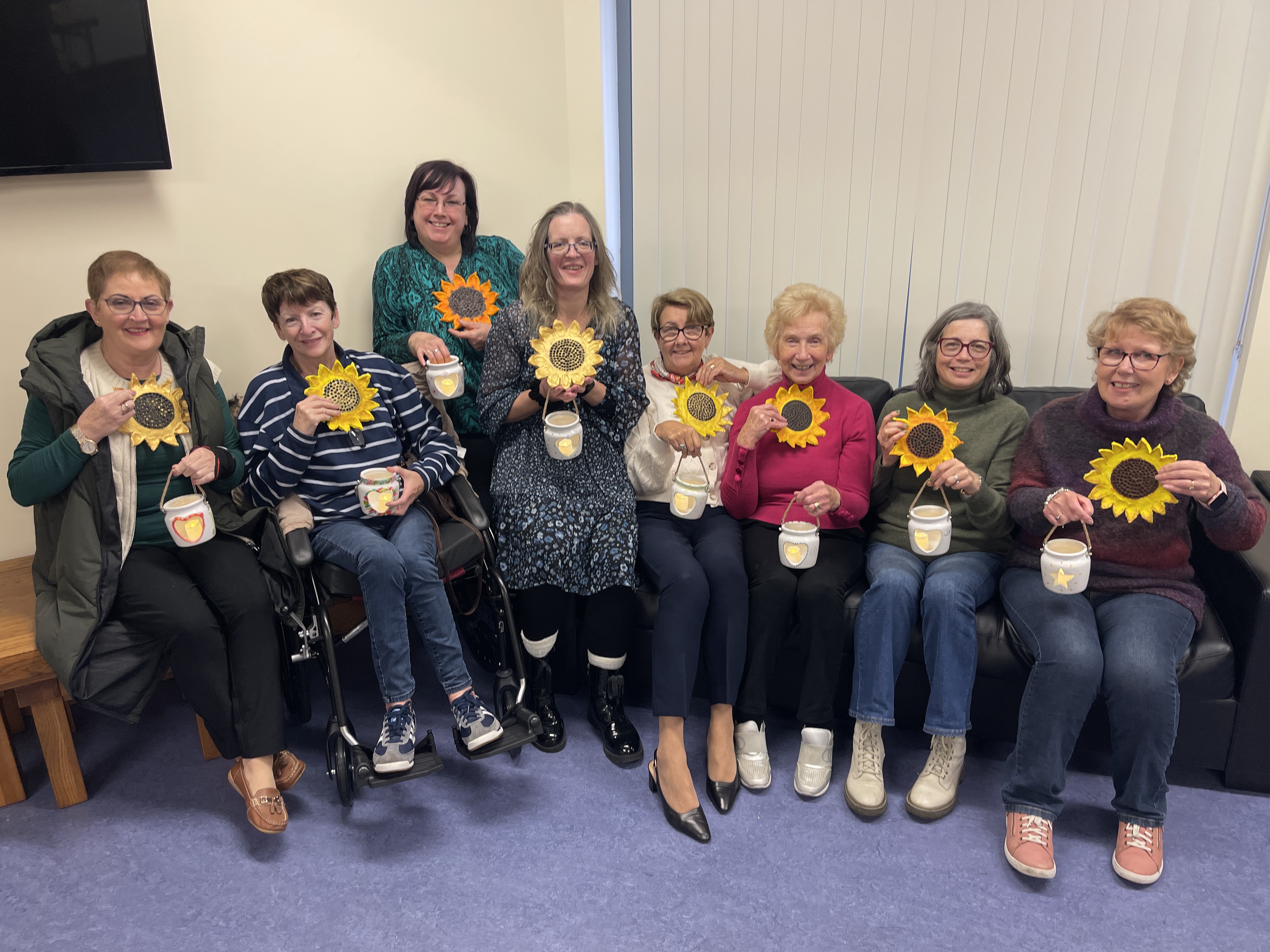
Between October and November 2025, Women’s Collective Ireland–Donegal worked with different groups in Donegal. These included the Early Birds Pettigo Women’s Group, Donegal Town Crafting for Connection Group, Rossnakill Community Hub, AIB staff from Donegal Town, Killybegs, Ballyshannon and Ballybofey, members of An Garda Síochána Donegal, and the ATU Donegal Empower Her Society.

The project highlights the reality that 1 in 3 women experience gender-based violence. It aims to remind women that they are not alone, that support is available, and that communities have a role to play in challenging violence and creating a safer future for women and girls.

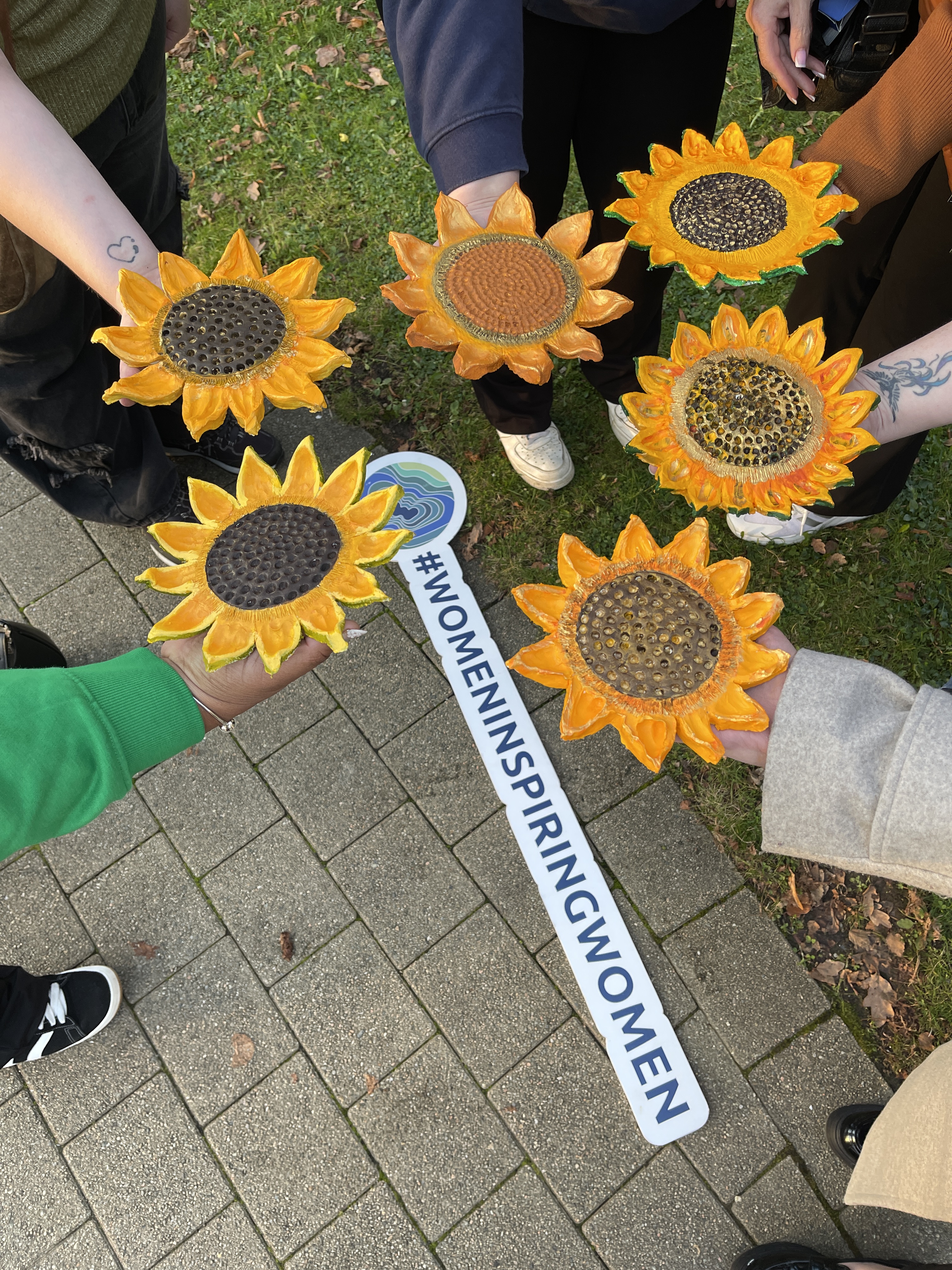
Each group created handcrafted clay sunflowers under the motto:

“Be like a sunflower, so that even on the darkest days you stand tall and find the sunlight.”

The sunflowers were first displayed at the 2025 Donegal Rape Crisis Centre Art Exhibition in Letterkenny. The exhibition theme was “Hope – Where the Light Enters. Together we rise, together we heal” and took place as part of the 16 Days of Activism, creating a supportive space for survivors and promoting community solidarity.

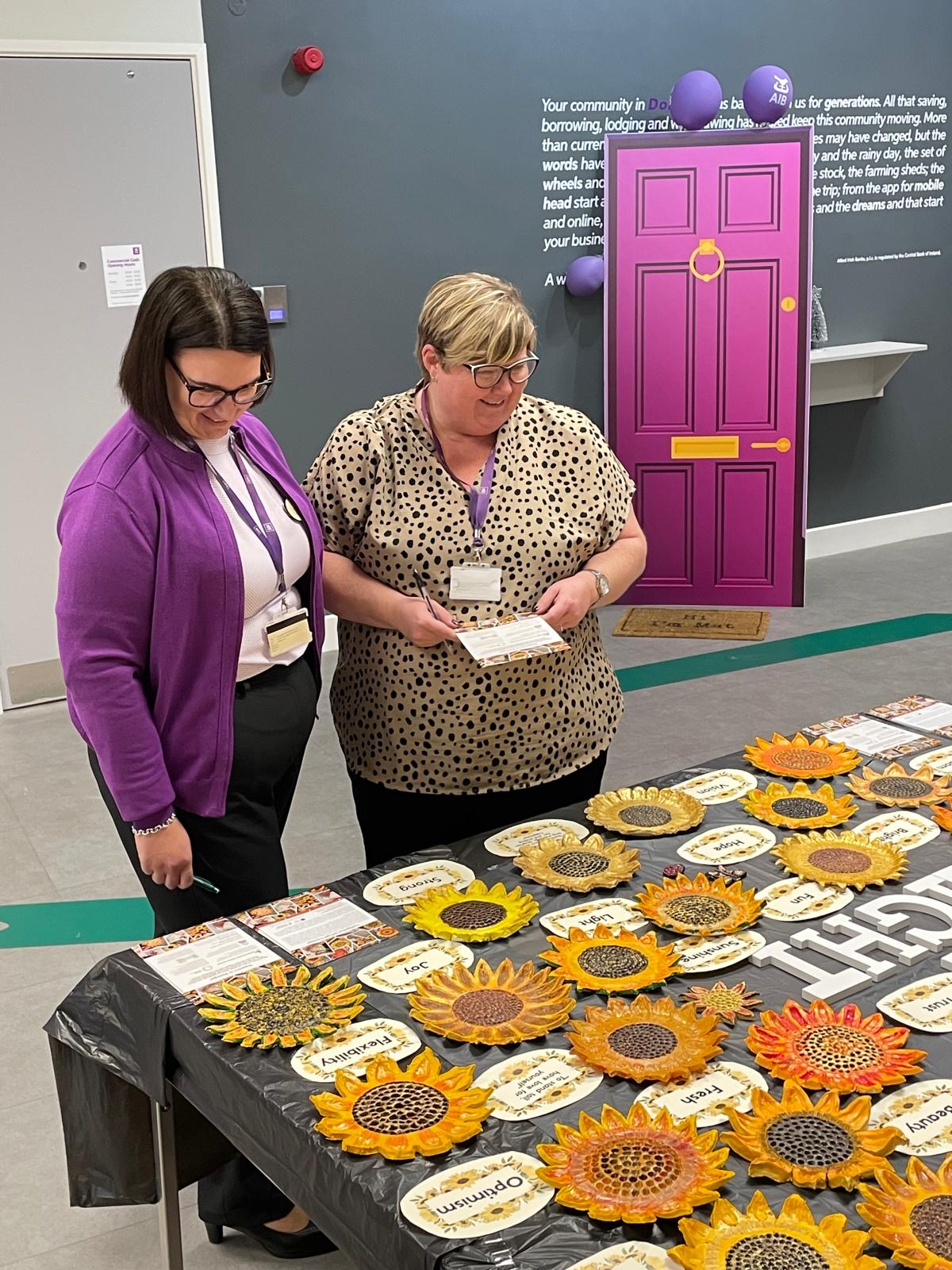
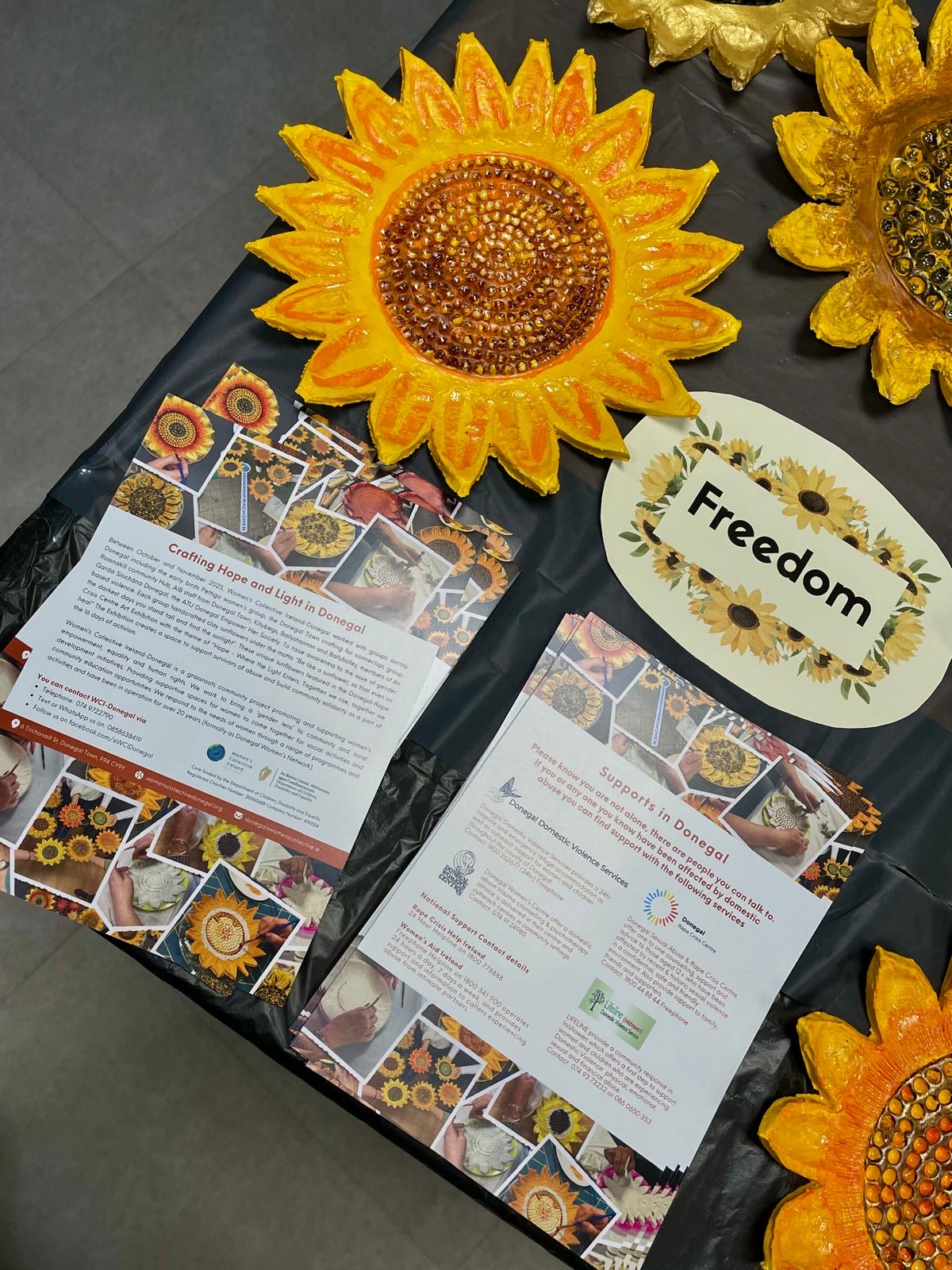
The collection, made up of over 40 unique handmade clay sunflowers, is now on display at the AIB branch in Donegal Town over the Christmas period until the New Year. Each sunflower represents hope, light and solidarity, and carries messages of encouragement for women who have experienced gender-based violence. Members of the public are encouraged to visit the display while in Donegal Town. The AIB branch is open Monday to Friday, 10am to 4pm, and is closed on bank holidays.
Supports in Donegal

Please know you are not alone, there are people you can talk to. If you or any one you know have been affected by domestic abuse you can find support with the following services;

If you or someone you know is a victim of domestic abuse, please contact 999/112 or your local An Garda Síochána Donegal Station.

Donegal Domestic Violence Services – DDVS provides a 24hr helpline and emergency refuge accommodation as well as outreach support for women and children throughout the county of Donegal. Contact: 1800 262677 (24hr) Freephone

Donegal-Rape Crisis Centre offer one to one counselling, support and advice to those aged 12+ who have been affected by recent & historic sexual violence in a confidential, safe and friendly environment. Also provide support to family, friends and supporters. Contact: 1800 44 88 44 Freephone

Donegal Women’s Centre offer a domestic abuse trauma counselling & psychotherapy service is delivered in their centre and outreach centres in community settings. Contact: 074 91 24985

Lifeline Inishowen provides a community response in Inishowen which offers a first step to support women and children who are experiencing Domestic Violence: physical, emotional, sexual and financial abuse. Contact: 074 93 73232 or 086 0650 353

National Support Contact details

Dublin Rape Crisis Centre (Rape Crisis Help Ireland): 24 Hour Helpline on 1800 778888

Women’s Aid Ireland: Freephone Helpline on 1800 341 900 operates 24 hours a day, 7 days a week, and provides support and information to callers experiencing abuse from intimate partners.

References

Measuring femicide in Ireland

Five essential facts to know about femicide

Research from UNODC and UN Women

Femicide in Ireland 2012-2023

FUNDAMENTAL RIGHTS REPORT –2025

How to Introduce Eco-Friendly Changes

10

This feature is part of the NCCWN Donegal Women’s Network, ‘Women’s Lives, Women’s Voices’ series. Written by Mary Lane to raise awareness to the global movement and campaign ‘Plastic Free July’. This is the first in a two part feature by Mary who reflects on her experience of becoming aware of the concept of Zero Waste and how she has managed to bring a zero waste lifestyle into her family home.


This month, July 2019, we have decided to try Plastic Free July. We knew from the get go that we would never achieve 100% plastic free but we definitely knew we could use it as an incentive to at least make conscious decisions about what plastic we did use, and where we could actually skip it.

It has been a very eye opening experience. Food is definitely a hurdle to get the head around. Shopping at supermarkets has its challenges, especially when it comes to fruits and vegetables. While there are plastic free options, the cost is often more expensive.

Plastic-v-no-plastic

For example, a twin pack of courgettes can be bought pre packed in a plastic tray and wrapper for around 90c for 500g weight. Loose courgettes are €3.29 per kilo, meaning a single courgettes set me back €1.14. Apples and oranges can be bought in a multipack plastic bag for less than a euro, yet the loose ones are 40-60c each, or 5 for €2. A 1kg bag of carrots containing at least a dozen pieces can cost under one euro, yet opting for 4 loose carrots cost over 50c.

On a friend’s suggestion however, I visited a vegetable market that’s less than 5 minutes from my house. I bought a whole stack of food – sweet potatoes, mushrooms, carrots, broccoli, oranges, and a bottle of lemonade in a returnable glass bottle, all for only €6.


Other swaps we have made this month are:

  • Bringing my own containers to the butchers rather than using their plastic bags.

  • Choosing a toothpaste in a recyclable metal tube.

  • I’ve ordered bamboo toothbrushes online, so we will be swapping out our plastic ones. These are fully biodegradable and can just go in the household compost.

  • I bought some glass storage jars to keep my homemade cookies, popcorn and other snacks in.

  • I stopped buying hummus and falafel – foods we love – and I made them myself at home from tinned chickpeas and they were delicious.

  • We often bought a lot of tortilla wraps, but I tried my hand at making an easy alternative – Indian chapatis. While they’re not a direct comparison, they did the job perfectly well and were very tasty. And no nasty extra ingredients!

  • I’ve been taking a stainless steel water bottle everywhere and actually using it! I’d previously been guilty of buying reusable bottles and not using them more than two or three times, and also buying plastic bottles of drinks when out and about. With an exception on one very hot day, I’ve gone without these extra purchases.

  • I picked up a set of stainless steel straws for us to use when out and about so we can skip the plastic ones as much as possible.


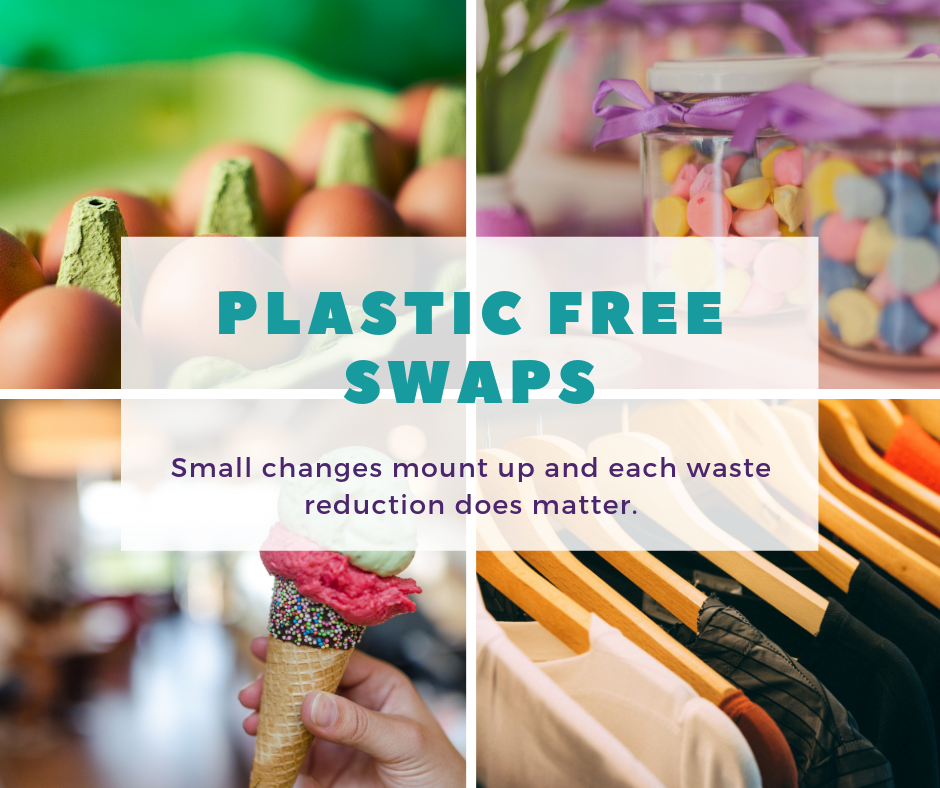
Plastic Free Swaps

 I’ve baked instead of buying biscuits and treats. 

I’ve switched as much as possible to jars, glass bottles and tins. So ketchup, mayonnaise, relish, etc in plastic bottles are all being replaced by glass contained alternatives as they finish. 

We have replaced some of our bread consumption with package free bread from the bakery, or French sticks bought in a paper wrapper. 

I’ve popped our own popcorn for snacks, instead of individual portion bags or crisps. While the kernels come in a plastic bag, the amount of plastic is much smaller than the alternative.

12

 We had been buying eggs in plastic cartons, but have switched to traditional cardboard ones.

We needed new food storage as most of our plastic Tupperware had gone walkies along the way. I chose a set of glass tubs with plastic and silicone lids. Again, not totally plastic free but certainly less plastic. Also, the glass containers can be used to reheat food in the oven and microwave, and don’t pose any risk of leaking harmful BPAs into the food. 

My son loves ice lollies. And many days it almost the only hydration I can get into him. I’ve been making them just with water or juice in a mould at home and he loves them. Where possible, we have chosen ice cream in cones when out and about rather than in tubs or pops in plastic wrappers. 

I’ve brought cloth bags when buying loose fruit, vegetables, baked goods, etc. I made these myself from old T-shirts that were going to be donated.


Realistically, I think that for my family Zero Waste and Plastic Free isn’t achievable, BUT I think we have definitely benefited and will continue to benefit from having these “extreme” concepts to the front of our minds when buying things, or making decisions that might have unnecessary wasteful impacts.


Given that pretty much all plastic products and disposable resources have only been around for the past 60 years or so, and increasing at a disastrous rate over the last couple of decades, it’s really awful to see the impact on our environment and more worryingly is the thought that it is irreversible. But now really is the time to get a handle on it and it does start in each of our homes. Small changes mount up and each waste reduction does matter.


In our home, we are really making changed with the Reduce, Reuse, Recycle mantra, but also adding into it the ideas of repair, rebuild, refurbish, refinish, resell and rot (compost). Anything after that should be restricted, redesigned or removed from production.


We need to be showing our children that consumerism and the need for everything to come in its own wrapper is not actually the best thing for our world, and that disposable is not always good. We need to set examples to our friends, family, co-workers, etc. that introducing small eco-friendly changes are not to be feared or ridiculed.

I’m pretty sure many people just want a “simple life”. Why not start by making life simple?


Plastic Free July is a global movement that helps millions of people be part of the solution to plastic pollution – so we can have cleaner streets, oceans, and beautiful communities. Will you be part of Plastic Free July by choosing to refuse single-use plastics? To find out more about this global movement check out the https://www.plasticfreejuly.org/ website


NCCWN Donegal are always looking for women to share their stories and looking for women to write features on topics of their choice which we will profile as part of our Women’s Lives, Women’s Voices’ series.

‘SORT OUR SMEARS’ CAMPAIGN

Screenshot 2019-04-23 at 14.35.32

NCCWN Donegal Women’s Network are inviting you to participant in the ‘SORT Our Smears’ CAMPAIGN, a community ‘art in activism’ project by visual artist Barbara O’Meara in collaboration with Karen Ward of Moon Mna Women’s Celtic Circles supported by the National Collective of Community Based Women’s Network’s (NCCWN)

The project is in response to the ongoing ‘Cervical Check’ Smear Test Scandal which broke last year. This ongoing scandal is affecting thousands of women across Ireland, threatening women’s health and wellbeing, and already resulted in the loss of 22 women’s lives in Ireland.

This month it was reported[1] there remains a backlog of 80,000 tests and delays of up to 33 weeks for a result. This situation is unacceptable and action is required from the government to address this situation now.

The ’Sort Our Smears’ Campaign was launched on 8th March for International Women’s Day and grassroot community workshops are currently being run to give women the opportunity through the use of art to express how you feel about the ongoing cervical smear test scandal which is impacting women’s healthcare in Ireland.

The project aim is to bring all the pieces created by women from across Ireland together to be put on Exhibition Nationally in Autumn 2019.

NCCWN Donegal are pleased to be a part of this project and will be running a number of art activism sessions in Donegal for women to participant in to express how they feel about the ‘Cervical Check’ Smear Test Scandal.

Confirmed dates include

8th May, Donegal Women’s Network, 6 Tír Chonaill Street Donegal Town; 10am-12.30pm,

9th May, Central Library Letterkenny, St Oliver Plunkett Road, 10.30am-1pm

27th May, Greencastle Community Centre, 12.00-2.30pm

Should you be a group interested in participating in a session please get in contact with us to discuss if we can facilitate one in your area too!

Places are limited so please sign up by filling in our online form here, we can also be contacted on donegalwomensnetwork@gmail.com or 074 9722790


To find out more about the campaign  ‘Sort Our Smears’ Campaign please see here.

For information for people concerned about Cervical Check please visit the HSE information page which can be found here.

[1] https://www.independent.ie/irish-news/health/harris-to-stand-over-free-tests-decision-amid-80000-backlog-37991909.html

smear college

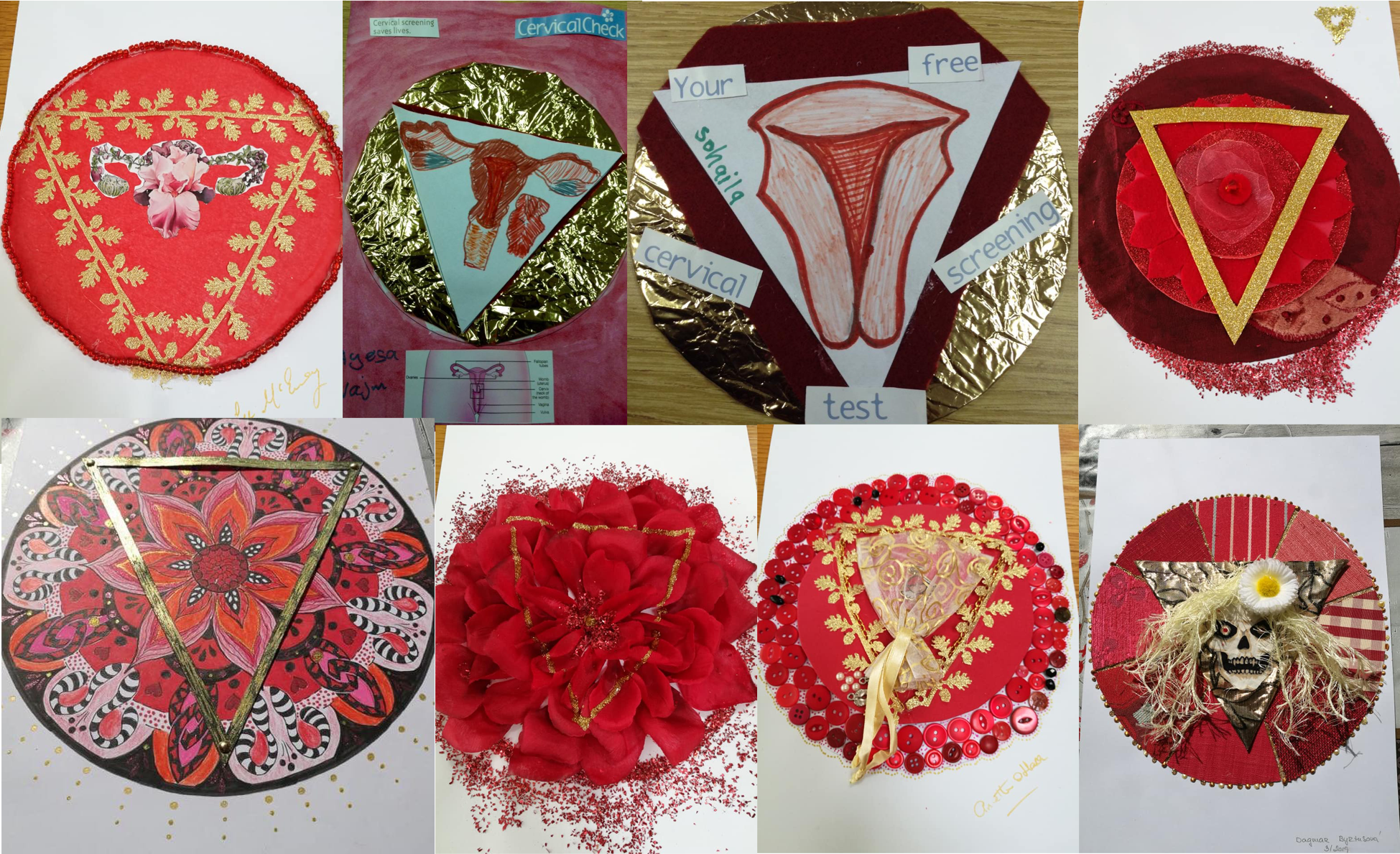
Some the SORT OUR SMEARS art pieces already created by women in Ireland

smear college 1


Equal Representation is a Basic Social Justice

balance for better

In 2019 of the 37 County Councillors in Donegal only 3 are women, that’s a 8.1% representation, the highest it’s ever been. At the national political level two women since 1918 have ever represented Donegal in Dáil Éireann. We need change.

This year’s International Women’s Day Theme is ‘Balance for Better’, it is a call-to-action for driving gender balance across the world. While also asking people how will you help make a difference?

In honour of this day NCCWN Donegal Women’s Network in association with 50:50 North West invite you to come Celebrate International Women’s Day 2019 with us on Thursday 7th March in Donegal central library, Letterkenny 10am-1pm.

We’ll be discussing equal representation, chatting to female County Councillors and to women who will be running in the upcoming May Local Elections. We’ll also be joined by Historian Dr Angela Byrne who will be talking about the first woman in Donegal to be Elected as a councillor.

This will be an interactive and informative event, refreshments will be provided and all are welcome.

For more information you can contact NCCWN Donegal Women’s Network on donegalwomensnetwork@gmail.com or by phone on 074 9722790